
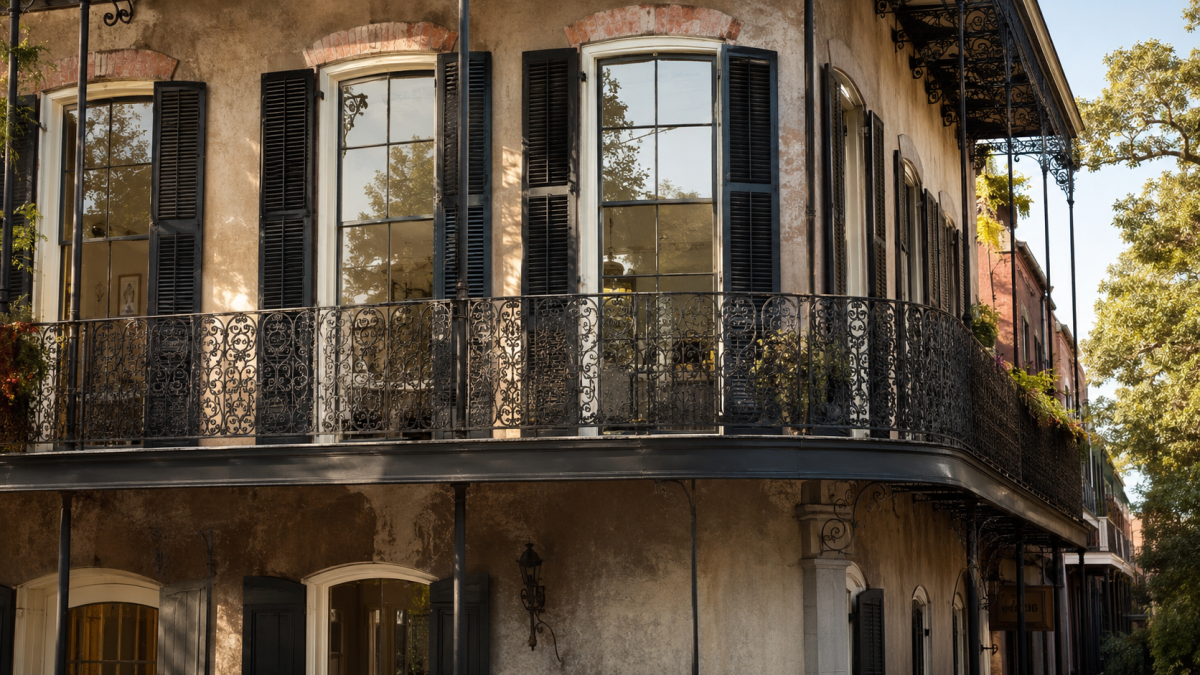
Solar control film for New Orleans French Quarter historic properties solves one of the oldest conflicts in preservation: how do you make a 19th-century building comfortable and protect its irreplaceable interior contents without touching the exterior character that makes it worth preserving in the first place? French Quarter and Garden District homeowners, B&B operators, and historic property managers face this question every summer, when single-pane original glass turns sun-drenched rooms into heat traps and silently accelerates the fading of antique furniture, heart pine floors, and period textiles.
Solar control window film applied to existing glass blocks UV radiation and reduces solar heat gain, which causes both problems, without altering the exterior appearance that the Vieux Carré Commission, the Historic District Landmarks Commission, and preservation-minded owners all require to remain unchanged.
MGT Glass Solutions installs solar control film for historic properties throughout New Orleans, including the French Quarter, Garden District, Uptown, Marigny, and Bywater, as well as surrounding areas such as Metairie and the Northshore. This guide covers which film options preserve exterior character, how the installation works on original glass, and what property owners should understand before scheduling a consultation.
The Preservation Problem With Window Upgrades
Historic property owners in New Orleans operate within one of the most strictly maintained preservation frameworks in the United States. The French Quarter is governed by the Vieux Carré Commission, which reviews and approves changes to exterior building elements, including windows. The Garden District and other locally designated historic districts operate under similar review structures through the Historic District Landmarks Commission.
Window replacement with modern double-pane or impact-rated glazing is frequently prohibited or heavily restricted in these districts. Even when replacement is technically permissible, the cost, disruption, and loss of the original glass’s character often make it an unacceptable option for owners committed to genuine preservation rather than a superficial historic appearance.
The result is that many French Quarter and Garden District properties are heated and lived in through Louisiana summers with single-pane glass that offers essentially no resistance to solar heat gain or UV transmission. Air conditioning addresses the comfort issue but does nothing to prevent the UV damage accumulating on every antique, painting, rug, and wood surface in the room.
Residential window tinting in a historic New Orleans context requires a product approach specifically matched to preservation requirements, rather than a standard residential tinting specification. The film must perform on the inside and be invisible on the outside.
Neutral Solar Film Options for Historic Exteriors
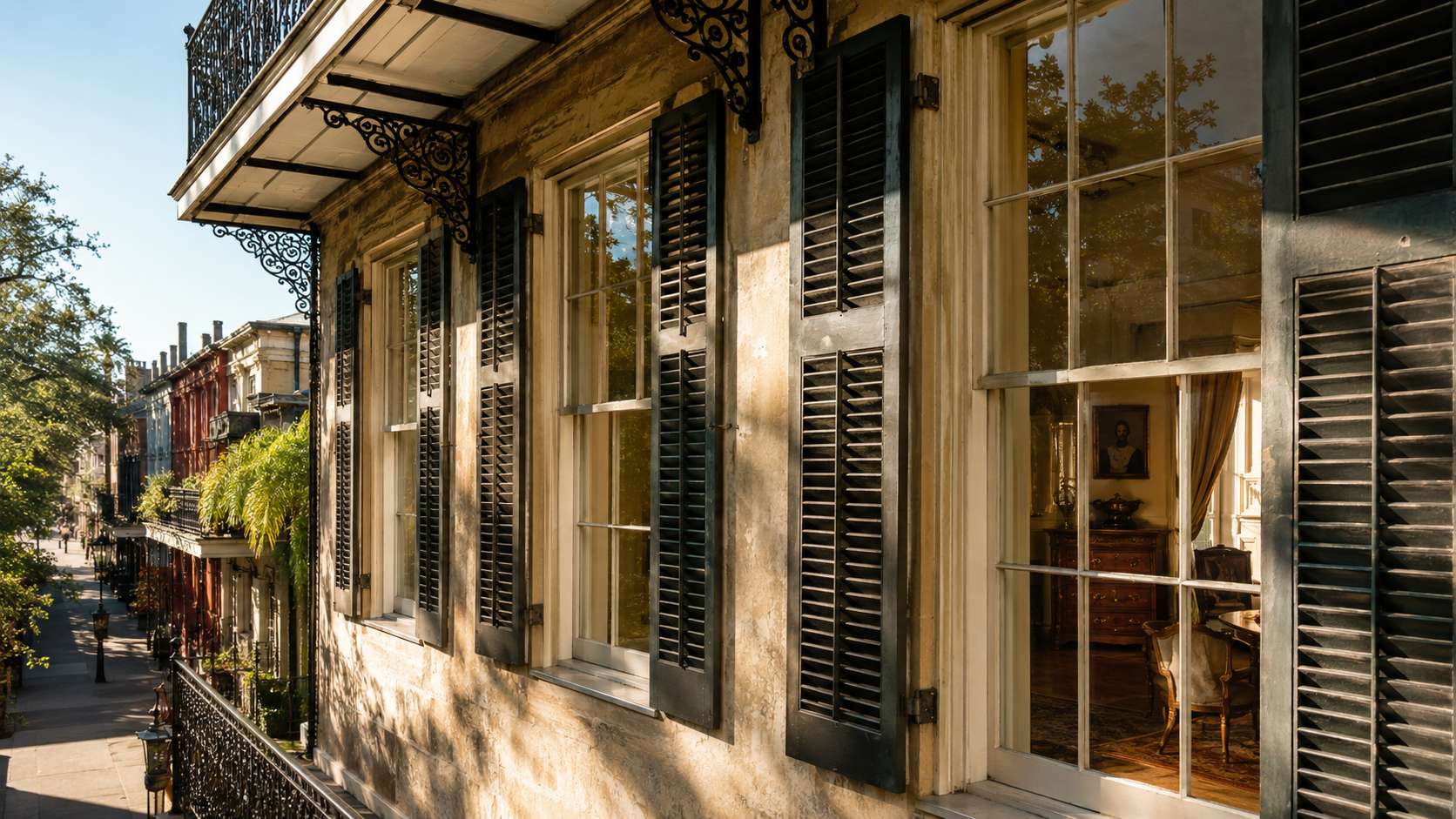 Neutral solar control films are formulated to reject heat and block UV while minimally affecting the glass’s visible light transmission and reflectivity. From the street, a window treated with neutral solar film looks like an original window. The glass retains its character, its color, and, in most cases, its slightly imperfect reflectivity profile characteristic of period glazing.
Current-generation neutral films are available with specifications that block 99 percent or more of UV radiation and reject a meaningful percentage of solar heat gain, while maintaining sufficient visible light transmission to keep rooms bright and interiors feeling open. For B&B and short-term rental operators in the French Quarter whose guest experience depends on rooms that feel historic and livable rather than dark and institutional, the visible light transmission specification is as important as the UV and heat rejection numbers.
To understand the full mechanism by which these products work before selecting a specification, our post on how sun control window film works explains the technology in accessible terms.
Protecting Antiques, Hardwood, and Original Finishes
The interior protection case for solar control film at a historic property in New Orleans is as strong as it is anywhere in the country. These buildings are filled with genuinely irreplaceable materials: original heart pine and cypress floors that cannot be sourced new, antique furnishings that have been in families or properties for generations, oil paintings and watercolors with no modern reproductions, and silk, wool, and cotton textiles that fade and degrade under UV exposure faster than almost any other interior material.
UV radiation is the primary driver of photodegradation in all of these materials. It breaks down pigments in paintings and fabrics, bleaches wood finishes, and causes the uneven fading in floors where rug placement creates sharp lines between protected and exposed areas. In a French Quarter room with south or west exposure and original single-pane glass, that process runs continuously through every daylight hour of every day the property is occupied.
Solar control film blocking 99 percent of UV does not stop fading entirely. Some degradation occurs from visible light and interior sources. But removing the largest single source of photodegradation, which is direct UV transmission through unprotected glass, extends the lifespan of every vulnerable material in the room significantly and measurably.
Our post on protecting hardwood floors from sun fading covers the mechanism and the real-world outcomes for historic wood floors in detail, and is worth reviewing for any property owner whose floors are showing differential fading from sun exposure.
What Installation Looks Like on Original Single-Pane Glass
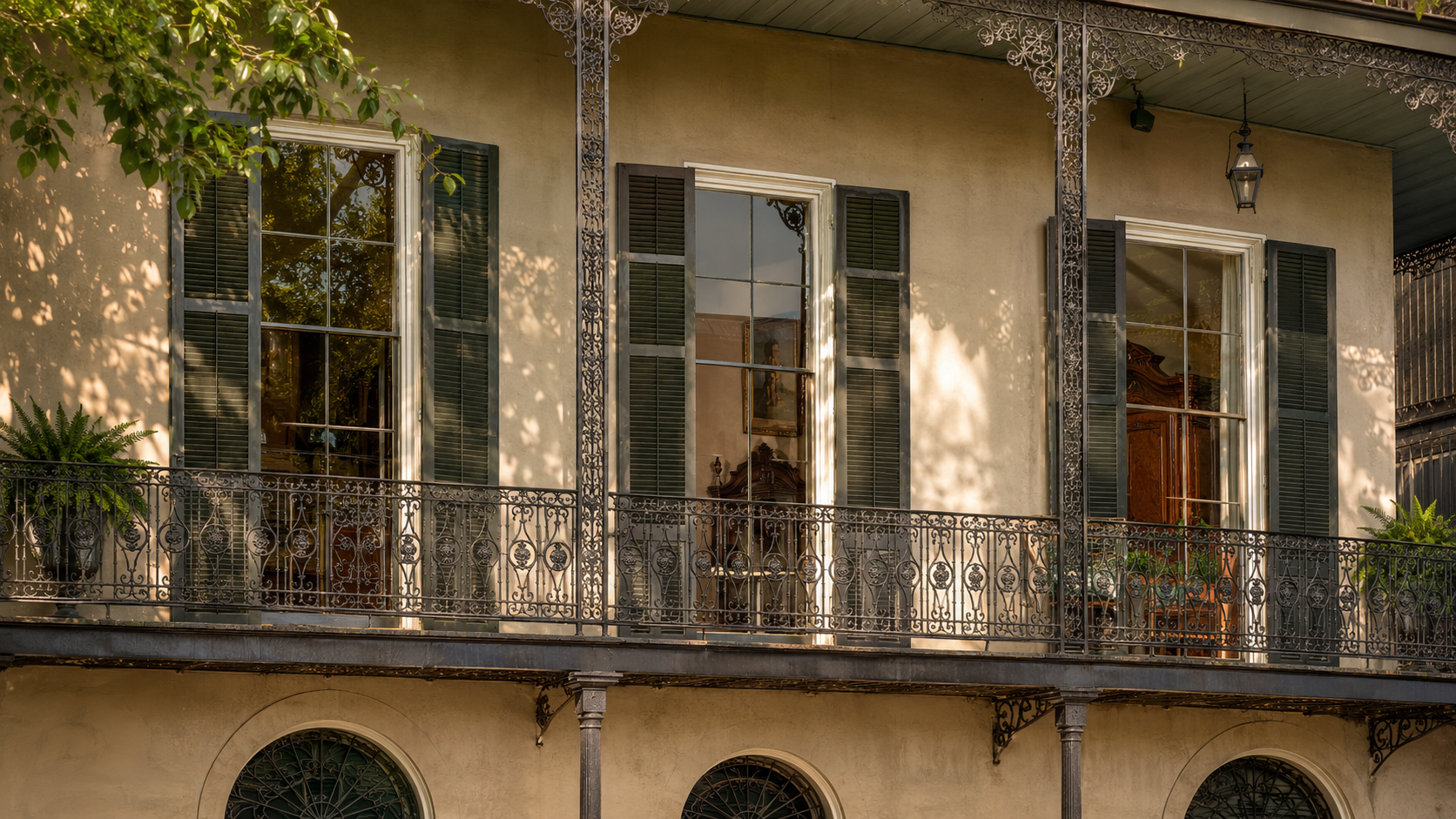 Original New Orleans historic glass presents specific installation considerations that differ from standard residential work. Pre-20th-century glass is often wavy or hand-rolled, with surface irregularities that affect how film adheres and how it reads visually after installation. Wood window frames with original glazing compound require edge treatment that seals the film correctly without trapping moisture against the glass or the frame.
MGT Glass Solutions has direct experience with historic property installations across New Orleans’s older neighborhoods. Our installers understand the handling requirements for fragile original glass, the edge treatment protocols for wood-framed openings, and the film specifications that perform well on irregular historic glass surfaces without introducing optical distortion or adhesion issues.
The installation process for a historic property is slower and more deliberate than a standard residential installation. Individual lights are cleaned, assessed for condition, and filmed with care, focusing on the glass surface and frame. Properties with multiple original wood-framed windows across several rooms are typically scheduled over multiple days to maintain that standard throughout the full scope.
Single-pane glass also offers one installation advantage worth noting. The thermal stress risk posed by certain film specifications on sealed insulated glass units does not apply to single-pane historic glass in the same way. This means the product selection process for original New Orleans historic windows is less constrained by film performance specifications, and higher-rejection films that would be inappropriate on some modern glazing systems are often well-suited to the original single-pane glass in French Quarter and Garden District properties.
Request a French Quarter or Garden District Consult
Historic property film installations require an on-site consultation before any product decision is committed. Glass condition, frame type, window orientation, room use, and exterior appearance requirements all shape the specification, and those variables are only accurately assessed in person.
MGT Glass Solutions conducts in-property consultations for historic residential and commercial properties throughout the French Quarter, Garden District, Uptown, Marigny, Bywater, and surrounding New Orleans neighborhoods. The consultation covers a full window inventory, film specification recommendations with exterior appearance samples for your review before installation, and a project timeline that fits your occupancy calendar.
For B&B operators and short-term rental owners in the French Quarter and Garden District, we build installation schedules around your booking calendar to minimize disruption to occupied rooms.
Contact MGT Glass Solutions today to schedule your New Orleans historic property consultation and get a specification that protects your interior, preserves your exterior, and performs through Louisiana summers for years to come.
Frequently Asked Questions
Will film damage original single-pane historic windows?
No. Properly specified solar-control film does not damage the original single-pane historic glass. The thermal stress risk that applies to some film specifications on sealed insulated glass units does not apply to single-pane windows, which means historic New Orleans glass is well-suited to a wide range of solar control film products. The primary installation consideration is edge treatment at wood frames with original glazing compound, where correct sealing prevents moisture infiltration and edge lifting over time. MGT Glass Solutions assesses the frame condition and the integrity of the glazing compound during the consultation and selects installation methods appropriate to each window’s specific condition.
Is the film visible from the street?
Neutral solar control film is visually indistinguishable from untreated glass at normal street-viewing distances. There is no mirror finish, no visible tint, and no change in surface texture with neutral-specification films. For French Quarter properties subject to Vieux Carré Commission review and Garden District properties under HDLC oversight, neutral film installations do not alter the exterior character of the glazing. MGT Glass Solutions can provide exterior appearance samples before installation begins, so the visual result can be confirmed before any film is applied to the glass.
How long do UV-blocking films last in New Orleans humidity?
Quality solar control films specified for residential applications are rated for ten to fifteen years under normal conditions. New Orleans’s combination of high humidity, heat, and UV index is among the most demanding residential film environments in the country, and film longevity in this market depends on correct specification for the exposure conditions, proper installation with sealed edges, and routine cleaning with appropriate products. MGT Glass Solutions specifies films rated for high-humidity environments and provides care and maintenance guidelines with every installation. Improper edge sealing is the most common cause of premature film failure in humid climates, which is why installation quality matters as much as product quality in the New Orleans market.
Can film be installed on wavy historic glass?
Yes, with the right installer and the right installation approach. Wavy or hand-rolled historic glass has surface irregularities that require an experienced installer who understands how to manage adhesion on non-planar surfaces and how to read the glass condition before committing film to it. The installation takes longer than flat modern glass and requires specific application techniques to avoid air entrapment or optical distortion. MGT Glass Solutions has direct experience installing solar control film on original wavy glass in New Orleans historic properties and uses application methods appropriate for these surfaces. A glass condition assessment during the consultation confirms which windows are good candidates and identifies any that need attention before film installation.