
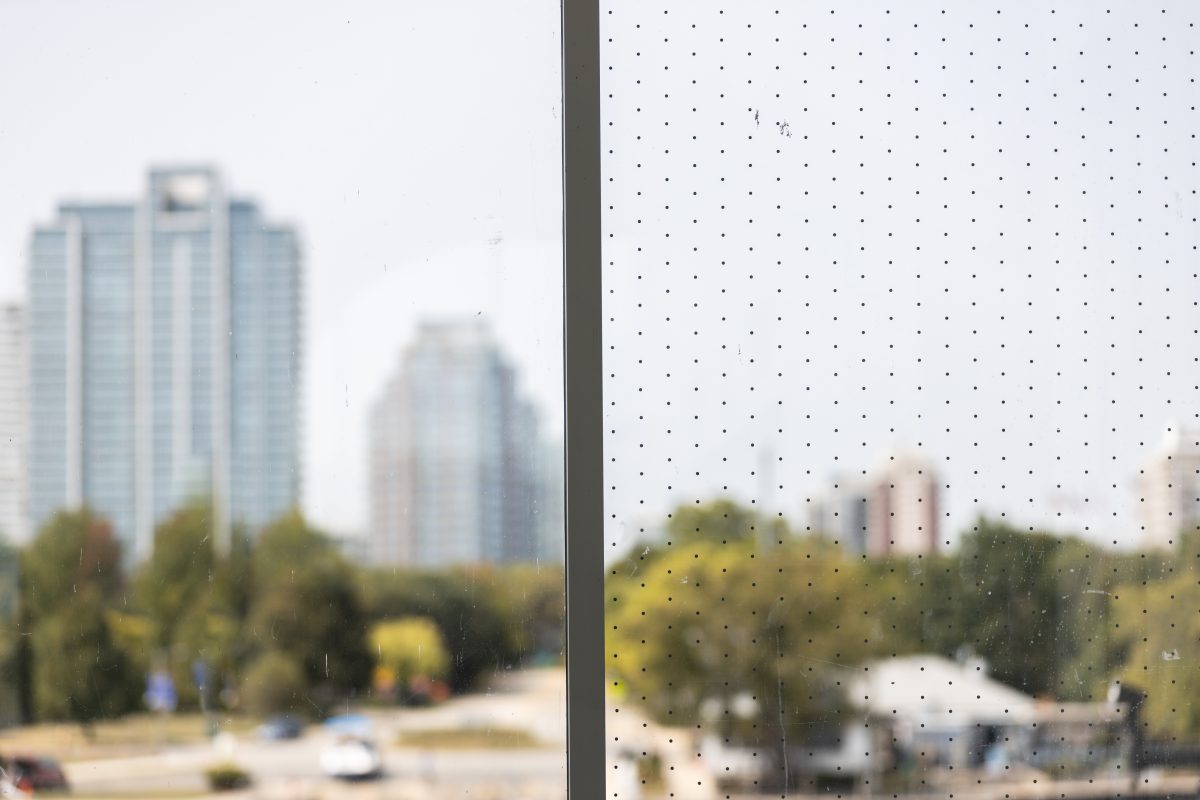
Bird-safe window film works by giving birds a visual signal that a surface is solid, either through a UV-reflective coating birds can perceive but humans generally can’t, or through a visible pattern spaced closely enough to register as a barrier. The underlying problem it solves is specific: birds don’t perceive reflective or transparent glass as an obstacle the way they perceive a solid wall, and both film mechanisms address that perceptual gap.
This mechanism is more precise than the claim that “birds see a pattern and avoid it.” The two main approaches, UV reflection and visible spacing, work through genuinely different physical principles, and understanding that distinction matters for anyone specifying film on an actual building rather than just buying a generically labeled product. What follows covers the core mechanism, how each film type actually achieves it, how film compares to bird-safe glass as a specification choice, and a detail that gets less attention than it should: whether the film goes on the interior or exterior surface of the glass.
Key Takeaways
- Bird-safe film works by giving birds a visual signal that glass is a solid surface, correcting a perceptual gap that causes collisions with reflective or transparent glass.
- UV-reflective film and visible-pattern film use genuinely different mechanisms, not just different aesthetics, to achieve that same underlying goal.
- The American Bird Conservancy’s widely cited 2×4-spacing guideline is the practical benchmark for the effectiveness of visible-pattern film.
- Film is a retrofit solution, while bird-safe glass, such as fritted or acid-etched glass, is a ground-up specification choice made during design or construction.
- Whether film is applied to the interior or exterior surface of the glass can affect how well it addresses the reflection dynamics that confuse birds.
The Short Answer
Bird-safe window film works by correcting a specific perceptual gap: birds don’t reliably register reflective or transparent glass as a solid barrier, and film addresses this either through a UV-reflective coating visible to birds but not humans, or through a visible pattern spaced closely enough to read as an obstacle.
Both approaches solve the same underlying problem through different physical mechanisms, and the specifics of each matter for real-world performance.
The Core Mechanism: Giving Birds a Visual Signal
Birds navigate largely by sight, and their visual system doesn’t reliably interpret a clear or reflective glass surface the way it interprets a solid, opaque one. A reflective window can show a mirrored image of sky or vegetation that reads as open space rather than an obstacle, and clear glass can appear to be an unobstructed path through to a visible interior or a reflection beyond it. Bird-safe film’s entire function is to break that illusion by adding a signal to the glass surface that a bird’s visual system will register as solid, regardless of the specific mechanism used to create it.
This is fundamentally a different problem from most other window film applications. Solar control film manages heat and light. Security film manages fragment retention. Bird-safe film manages a specific perceptual failure mode, one where the glass is doing exactly what it’s designed to do optically, being transparent or reflective, and that very property is what creates the hazard. The fix has to work with or around that optical property rather than eliminating it, which is why the two dominant approaches take such different technical paths to the same result.
UV-Reflective Film: How the Coating Actually Works
Many bird species see further into the ultraviolet spectrum than humans do, which is the basis for UV-reflective film’s mechanism. The coating reflects UV light in a pattern that’s visible to birds but largely imperceptible to the human eye, meaning the glass appears nearly clear to a person while still presenting a visible obstacle signal to birds. This is a genuinely different physical mechanism from a printed or etched visible pattern, since it relies on a spectral difference in perception between species rather than on differences in visual acuity or attention. The trade-off is that UV coating consistency and manufacturing quality matter significantly, since an unevenly applied coating can leave gaps in the reflective signal that a visible pattern wouldn’t.
Visible Pattern Film: The 2×4 Spacing Principle
Visible pattern film takes a more direct approach: dots, lines, or other markings applied densely enough that a bird registers the surface as blocked rather than open. The spacing of that pattern is the detail that actually determines whether it works. A widely referenced practical guideline calls for markings no more than 2 inches apart vertically and 4 inches apart horizontally, based on the smallest gap many birds will still attempt to fly through. Pattern film spaced wider than this is more likely to read as a passable gap than as a genuine barrier, which is why pattern density matters more than simply confirming a pattern exists at all.
Film vs. Bird-Safe Glass: Retrofit vs. Ground-Up Specification
 Film and bird-safe glass solve the same underlying problem at different points in a building’s lifecycle. Bird-safe glass, including fritted glass with a ceramic pattern baked into the surface or acid-etched glass with a permanently textured finish, is specified during design or construction and becomes a permanent part of the glazing unit itself. Film is fundamentally a retrofit solution applied to glass that’s already installed, making it the practical option for an existing building with a documented or anticipated collision problem where full glazing replacement isn’t part of the project scope.
According to the International Window Film Association, bird-safe glazing solutions, including film, have seen growing adoption in both new construction and retrofit projects as awareness of collision risk has increased across the industry. Neither approach is inherently better. They serve different points in a building’s decision timeline. New construction and major renovation favor glass-integrated solutions, while retrofit projects on existing buildings are where film does its most practical work.
Does It Matter Whether Film Is Applied to the Interior or Exterior?
This is a detail that gets less attention than it deserves. The reflection dynamic that confuses birds, a mirrored image of sky or landscape, occurs at the outward-facing surface of the glass. Some bird-safe film products are specifically designed and labeled for exterior application for exactly this reason: applying the treatment to the outer surface addresses the reflection where it actually occurs, rather than relying on it being visible through the glass from an interior-applied layer. This isn’t universal across every product, and installation requirements vary by manufacturer. Still, it’s a genuinely relevant technical detail worth confirming for a specific film rather than assuming interior application is always equivalent.
Verifying Which Mechanism a Specific Product Actually Uses
Because both approaches get marketed under the same general “bird-safe” label, it’s worth confirming which specific mechanism a product actually uses before specifying it for a project. A UV-reflective product should have documentation describing its coating and, ideally, some indication of manufacturing consistency, since an inconsistent UV coating is harder to visually inspect than a printed pattern. A visible-pattern product should have its specific spacing measurements available, ideally matching or exceeding the 2×4 guideline, rather than a general assurance that it’s “densely patterned.” Asking for this level of specificity is a reasonable step for any project where collision reduction is a genuine design requirement rather than an afterthought.
Comparison Table
| Approach | Mechanism | Application Point | Best Fit |
| UV-reflective film | Reflects UV light visible to birds, not humans | Retrofit, applied to existing glass | Projects prioritizing minimal visual change to the glass |
| Visible pattern film | Dense markings spaced per the 2×4 guideline | Retrofit, applied to existing glass | Projects where visible treatment is acceptable or desired |
| Fritted or etched glass | Permanent pattern integrated into the glass itself | New construction or major glazing replacement | Ground-up specification during design |
Conclusion
Bird-safe window film works by correcting a specific, well-understood perceptual gap in how birds process reflective and transparent glass, using either a UV-reflective coating or a densely spaced visible pattern to create a signal that reads as a solid barrier. The two mechanisms are genuinely different. Film is a retrofit tool distinct from ground-up glass specification, and details like exterior application can meaningfully affect real-world performance. Treating this as a specific technical mechanism rather than a generic decorative product leads to a genuinely effective installation.
Frequently Asked Questions
Is UV-reflective film or visible pattern film more effective?
Both can be effective when properly manufactured and applied. UV-reflective film offers minimal visual change, while the spacing of visible pattern film can be verified directly against the 2×4 guideline.
Can bird-safe film be added to a building after construction, or does it need to be planned from the start?
Film is specifically designed as a retrofit solution and can generally be applied to existing glass at any point, which is its main practical advantage over glass-integrated solutions.
Does the 2×4 spacing rule apply to UV-reflective film as well as visible pattern film?
The spacing guideline is specifically relevant to the density of visible pattern film. The effectiveness of UV-reflective film depends more on coating consistency and coverage than on spacing measurements.
Why would exterior application matter if the film still covers the whole window either way?
The reflection dynamic that confuses birds occurs at the outer glass surface, so treating that surface directly can address the mechanism more precisely than an interior-applied layer in some cases, depending on the specific product and glazing configuration.
Is fritted glass better than film, since it’s a permanent solution?
Not necessarily better, just suited to a different point in a project’s timeline. Fritted glass is well-suited to new construction or major glazing work, while film is the practical choice for retrofitting existing buildings.
Does bird-safe film work on tinted or coated glass, or only clear glass?
It’s generally applicable to most standard glass types, though highly reflective, tinted, or specialty-coated glass may benefit from a compatibility check before installation.
How is bird-safe film different from standard privacy or decorative film?
Standard decorative film isn’t engineered or tested for the specific UV reflection or spacing requirements that make bird-safe film effective, so you shouldn’t assume it provides the same collision-reduction function.
Who typically specifies bird-safe film versus bird-safe glass on a project?
Architects and designers often specify glass-integrated solutions during new construction, while facilities managers and building owners more commonly turn to film for retrofitting existing buildings with a known or suspected collision issue.
What documentation should I ask for before specifying a bird-safe film product?
For UV-reflective film, ask about coating consistency and manufacturing quality control. For pattern film, ask for the specific spacing measurements rather than a general density claim.
Does bird-safe film need to be reapplied over time, or is it a one-time installation?
Quality film is designed for long-term outdoor durability, though periodic inspection is advisable to confirm that the coating or pattern hasn’t degraded in a way that would compromise its collision-reduction function.
Considering Bird-Safe Film for a Retrofit Project?
Whether you’re addressing a documented collision issue on an existing building or evaluating options during a renovation, understanding the specific mechanism behind a product matters more than a general “bird-safe” label.
Contact MGT to discuss your project’s specific glazing and collision-risk considerations.