
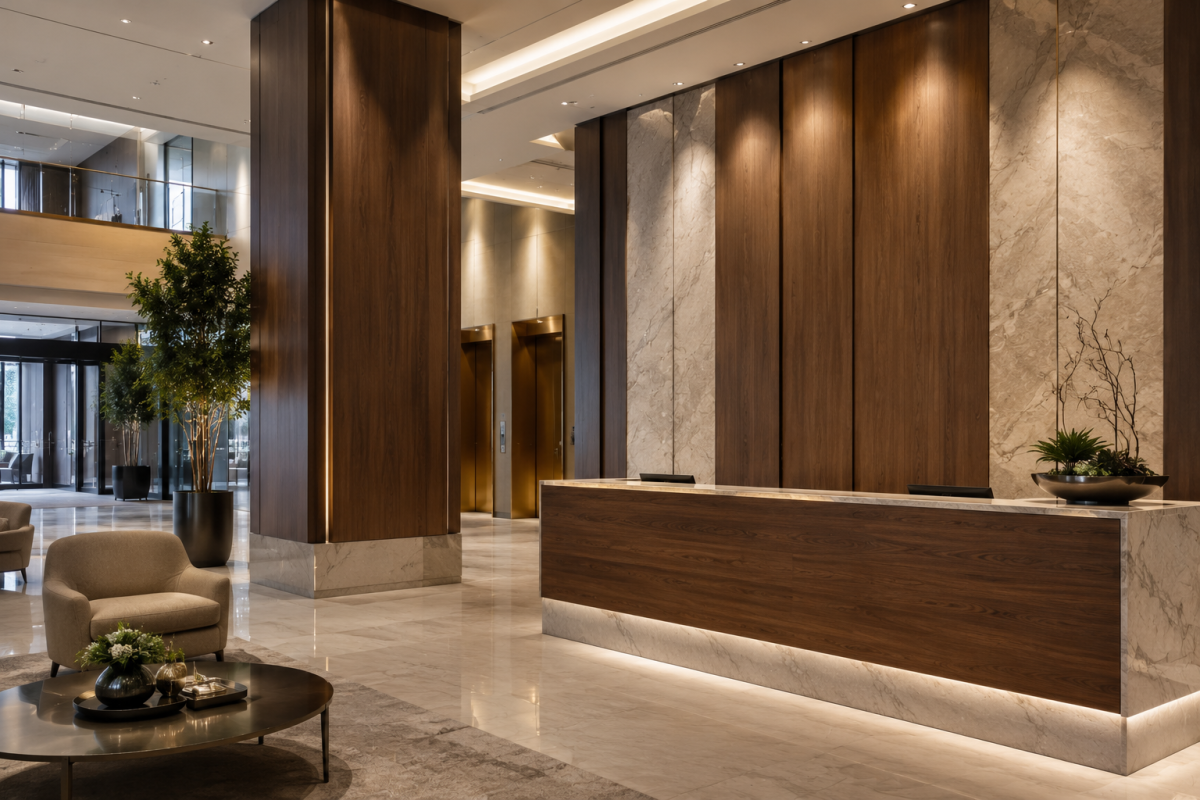
Architectural resurfacing for Jackson, MS, hotels is one of the most practical tools available to ownership groups and asset managers navigating brand-mandated property improvement plans. Instead of gutting lobbies, replacing millwork, and taking rooms offline for weeks, resurfacing applies high-performance architectural film directly to existing surfaces, delivering the brand-standard visual refresh at a fraction of the demolition cost and in a fraction of the time.
MGT Glass Solutions provides architectural resurfacing for hotels and hospitality properties throughout Jackson and surrounding areas, including Ridgeland, Madison, Brandon, Pearl, and Flowood. Whether the project is a full PIP compliance refresh or a targeted lobby and corridor update, we deliver installations built for the occupancy demands and brand documentation requirements of the hospitality industry.
The CapEx Case for Resurfacing in Hotel PIPs
Property improvement plans are a recurring pressure point for franchised hotel ownership in Jackson. Brand flags issues with PIPs on a scheduled cycle, and the compliance list typically includes surface finishes, millwork, lobby elements, and corridor treatments that read as dated relative to current brand prototype standards. The traditional path to compliance is demolition and replacement, which means construction crews, revenue displacement, and capital expenditures that can run well into six figures for a mid-size property.
Architectural resurfacing meaningfully changes the financial model of PIP compliance, rather than removing and replacing a surface; resurfacing bonds a precision-engineered architectural film directly to the existing substrate. The result matches the target finish specified in the brand’s current prototype standards, whether that is brushed metal, wood grain, stone, concrete, or a solid-color treatment, without the demolition cost, debris removal, extended timeline, or revenue disruption that full replacement creates.
For Jackson hotel owners operating under tight NOI targets, the CapEx difference between a demolition-based PIP and a resurfacing-based PIP can be significant enough to affect the decision to hold or sell an asset. Ownership groups that have undergone a resurfacing-assisted PIP rarely return to the traditional approach for surface-level compliance items.
What Surfaces Can Be Resurfaced
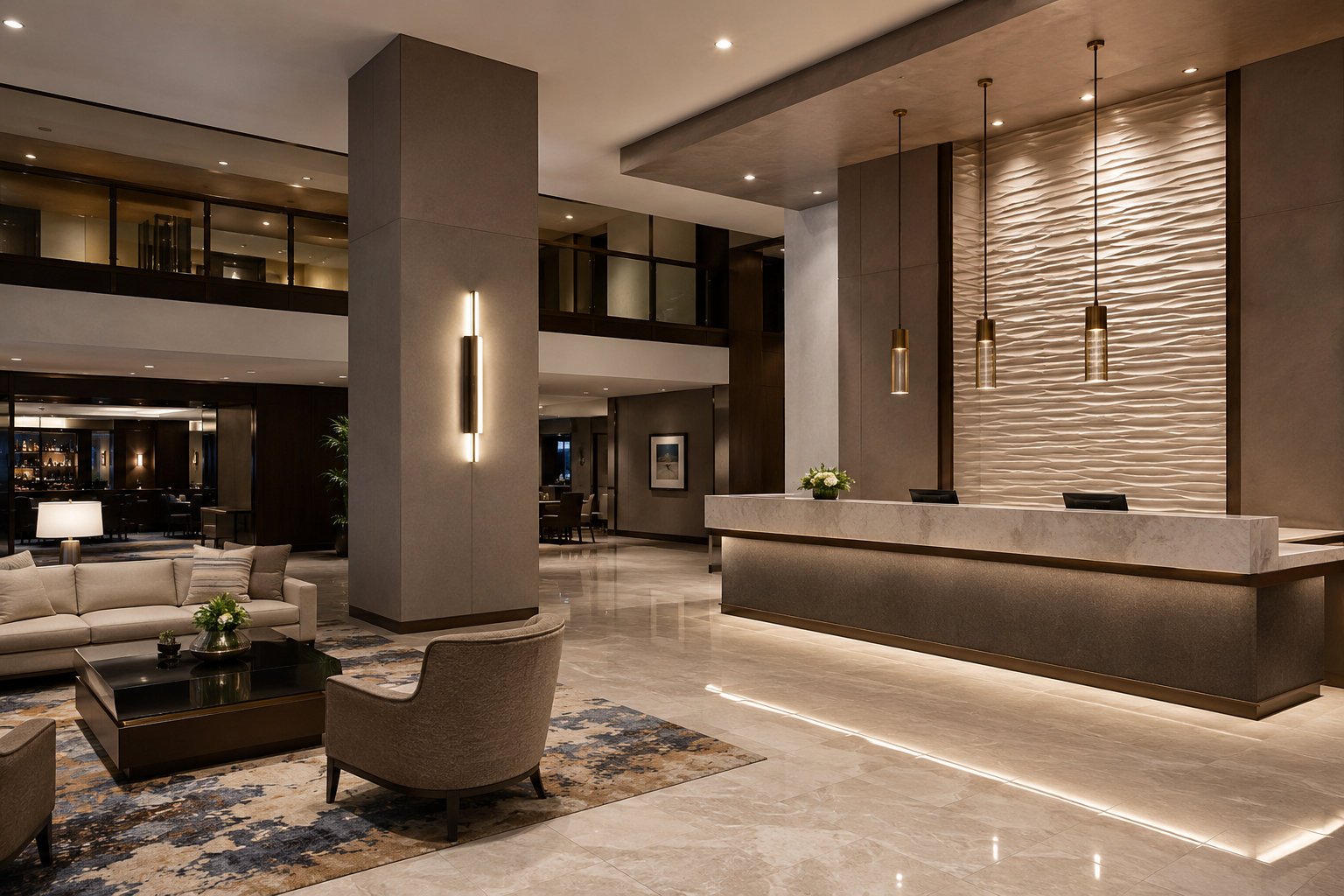 Architectural resurfacing is appropriate for a wide range of hotel surfaces across public areas, back-of-house corridors, and guest rooms. Understanding what can be resurfaced helps ownership and asset management teams identify where the approach delivers the highest value in a PIP scope.
Lobby and Reception Surfaces
Front desk fascias, column wraps, accent walls, and lobby millwork are among the highest-visibility surfaces in any hotel and among the most frequently cited in PIP documents. Resurfacing these elements with wood grain, stone, or metallic film delivers the updated look the brand standard requires without removing and rebuilding the underlying structure.
Corridor Walls and Door Faces
Guest room corridor walls and door faces are high-traffic surfaces that show wear quickly and are frequently flagged in brand inspections. Architectural film applied to corridor wall panels and door faces refreshes the entire floor without painting crews, drywall work, or the smell and drying time that paint-based refreshes require in an occupied building.
Elevator Cabs and Lobbies
Elevator cabs are among the most impactful opportunities for resurfacing in a hotel because every guest interacts with them multiple times during a stay. Stainless steel, wood grain, and brushed aluminum finishes applied to existing cab panels transform a dated elevator interior in a single day per cab without removing the cab from service for an extended period.
Food and Beverage Outlets
Bar fronts, host stands, booth backs, and millwork in hotel food-and-beverage outlets are high-priority PIP items for full-service properties. Resurfacing these surfaces with current brand-standard finishes keeps the outlet consistent with the broader property refresh, without the extended construction period that a full F&B renovation would require.
Back-of-House and Service Areas
Resurfacing is also appropriate for back-of-house surfaces, including service corridors, laundry room panels, and staff areas where surface condition affects employee environment and periodic brand inspection results.
Brand Standard Finishes and Di-Noc Options
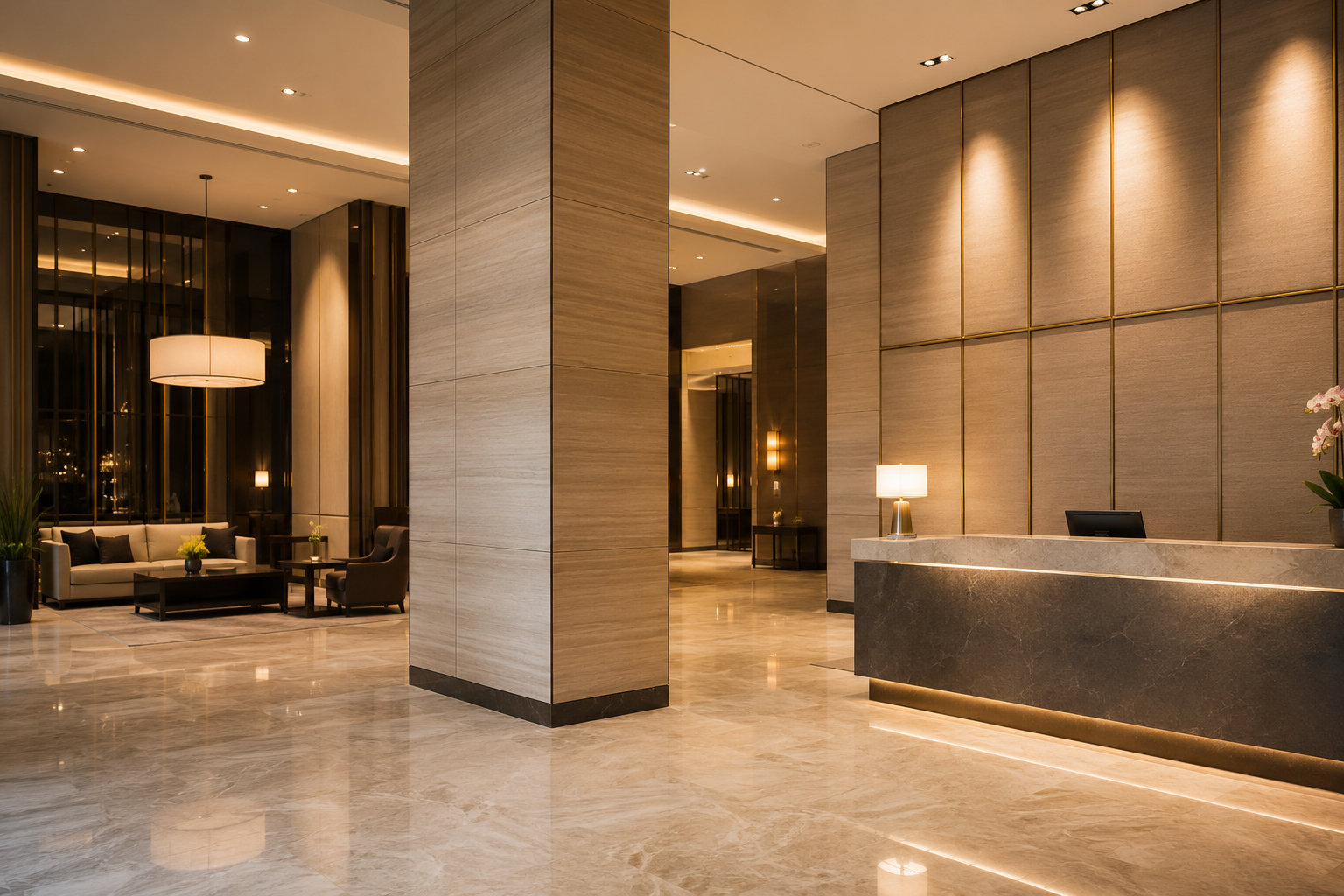 The finish library available through architectural resurfacing is broad enough to address virtually any brand-standard specification that a Jackson hotel property is likely to encounter in a PIP document. 3M Di-Noc architectural film, the most widely specified product in the category, is available in over 1,000 SKUs, covering wood grain, stone, metal, textile, abstract, and solid-color finishes, with varying gloss levels and surface textures.
For a detailed overview of what Di-Noc film is, how it is manufactured, and what applications it is suited for, our complete guide to Di-Noc films covers the product in depth. It is worth reviewing before entering a PIP specification conversation with your brand representative.
Brand compliance documentation for resurfacing projects is an area where MGT Glass Solutions has direct experience. We provide product data sheets, finish sample submissions, and installation documentation formatted for brand review processes. Ownership groups submitting a resurfacing-based PIP compliance plan to a flag brand benefit from having contractor documentation that speaks the brand’s specification language, not just a product name.
Decorative window film is a complementary product for hotel properties that need frosted or patterned treatments on interior glass partitions, conference room glazing, or lobby glass elements as part of the same PIP scope. Commercial window tinting can also be incorporated for exterior-facing glass where solar control is part of the renovation objective.
Room Downtime vs. Full Renovation
The revenue displacement calculation is where resurfacing makes its most compelling case for Jackson hotel operators. A full demolition-based PIP on a corridor floor typically takes the floor out of inventory for 2 to 4 weeks, depending on the scope and the contractor’s pace. Multiply that across multiple floors, and the revenue displacement becomes a significant factor in the total project cost that rarely appears in the initial contractor quote.
Architectural resurfacing on the same corridor floor is typically completed in two to four days. A single elevator cab resurface takes one day per cab. A lobby desk fascia and column wrap project in a working hotel lobby runs one to two days, with the crew working around the property’s check-in and check-out traffic patterns.
For guest room applications, resurfacing allows individual rooms to be turned around in a single day for surface-level updates, rather than taking a room block offline for a week-long renovation cycle. An ownership group managing a 150-room property through a PIP can phase in room-level resurfacing work, room by room, during normal out-of-service rotation without pulling a full block from inventory at any point in the project.
MGT Glass Solutions structures all hotel project schedules around the property’s occupancy calendar. We work directly with the general manager and director of rooms to identify low-occupancy windows, phase installation by floor or zone, and confirm daily crew access protocols before the project begins.
Getting Started on a Jackson Hospitality Project
The starting point for any Jackson hotel resurfacing project is a surface-level assessment of the PIP scope and a conversation about which items are candidates for resurfacing versus which genuinely require replacement. Not every PIP item is a resurfacing candidate, and honest scope definition up front produces better outcomes than committing to a resurfacing approach for surfaces where it is not the right solution.
MGT Glass Solutions conducts hospitality assessments for hotels and lodging properties throughout Jackson and the surrounding area, including Ridgeland, Madison, Brandon, Pearl, and Flowood. The assessment covers your full PIP surface list, finish specifications that match your brand’s current standards, room downtime estimates by phase, and a written project scope with pricing, all of which can be submitted alongside your PIP compliance documentation.
Contact MGT Glass Solutions today to schedule your Jackson hotel assessment and get a scope that addresses your PIP requirements, protects your revenue, and delivers brand-standard results without a full demolition budget.
Frequently Asked Questions
Does resurfacing meet the standards of flagship hotel brands?
Architectural resurfacing using 3M Di-Noc and comparable commercial-grade architectural films has been accepted in PIP compliance submissions for major hotel flag brands. The key to brand acceptance is documentation: product data sheets, finish samples that match the specified prototype standard, and installation records from a qualified contractor. MGT Glass Solutions provides full compliance documentation packages for hotel resurfacing projects, including finish sample submissions formatted for brand review. Whether a specific brand accepts resurfacing for a given surface type depends on the brand’s current PIP guidelines and the property’s relationship with its brand representative. We recommend confirming acceptability with your brand contact before finalizing the project scope.
How fast can a floor be turned around?
A typical guest room corridor floor receiving resurfacing on wall panels, door faces, and millwork elements can be completed in two to four days, depending on corridor length and surface complexity. This compares to two to four weeks for a demolition-based corridor renovation covering the same scope. Individual guest rooms receiving surface-level resurfacing on millwork, headboard walls, and case goods can typically be turned around in one day per room, allowing a property to phase room updates through normal out-of-service rotation without pulling a full block from inventory.
Can this be used in guest rooms, not just public areas?
Yes. Architectural resurfacing is appropriate for guest-room applications, including headboard accent walls, case-goods surfaces, bathroom vanity faces, closet door panels, and millwork elements. Guest room applications follow the same single-day turnaround model, allowing properties to phase in room-level updates through normal maintenance rotation. For properties with a high mix of room types, resurfacing can also be used to standardize the visual appearance of rooms built or renovated in different eras, aligning them with the current brand standard without a full room renovation.
What is the lifespan of architectural film in a hotel environment?
Commercial-grade architectural film for hotel interior applications is typically rated for 7 to 12 years under normal use conditions. Lifespan varies by surface type, traffic level, cleaning protocol, and whether the film is applied in a public area, a guest room, or a service corridor. High-traffic public-area surfaces, such as elevator cabs and front-desk fascias, experience greater wear than guest-room millwork and may be at the lower end of the lifespan range under heavy use. MGT Glass Solutions specifies film products appropriate to the wear level of each surface type and provides care and maintenance guidelines with every hospitality installation to support maximum film lifespan.