
Springfield, IL, has a glass problem. The state capitol district, Old State Capitol Plaza, and the stretches of 5th and 6th Street lined with storefronts see consistent graffiti, acid etching, and paint tagging year after year. For building operations managers, state facility directors, and downtown business owners, the recurring cost of glass repair and replacement is a budget line that never goes away until the right solution is in place.
Anti-graffiti window film installations in Springfield, IL, give property owners a proven way to permanently protect glass and reduce long-term vandalism costs to almost nothing. This guide covers how it works, what it protects against, where it makes the most sense across Springfield, and how to get a quote for your property.
The True Cost of Graffiti on Glass in Downtown Springfield
Most property owners underestimate what graffiti on glass actually costs them. The visible spray paint or etching is only the starting point. Factor in:
- Emergency glass replacement for acid-etched or deeply scratched panes
- Labor for chemical cleaning of painted or marked surfaces
- Repeat incidents at the same location once a building is targeted
- Downtime for storefronts during repair windows
- Insurance claims and potential premium increases after repeated vandalism
In high-traffic corridors such as South 6th Street and Capitol Avenue, and in areas surrounding the Illinois State Capitol building, tagged glass is not a one-time event. State facilities, courthouses, transit shelters, and retail storefronts in these zones are prime repeat targets. Replacing a single pane of tempered or specialty glass can cost several hundred to several thousand dollars. Multiplied across multiple incidents per year, the math adds up fast.
Springfield storefront graffiti protection through sacrificial film changes the cost structure entirely. Instead of replacing glass, you replace film at a fraction of the price.
How Sacrificial Anti-Graffiti Film Works
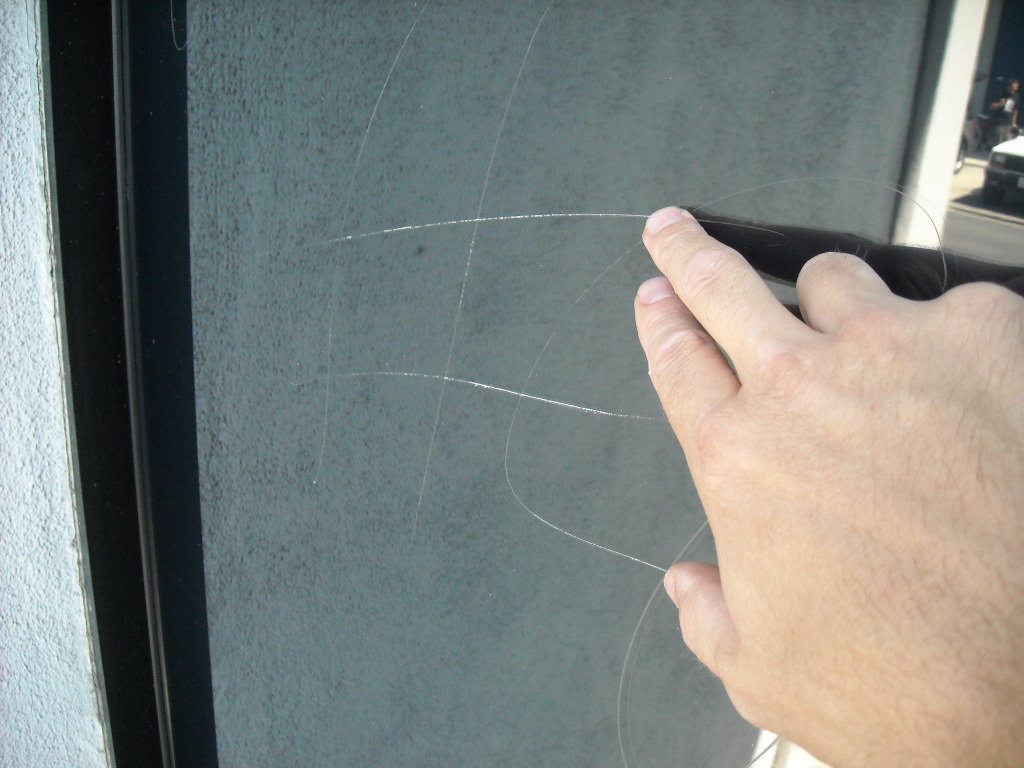
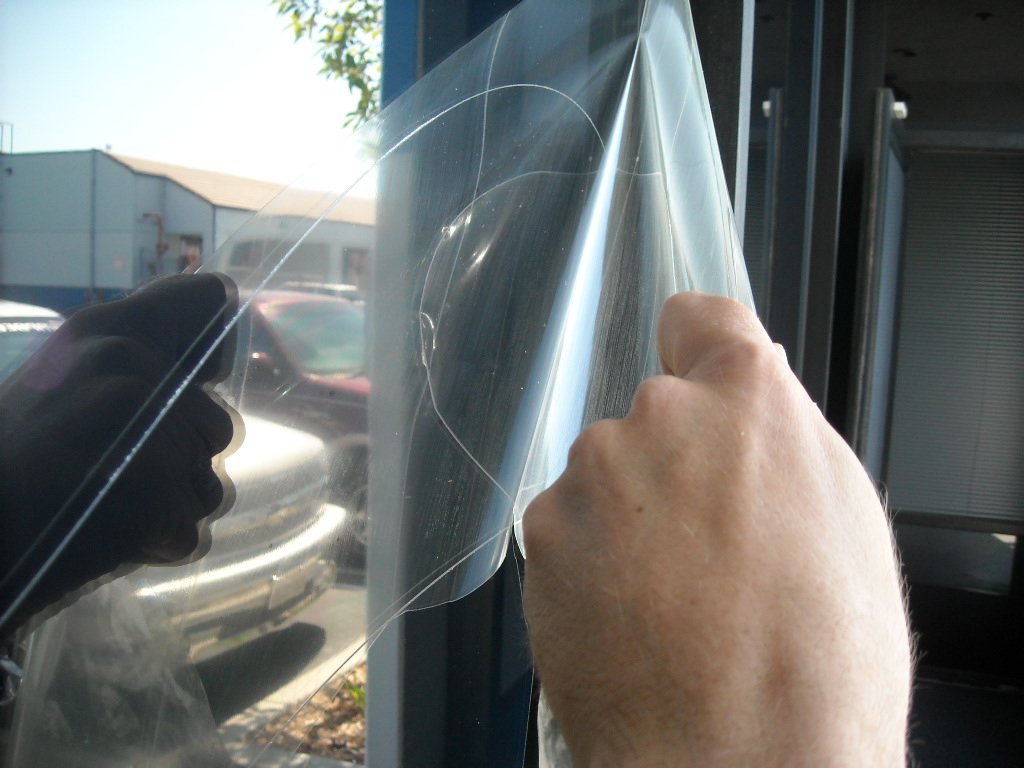
The term “sacrificial” is exactly what it sounds like. Anti-graffiti film is a clear, optically transparent polyester layer applied directly to the interior or exterior glass surface. When vandals spray paint, etch, scratch, or mark the glass, they damage the film, not the glass underneath.
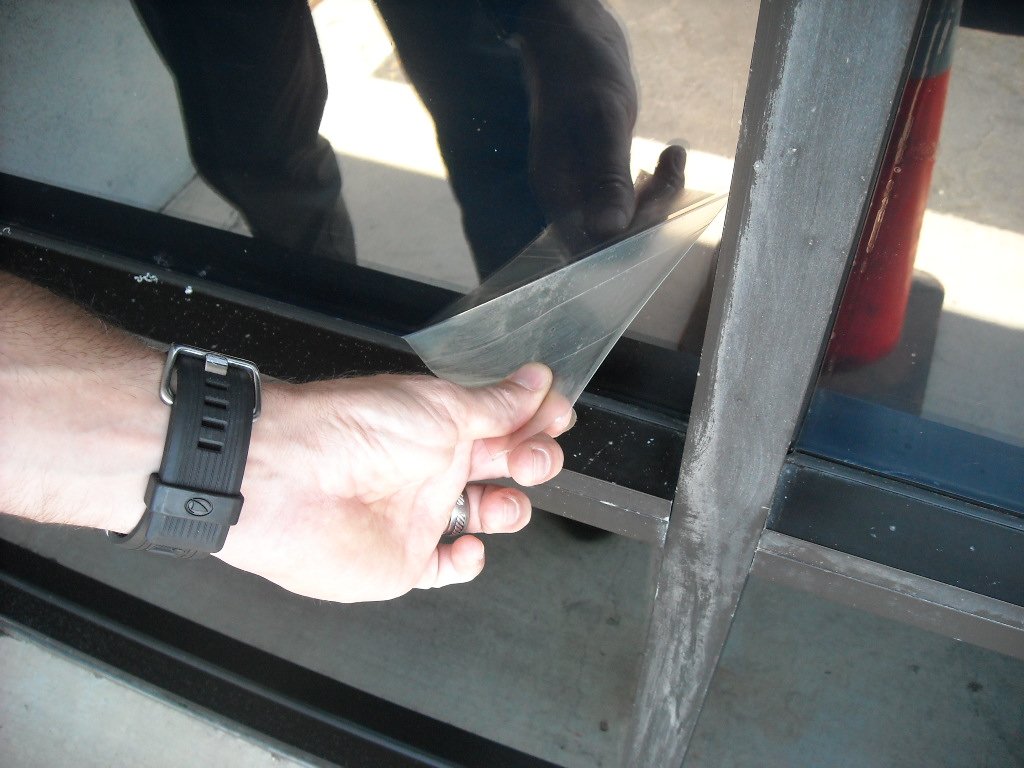
Once vandalized, the damaged film is peeled off, and a fresh layer is applied. The glass beneath remains fully intact. This is the sacrificial cycle, and it is what makes commercial window film for graffiti protection in Springfield, IL, such an economical long-term investment.
The film itself is:
- Optically clear with no visible tint or haze under normal conditions
- Applied in sheets sized to the glass pane
- Bonded with a pressure-sensitive adhesive that holds firmly but allows clean removal
- UV-stable, so it does not yellow or degrade from sun exposure
- Available in different thicknesses depending on the level of protection needed
For a more detailed technical breakdown, see our complete guide to anti-graffiti film.
Scratch, Etch, and Paint – What It Protects Against
Not all graffiti is spray paint. In urban commercial and government settings, the most destructive and expensive forms of vandalism involve physical damage to the glass surface itself. Anti-graffiti film handles all of the following:
Acid and chemical etching: This is the most costly type of glass vandalism. Vandals use acid-based compounds to permanently etch patterns, tags, or markings directly into the glass. On unprotected glass, the damage is irreversible. On film-protected glass, only the film is etched. Peel and replace.
Mechanical scratching: Keys, coins, nails, and diamond-tipped scribes are commonly used to scratch tags into glass. Film absorbs these scratches and protects the glass beneath.
Spray paint and paint markers: Standard graffiti. Film-protected surfaces can be cleaned in some cases, and in others, the film is simply replaced. Either way, the glass is preserved.
Stickers and adhesive vandalism: Stickers, labels, and adhesive tagging strips cleanly come off film without leaving residue or damaging the glass surface.
The state capitol area graffiti film applications we install are sized and specified to address all four of these threat types, depending on the facility and risk profile.
Where It Makes the Most Sense in Springfield
 Not every piece of glass in Springfield is a graffiti target, but certain property types and locations carry substantially higher risk. Anti-graffiti film delivers the strongest ROI in the following settings:
State and government facilities: The Illinois State Capitol, surrounding office buildings, the Stratton Building, and courthouses along Capitol Avenue are subject to ongoing tagging and etching. Facility managers at these properties deal with vandalism-related maintenance calls on a recurring basis. Film installations across these facades reduce reactive maintenance costs and protect historically significant glass.
Downtown retail storefronts: The 5th and 6th Street retail corridors, Old Capitol Plaza retail, and storefronts near the UIS Springfield campus experience consistent foot traffic and, with it, higher exposure to vandalism. Retailers who have experienced repeat incidents are strong candidates for a full storefront film application.
Transit infrastructure: Bus shelters, station enclosures, and transit-adjacent commercial glass are among the most frequently vandalized surfaces in any urban area. Thin sacrificial film on shelter glass is standard practice in higher-volume transit settings.
Restaurants and bars with street-level glass: Late-night vandalism is common near entertainment and dining districts. Film gives these owners a fast, affordable recovery path after incidents.
Parking structures and garages: Multi-level structures with glass panels, stairwell enclosures, and lobby glass are frequently overlooked but commonly targeted.
For more on protecting commercial storefronts specifically, see our post on protecting storefronts with anti-graffiti film.
Replacement Lifecycle and Cost Math
One of the most common questions from facility managers and building operations teams is: how often does the film actually need to be replaced, and what does that cost over time?
The honest answer depends on how often you vandalize. Here is a straightforward framework:
Unprotected glass replacement cost: A standard commercial pane runs $200 to $800 or more, depending on size and glass type. Specialty glass, historic glass, or large-format panels can run significantly higher. This does not include labor, downtime, or emergency call-out fees.
Film replacement cost: A sacrificial film replacement on a standard commercial pane typically costs $50 to $150, including labor. The glass underneath is untouched.
At just one incident per year, film pays for itself. At two or more incidents per year — which is common in high-risk Springfield corridors — the savings are substantial.
Initial film installation cost varies by property size, glass type, and number of panes. MGT Glass Solutions provides site-specific quotes based on a walkthrough. Most commercial storefront installations are completed in a single day with no business disruption.
Film also does not need to be replaced on a calendar schedule. It is replaced as needed after vandalism. Undamaged film continues performing indefinitely without replacement.
Pairing anti-graffiti film with commercial window tinting is a common upgrade for storefronts that want both graffiti protection and solar control in a single installation.
Get a Springfield Quote
MGT Glass Solutions installs anti-graffiti window film for government facilities, commercial storefronts, and mixed-use properties throughout Springfield and the surrounding Central Illinois region. We work directly with building operations teams, state facility managers, property management companies, and independent business owners.
To get a quote for your Springfield location, contact us for a no-obligation site assessment. We will evaluate your glass exposure and vandalism history, and recommend the right film specification and installation approach for your property type.
Frequently Asked Questions
How is anti-graffiti film different from regular window film?
Standard window film is designed for solar control, privacy, or safety. It is a permanent or semi-permanent installation. Anti-graffiti film is specifically engineered as a sacrificial layer – it is meant to be damaged and replaced. The film is optically clear, does not affect solar performance on its own, and is bonded with an adhesive that allows clean removal without damaging the glass. Regular window film is not designed to be peeled off repeatedly.
How quickly can film be replaced after vandalism?
In most cases, same-day or next-day service is available for Springfield properties. The removal and reapplication process for a standard commercial pane takes under an hour. Larger installations with multiple affected panes may require a half-day appointment. The glass is fully protected and presentable immediately after the new film is applied.
Does anti-graffiti film affect how the glass looks?
When properly installed, anti-graffiti film is optically clear and nearly invisible. There is no tint, haze, or visible texture under normal viewing conditions. Some slight surface sheen may be visible at very acute angles or under direct raking light, but for practical purposes, the glass appearance is unchanged. Display windows, retail storefronts, and architectural glass all maintain their intended appearance after installation.
Can it be combined with solar or security film?
Yes. Anti-graffiti film can be layered with solar control film or installed over existing safety and security film. In a combined installation, the solar or security film is first applied to the glass as a permanent layer, with the sacrificial anti-graffiti film on top as the outermost surface. When the top layer is vandalized and replaced, the underlying solar or security film is unaffected. This is a common configuration for storefronts that need multiple performance benefits from a single window system.