
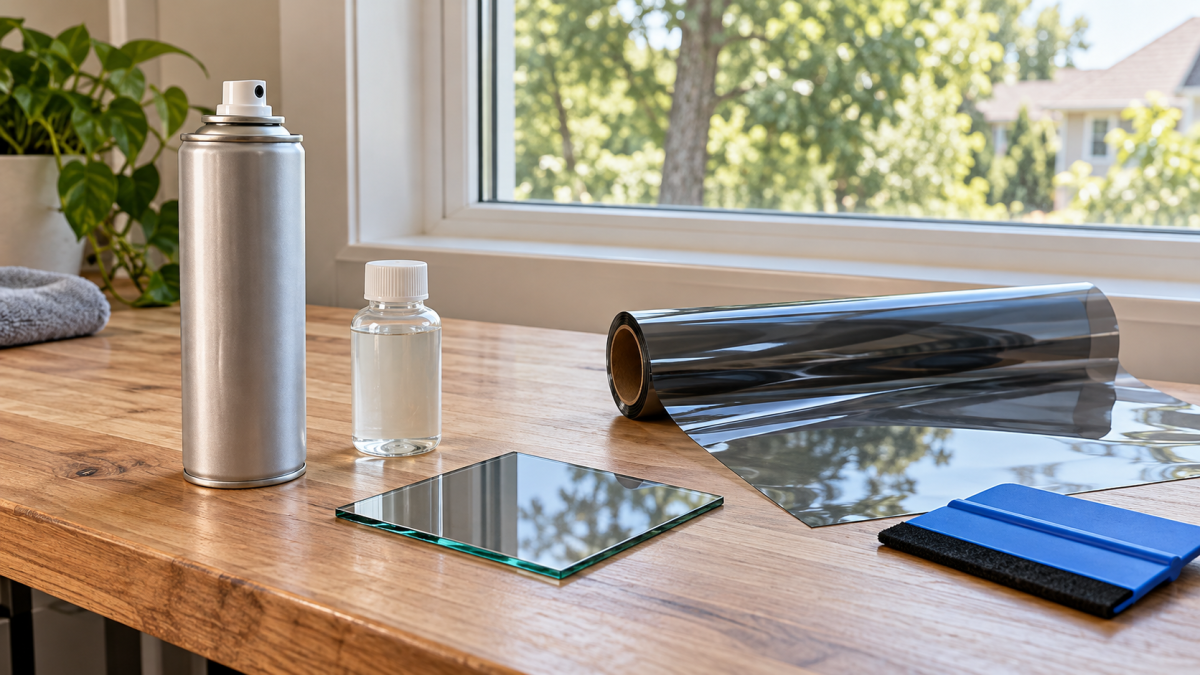
Yes, spray-on and liquid window tint products genuinely exist and are sold, primarily marketed toward DIY users looking for a lower-cost, easier-to-apply alternative to professional film. That’s the honest, straightforward answer. What matters more is understanding how differently these products actually perform compared to professional film, since the gap between the two is significant enough to shape whether a spray or liquid option makes sense for your specific situation.
Below is what these products actually are, how they compare to professional film on the factors that matter, and the limited situations where a spray or liquid option might reasonably fit.
Key Takeaways
- Spray-on and liquid window tint products genuinely exist and are sold, typically marketed as a DIY-friendly, lower-cost alternative to professional film.
- These products generally perform significantly worse than professional film in durability, application evenness, and consistent UV and heat rejection.
- Uneven application is common with spray and liquid products because achieving consistent coverage without professional equipment and technique is genuinely difficult.
- Professional film uses an engineered, multi-layer construction that spray-on products don’t replicate, which is the core reason for the performance gap.
- A spray or liquid product may fit a very low-stakes, temporary, or non-critical use case, but it isn’t a true substitute for professional film in most situations.
The Short Answer
Yes, spray-on and liquid window tint products exist and are sold, but they generally perform significantly worse than professional film in durability, application evenness, and consistent UV and heat rejection.
They’re better understood as a distinct, lower-performance product category than as a real substitute for professional film in most situations.
What Spray-On Tint Products Actually Are
Spray-on and liquid window tint products are typically liquid solutions applied directly to the glass surface, either sprayed or wiped on, intended to add some tinting, UV blocking, or heat reduction without the multi-layer construction of professional film. These products are generally marketed toward DIY users because they don’t require the precision cutting, positioning, and squeegee technique involved in professional film installation. This ease of application is a genuine selling point for some buyers, though it comes with real trade-offs in the finished result.
Formulations vary by product, with some using tinted polymer coatings and others incorporating UV-absorbing compounds in a liquid carrier. Regardless of the specific formulation, the fundamental application method- applying a liquid to glass by hand rather than positioning a precisely manufactured film sheet- creates most of the performance and consistency challenges these products face compared to professional film.
How Spray-On Tint Compares to Professional Film
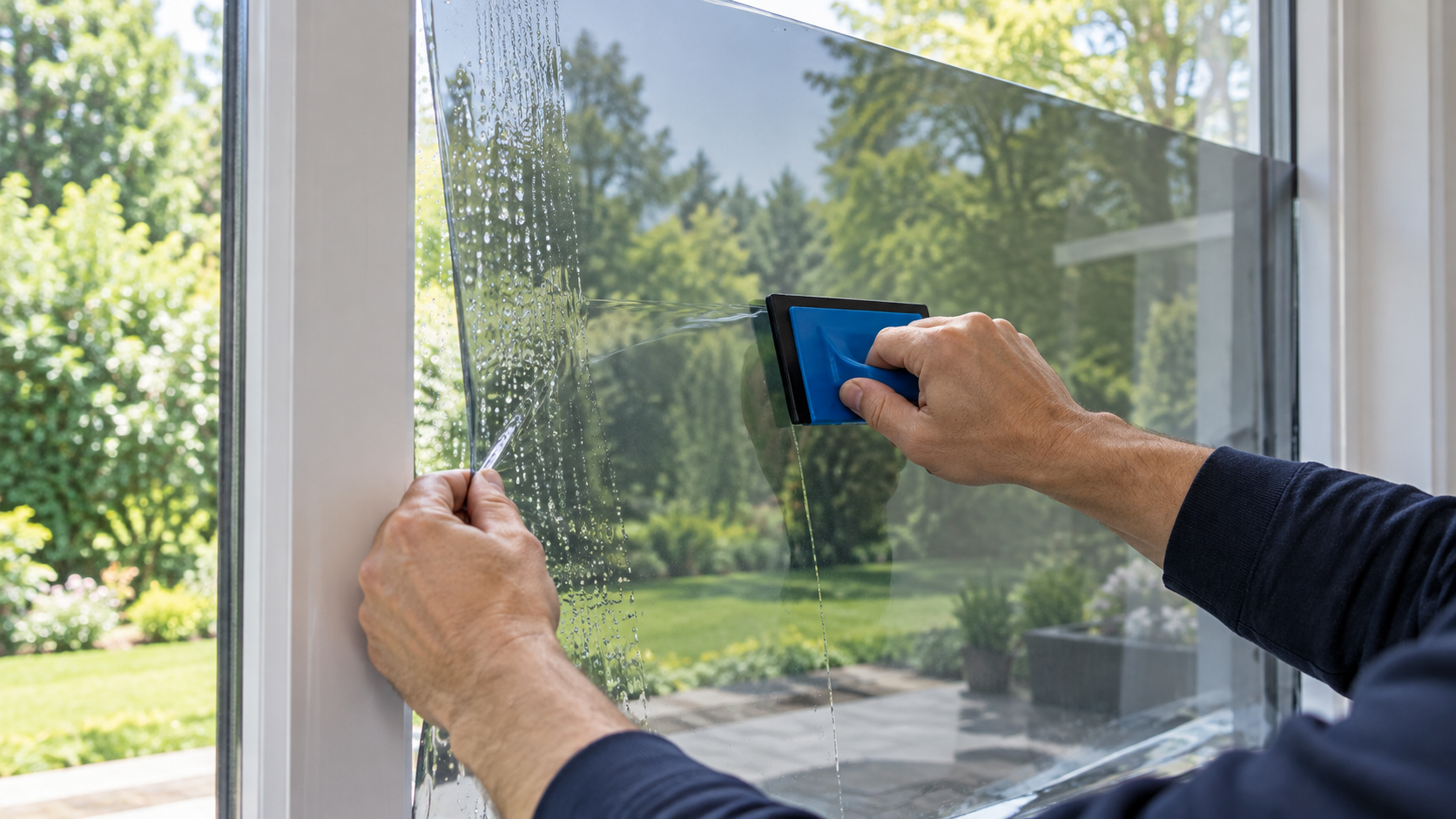 Professional window film, like our 3M solar window film products, is manufactured as an engineered, multi-layer product, with a stable base material, a functional layer specifically formulated for consistent performance, and a protective coating, all produced under controlled manufacturing conditions. A spray or liquid product doesn’t replicate this layered construction, which shows up directly in real-world performance.
Window Film Pros notes that DIY spray and liquid tint products often struggle to achieve the same consistent UV rejection and heat performance as manufactured film, largely because a hand-applied liquid coating is inherently harder to apply with uniform thickness and coverage than a precisely manufactured film sheet. Durability is another major gap, since spray and liquid coatings tend to degrade, streak, or wear unevenly over time in ways that quality professional film, properly installed, generally does not.
Why Professionals Generally Don’t Recommend Spray-On as a Film Substitute
Professional installers generally don’t recommend spray or liquid products as a substitute for film because the performance gap is significant enough to undermine the main reasons someone chooses tinting in the first place. If the goal is meaningful heat reduction or UV protection, an inconsistently applied liquid coating is unlikely to deliver comparable, reliable results across an entire window. If the goal is a clean, professional appearance, uneven application is a common, visible issue with these products, unlike correctly installed film. This isn’t professional bias against a competing product category. It reflects a genuine, well-understood difference in what each product can deliver.
When a Spray or Liquid Product Might Make Sense
Limited situations exist where a spray or liquid product’s lower cost and easier application might reasonably outweigh its performance limitations. One example is a very short-term, temporary application where long-term durability and consistent performance aren’t priorities. Another example is a low-stakes DIY project where the outcome isn’t critical and a homeowner is comfortable with an uneven or lower-performing result.
For a broader look at how DIY and professional approaches compare across different film categories, see our breakdown of DIY versus professional window tinting. For most situations where genuine, lasting heat reduction, UV protection, or a clean, professional finish matters, professional film remains the more reliable choice, even with its higher upfront cost and more involved installation process.
Why This Question Comes Up So Often
Part of why people search for a spray-on alternative comes down to a reasonable assumption: if spray paint and other coatings can be applied by hand, why would window tinting be any different? The answer depends on what the film is actually being asked to do. Beyond adding color, quality window film must deliver consistent, measurable performance across an entire pane of glass, reliably block UV radiation, manage heat transfer predictably, and withstand years of sun exposure and cleaning without degrading. That combination of requirements is much harder to achieve with a hand-applied liquid than with a manufactured film sheet, which is why the tinting industry has largely settled on film as the standard despite it requiring more specialized installation.
Comparison Table
| Factor | Spray-On or Liquid Tint | Professional Film |
| Application evenness | Often inconsistent, dependent on manual technique | Consistent, precisely manufactured |
| UV and heat rejection | Variable, generally lower and less consistent | Engineered for reliable, documented performance |
| Durability | Prone to streaking or degrading faster over time | Designed for long-term durability when properly installed |
| Cost and ease of application | Lower cost, DIY-friendly | Higher cost, typically professionally installed |
Conclusion
 Spray-on and liquid window tint products are a genuine, purchasable product category, not a myth or a marketing fiction, but they perform meaningfully differently from professional film. The gap shows up most clearly in application evenness, durability, and how consistently they actually reduce heat and UV exposure. For most situations where real, lasting performance matters, professional film remains the more reliable option, while a spray or liquid product might reasonably fit a genuinely low-stakes or temporary use case.
Frequently Asked Questions
Are spray-on tint products actually illegal or fake?
No, they’re a real, legitimate product category that’s legally sold, though they perform quite differently from professional film in terms of durability and consistency.
Can spray-on tint provide any real UV protection?
It can reduce UV, but that protection is generally less reliable and consistent than properly manufactured and installed professional film.
Why does spray-on tint often look uneven after application?
Achieving consistent thickness and coverage by hand is genuinely difficult without professional equipment and technique, so uneven application is common with these products.
Is spray-on tint a good temporary option before a professional installation?
It’s usually not necessary as a stopgap, since most professional installations can be scheduled directly without an interim solution.
Does spray-on tint damage the glass if I want to remove it later?
This depends on the specific product, so check the manufacturer’s removal instructions before applying it if you’re concerned about future removal.
How long does spray-on tint typically last compared to film?
Spray and liquid products generally last less than professional film and often show visible wear, streaking, or reduced performance well before quality film would.
Is there ever a case where spray-on tint outperforms film?
Its main advantages are lower cost and easier DIY application, not performance, so it doesn’t generally outperform film on the factors most people care about, like durability and consistent results.
Should I try a small test area before applying spray-on tint to a full window?
Yes, testing a small area first is a reasonable way to see how the specific product actually looks and performs on your glass before committing to a larger application.
Why hasn’t spray-on tint technology improved enough to match film?
The core challenge is achieving film-level consistency and durability through a hand-applied liquid process, which is fundamentally different from precisely produced film, not simply a matter of better formulations over time.
Can I combine a spray-on product with professional film for extra protection?
This isn’t a common or generally recommended practice, since professional film is already engineered to deliver the performance most people want without needing a supplementary product layered on top.
Considering Your Real Options for Window Tinting?
If lasting performance and a clean, professional result matter for your project, professional film is generally the more reliable choice.
Contact MGT to discuss what fits your goals and budget.