
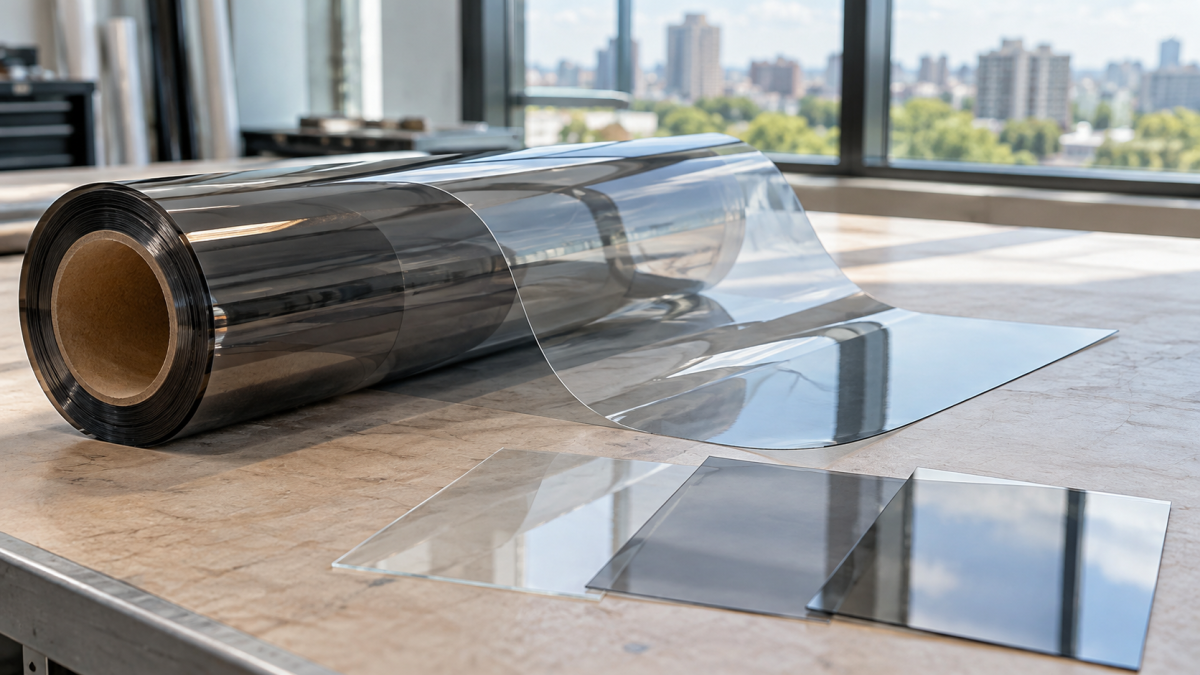
Window tint isn’t a single material stretched over glass. It’s a carefully engineered, multi-layer product, typically made of a polyester base, a functional layer that delivers the film’s specific performance, an adhesive that bonds it to the glass, and a protective coating on the exposed surface. Each layer serves a distinct physical role, and understanding its composition explains why product quality varies so much.
Below is a breakdown of each layer, the materials involved, and how manufacturing quality at each stage affects the finished film’s performance and long-term durability.
Key Takeaways
- Window tint is a multi-layer product, typically including a base substrate, a functional layer, an adhesive layer, and a protective top coating.
- Polyester film, known for its clarity and dimensional stability, is the standard base material across most window film products.
- The functional layer’s materials vary by window film category and the performance the product is designed to deliver.
- A scratch-resistant hard coat on the exposed surface protects the film from everyday wear and cleaning.
- Manufacturing consistency at each layer, not just the raw materials, affects how well the finished film performs and lasts.
The Short Answer
Window tint typically has four main components: a polyester base layer, a functional layer that determines the film’s specific performance, a pressure-sensitive adhesive that bonds it to glass, and a scratch-resistant coating on the outer surface.
During manufacturing, a removable liner also protects the adhesive until installation. Together, these layers form an engineered product, not a single uniform material.
The Layers That Make Up Window Film
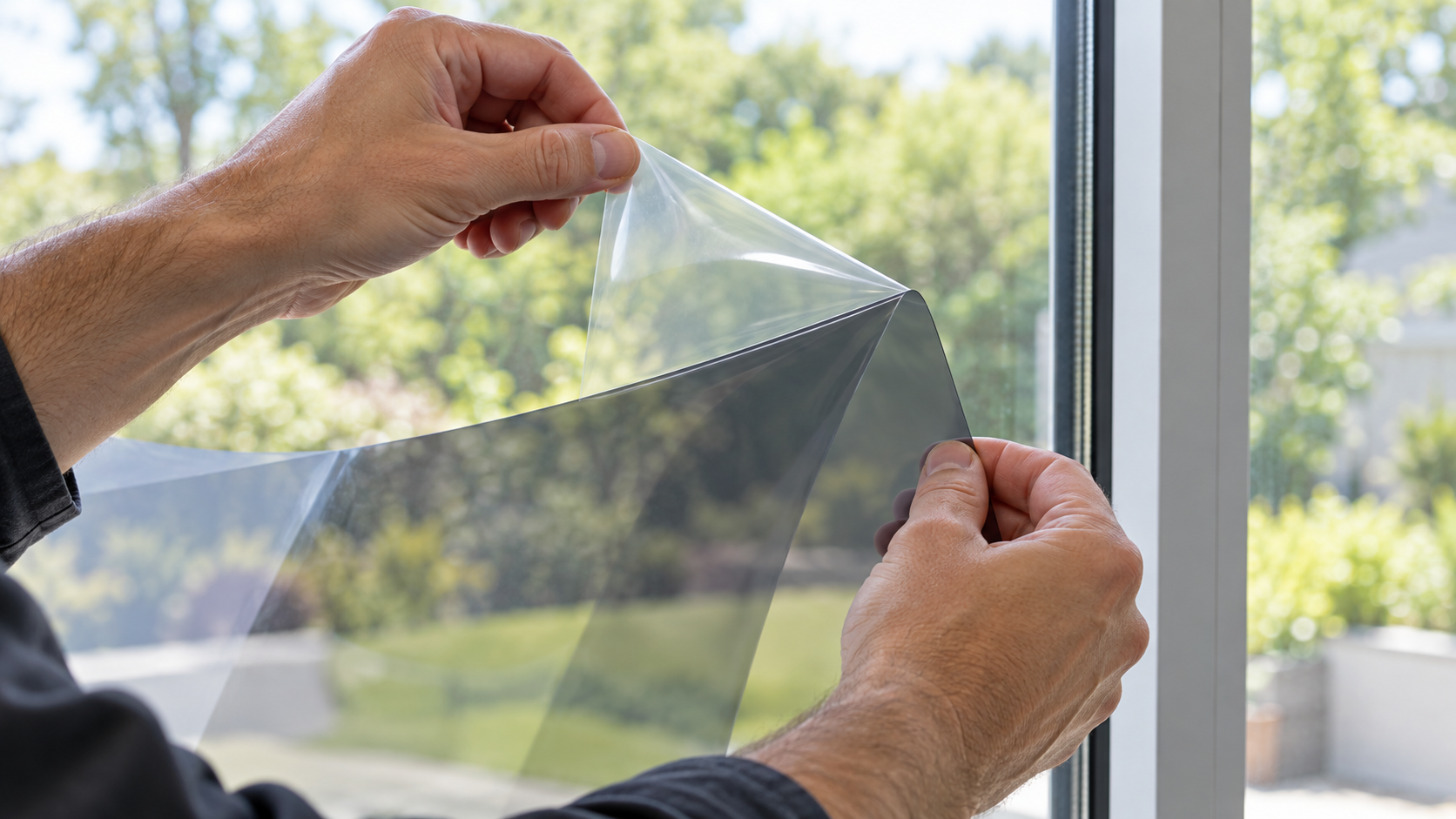 A finished piece of window film consists of several distinct layers bonded together, each contributing something specific to the final product. Starting from the layer facing the room and moving toward the glass, a typical film includes a scratch-resistant coating, a polyester base layer, a functional layer that gives the film its specific characteristics, and a pressure-sensitive adhesive on the glass-facing side. During manufacturing and before installation, a release liner temporarily protects that adhesive layer; installers peel it off and discard it once the film is applied.
The Base Material: Polyester Film
Polyester, specifically PET, is the standard substrate for most window film products. It’s chosen for several practical reasons: it’s optically clear, dimensionally stable across a wide temperature range, and durable enough to serve as a reliable base for the additional layers built on top of it.
This same base material is used widely whether the finished film is designed for heat rejection, privacy, safety, or decoration, since its role is structural rather than functional. The specific performance characteristics come from what’s added to or embedded within this base layer, not from the polyester itself.
Manufacturers sometimes laminate multiple layers of polyester rather than using a single sheet, particularly for higher-performance or safety-focused film categories, because laminated construction can improve the film’s overall strength and tear resistance. This construction detail helps explain why two products that look similar can differ meaningfully in durability, even when both use the same base material. Polyester is a well-understood, widely available material, but how manufacturers process and layer it during production genuinely affects the finished product’s performance.
The Functional Layer: What Varies by Film Type
This layer differentiates one film category from another, and its composition depends on what the finished product is designed to do. Some films incorporate colored dye compounds distributed through this layer. Others include a thin metallic or metal-oxide layer applied through vacuum deposition. Still others use finely engineered non-metallic particles distributed through the layer. Each represents a genuinely different material approach, and the choice affects everything from the film’s appearance to its long-term color stability.
Manufacturing this layer requires precise control, since even small inconsistencies in dye concentration, metal deposition thickness, or particle distribution can produce a visibly uneven final product. This is one reason film manufacturing tends to be more specialized than it might initially appear, requiring equipment and quality control suited to the material approach a given product line uses. A detailed look at how each material performs is a separate topic, but at the materials level, this is where a manufacturer’s formulation and process genuinely set one product apart from another.
How the Layers Are Actually Bonded Together
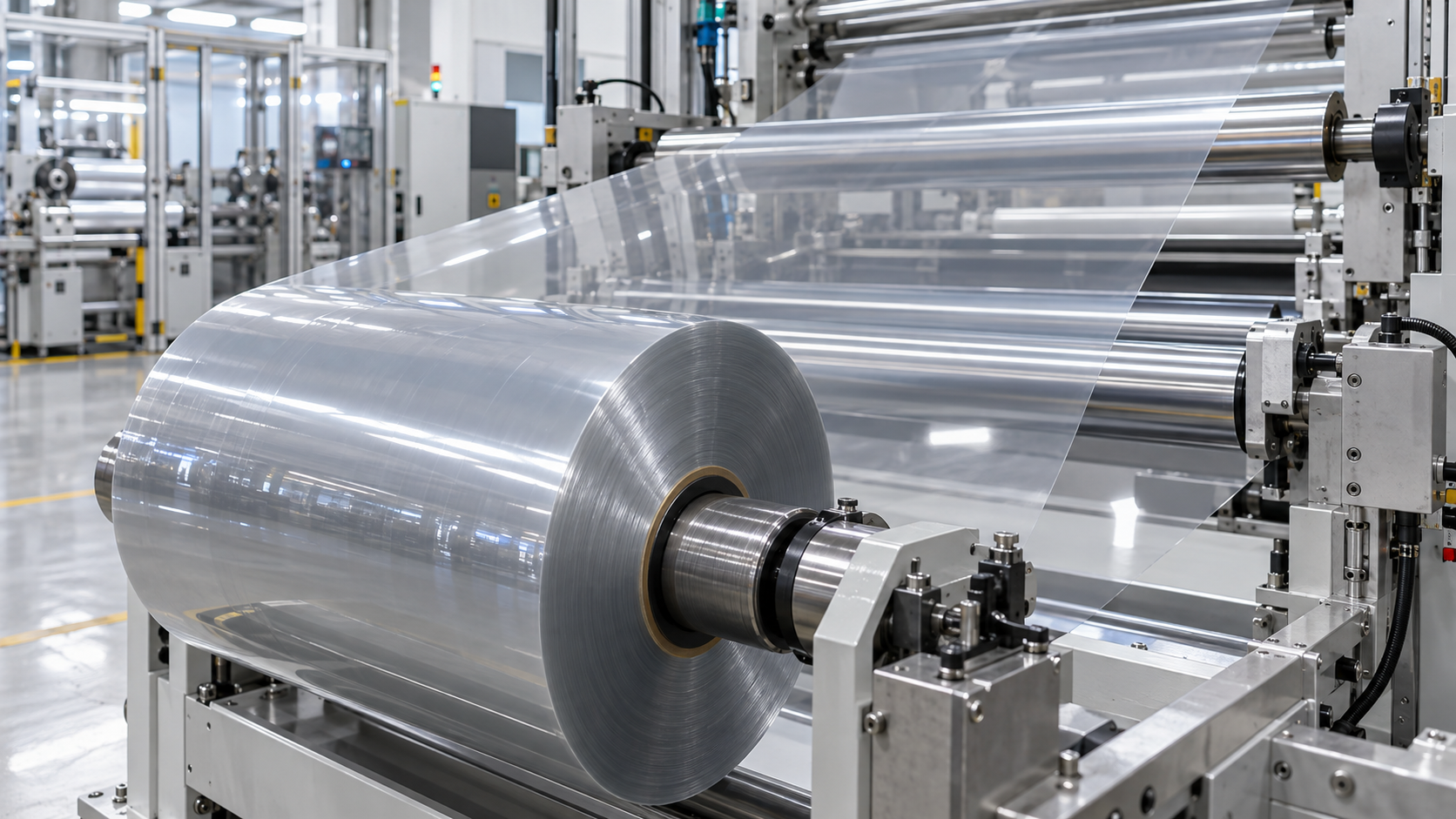 These layers aren’t simply stacked loosely on top of each other. Manufacturers laminate them during production using industrial processes designed to create a permanent, uniform bond between each layer. Manufacturers typically apply the functional layer to or coat the polyester base first, then apply the scratch-resistant coating to the exposed side.
Manufacturers add the adhesive and release liner last, on the side that will eventually face the glass. This lamination process happens under controlled conditions because any inconsistency- an air pocket, uneven coating thickness, or a weak bond between layers- can show up later as a visible defect or a shorter functional lifespan once the film is installed and exposed to real-world conditions.
Why Manufacturing Quality Matters
Window film raw materials aren’t exotic or unique to any one manufacturer, but how consistently manufacturers process and layer them varies significantly between products. Inconsistent adhesive coating can lead to uneven bonding and a higher chance of bubbling or lifting over time. A poorly applied scratch-resistant coating wears through faster, exposing the functional layer beneath to damage it wasn’t designed to withstand directly.
3M documents specific manufacturing and quality control standards for its film products, reflecting how manufacturing consistency, not just the base materials, affects a film’s real-world durability and performance. This is part of why two products built from broadly similar materials can perform very differently once installed.
Comparison Table
| Layer | Typical Material | Purpose |
| Scratch-resistant coating | Hard coat polymer | Protects the exposed surface from everyday wear |
| Base substrate | Polyester (PET) film | Provides optical clarity and structural stability |
| Functional layer | Varies (dye, metal/metal-oxide, or engineered particles) | Delivers the film’s specific performance characteristics |
| Adhesive | Pressure-sensitive acrylic adhesive | Bonds the film to the glass surface |
| Release liner (removed before use) | Silicone-coated backing | Protects the adhesive until installation |
Conclusion
Window tint is a genuinely engineered product built from several distinct layers, not a single sheet of tinted plastic. The polyester base provides structure and clarity, the functional layer delivers the film’s specific performance, the adhesive bonds it securely to glass, and the protective coating helps it withstand everyday wear. Manufacturing consistency across all these layers, not just the raw materials, separates a film that performs well for years from one that doesn’t.
Frequently Asked Questions
Is all window tint made from the same base material?
The polyester base layer is broadly similar across most window film products, but the functional layer built into or onto that base varies significantly by film category and manufacturer.
Does thicker film always mean better quality?
Not necessarily. Thickness is one factor among several, and manufacturing consistency across all layers matters as much as the finished product’s overall thickness.
Why does some window film fade or change color over time?
This generally depends on the materials and manufacturing quality of the functional layer, since some formulations hold their color and performance longer than others under sustained sun exposure.
What is the adhesive layer actually made of?
Most window film uses a pressure-sensitive acrylic adhesive, engineered specifically to bond securely to glass while remaining removable without damaging the surface underneath.
Does the release liner serve any purpose after installation?
No, the release liner is a temporary protective layer that you remove and discard during installation. It plays no role in the finished film’s performance.
Can I tell what materials are in a specific film product before buying?
Reputable manufacturers typically publish general information about their film’s construction and materials, so asking your installer for this documentation is a reasonable step before choosing a specific product.
Is the scratch-resistant coating the same across all window film brands?
The general concept is similar, but the specific hard-coat formulation and how evenly manufacturers apply it vary, which affects how well it protects the film over time.
Does the type of glass affect which film materials are appropriate?
Most standard window films are engineered to work with common residential and commercial glass types, though certain coated or specialty glass may require specific product compatibility checks.
Why do manufacturers laminate multiple layers of polyester in some products?
A laminated, multi-layer polyester construction can improve a film’s overall strength and tear resistance, which is particularly relevant for higher-performance or safety-focused film categories.
Can the layers of window film separate or delaminate over time?
This can happen if the original lamination process was inconsistent or if the film is damaged, though quality film manufactured and installed correctly is designed to maintain a stable bond between layers for years.
Curious What’s Right for Your Windows?
Understanding what’s actually in a window film product helps you choose more confidently.
Contact MGT Glass Solutions to discuss which product best fits your goals.