
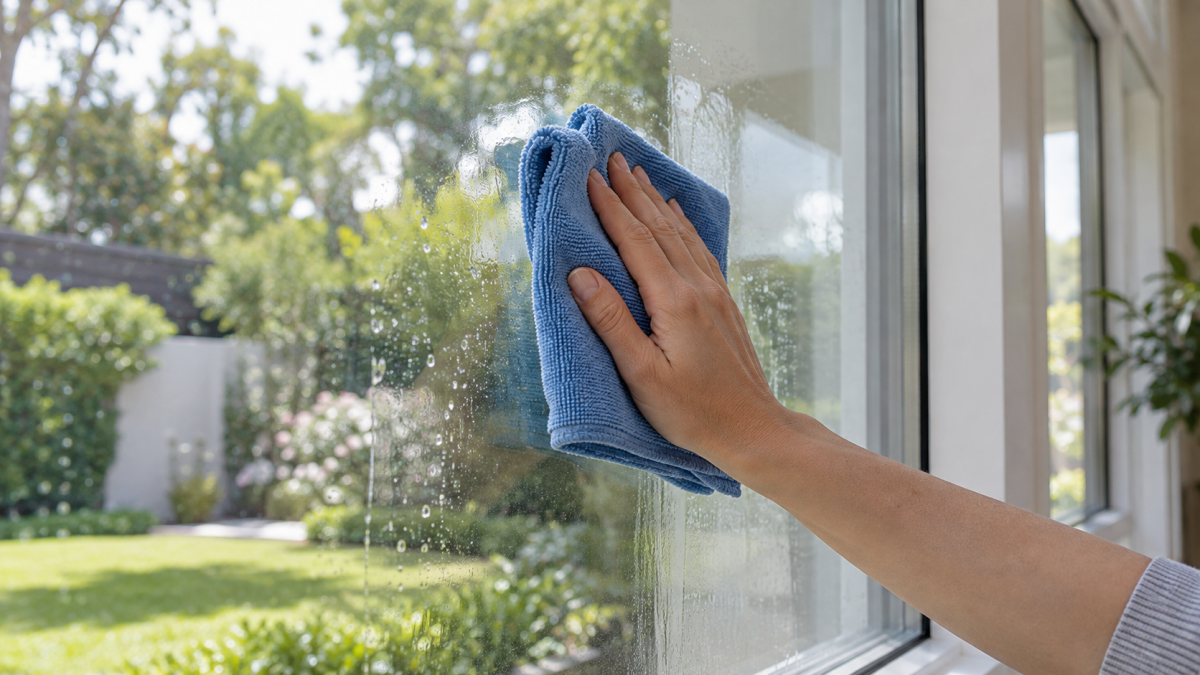
Cleaning tinted glass windows at home is genuinely simple, and most people can do it with supplies they already have. A few real mistakes can shorten your film’s life or leave it looking streaky and worn sooner than it should, so it’s worth knowing the basics before you grab whatever cleaner is under the sink.
Below is everything you need: the supplies, the steps, and a few mistakes to avoid so your windows stay clear, and your film stays in good shape.
Key Takeaways
- Cleaning tinted windows requires only a few basic supplies: a soft cloth, mild soap and water, and, optionally, a squeegee.
- Standard glass cleaners often contain ingredients that aren’t ideal for tinted film, so a gentler homemade solution is usually safer.
- Avoid abrasive sponges, scouring pads, and razor blades, as they can scratch tinted film.
- How often you need to clean depends mostly on where the window is and how much dirt or fingerprints it actually collects.
- A few minutes of proper technique protects an investment that’s meant to last for years.
The Short Answer
Cleaning tinted glass windows takes only a soft cloth, mild soap, and water, plus a gentle touch, no special products required.
Avoiding harsh chemical cleaners and anything abrasive protects the film more than any specific cleaning product you choose.
What You’ll Need
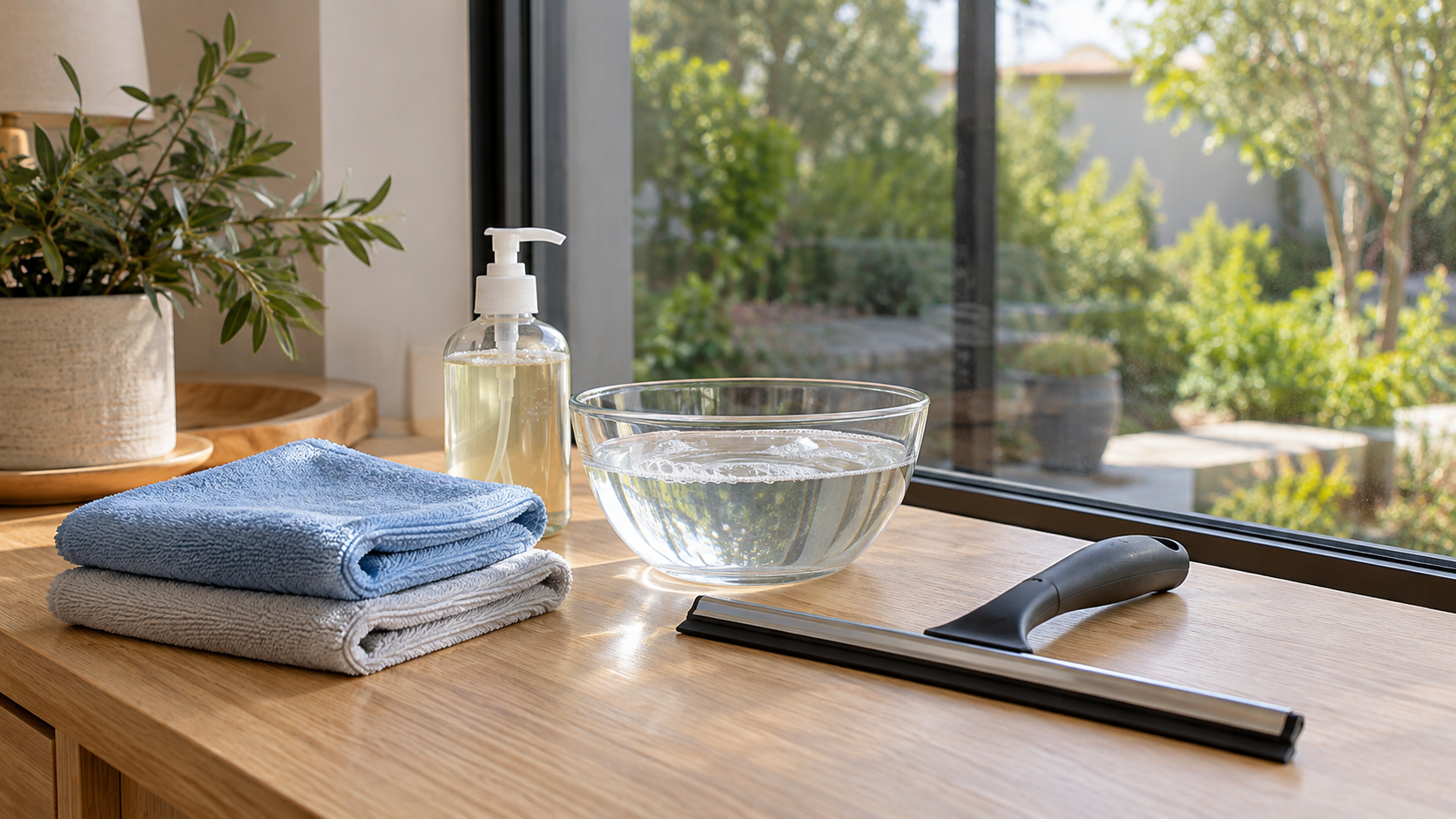
You don’t need anything fancy. A soft microfiber cloth or a clean, lint-free rag works well for both washing and drying. A few drops of mild dish soap in a bowl of warm water make a perfectly effective cleaning solution, and most windows really only need that. A squeegee with a clean rubber blade is optional but helpful for larger windows, as it removes water quickly without leaving streaks. If you don’t have a squeegee handy, a second dry cloth works fine for smaller windows or a quick touch-up.
Step-by-Step Cleaning Process
- Do a quick dust pass first. Before using any liquid, wipe the glass with a dry microfiber cloth to remove loose dust and grit, which helps prevent scratches when you start applying your cleaning solution.
- Apply your soap-and-water solution generously. Wet the film thoroughly with your mild soap-and-water mix instead of a damp cloth, since an even, generous coating lifts dirt without extra scrubbing.
- Work in overlapping sections. Instead of washing the entire window at once, clean and dry one manageable section at a time, from top to bottom, so the solution doesn’t dry on the glass before you can remove it.
- Finish with a dry, lint-free cloth. A clean, dry cloth removes any remaining moisture and leaves the glass clear and streak-free once you’ve worked through the full window.
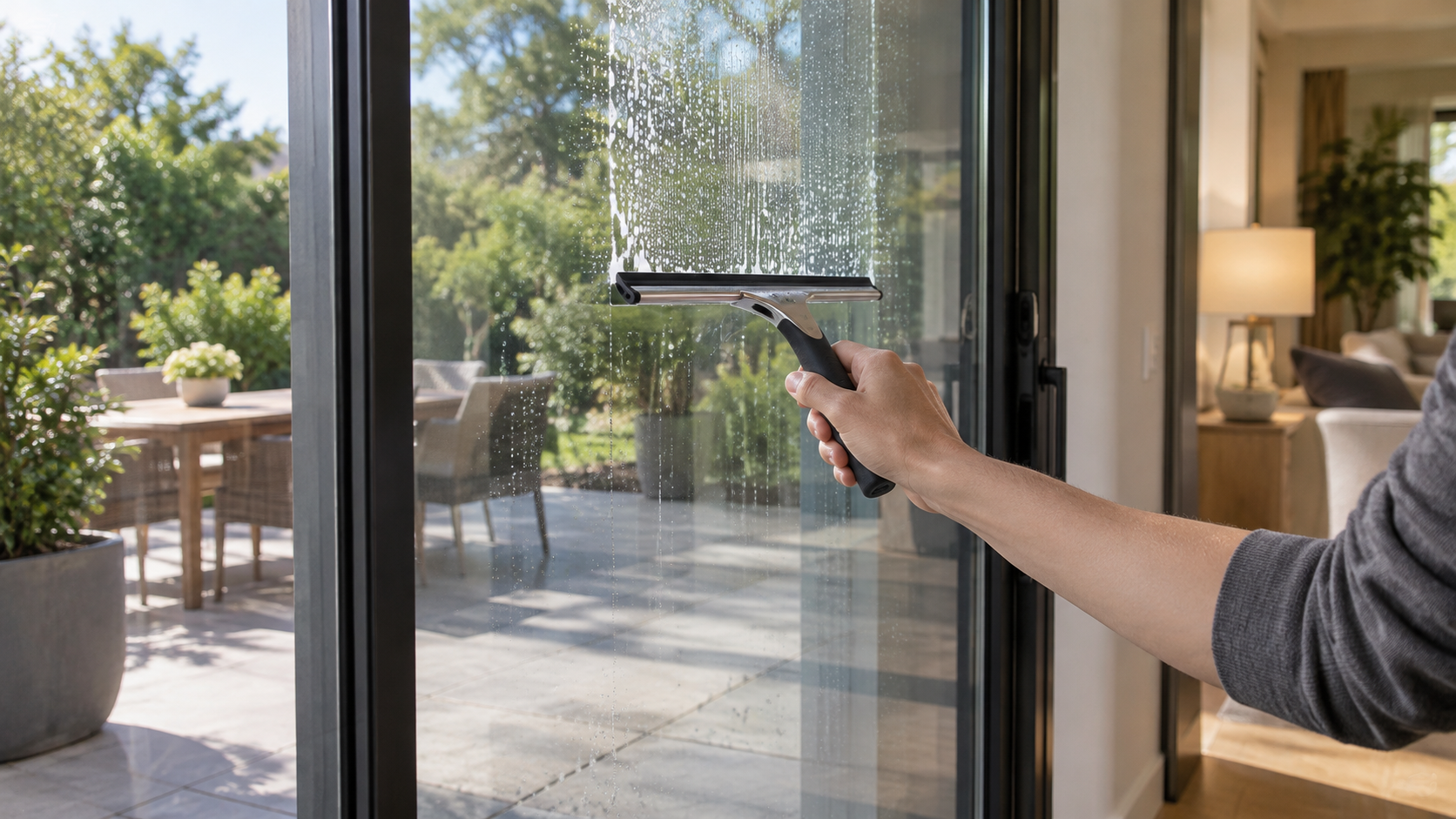
For larger windows, a squeegee can speed up step three considerably; just use one with a clean rubber blade so it doesn’t drag grit across the glass. Whichever method you use, use a slightly gentler touch near the edges and corners, since these areas can be more prone to lifting over time than the center of the glass.
Common Mistakes to Avoid
The biggest mistake is reaching for a standard glass cleaner without checking the label, since many contain ammonia, which can gradually break down the adhesive and coating of tinted film with repeated use. Scrubbing with anything abrasive, a scouring pad, a rough sponge, or even a stiff-bristled brush, can leave fine scratches on the film’s surface that don’t go away. Razor blades, sometimes used to scrape stubborn spots off bare glass, should never touch tinted film, since even a careful pass can cut or gouge it. Also avoid pressure washing tinted windows, since the force can push water beneath the film’s edges and loosen the adhesive bond over time.
It’s also worth mentioning a mistake that’s less about products and more about habit: rushing the drying step. Leaving a window to air-dry on its own, rather than wiping it with a soft cloth, often leads to water spots and a streaky finish, especially with hard tap water. Taking an extra minute to dry the glass properly is a small step that makes a noticeable difference in how clean the finished window looks.
Cleaning the Exterior vs. the Interior
 Most residential window film is applied to the interior surface of the glass, so you only ever touch the film from inside your home. You can clean the exterior glass surface with your regular household glass cleaner without the same restrictions, since you’re cleaning the bare glass, not the film. If you’re ever unsure, it’s still worth confirming which side your specific film was applied to, since applying the wrong cleaner to the film side is the mistake that matters here, not which side of the window you’re standing on.
How Often Should You Clean Tinted Windows
There’s no single fixed schedule that fits every window perfectly. A window near a busy entryway or facing a dusty street will need more frequent attention than a quiet upstairs bedroom window that rarely gets touched. As a starting point, check your windows every few weeks and clean them when you notice dust, fingerprints, or streaks, rather than following a rigid calendar. 3M recommends the same basic soap-and-water approach for its residential film products, underscoring how widely the industry considers this simple method a reliable standard.
Comparison Table
| Common Mistake | Why It’s a Problem | What to Do Instead |
| Using an ammonia-based glass cleaner | Can break down the film’s adhesive and coating over time | Use mild soap and water instead |
| Scrubbing with an abrasive pad or brush | Can leave permanent scratches on the film | Use a soft cloth and gentle motion |
| Using a razor blade on the film | Can cut or gouge the surface | Avoid entirely; use soap and water to loosen debris |
| Pressure washing tinted glass | Can force water under the edges and loosen the film | Use a soft cloth or squeegee by hand |
Conclusion
Cleaning tinted glass windows doesn’t require anything complicated, just mild soap, a soft cloth, and gentle technique. Avoiding ammonia-based cleaners, abrasive tools, and anything sharp protects the film over the long run more than any particular cleaning product. A few minutes of care every few weeks keeps your windows clear and your film performing as it should for years to come.
Frequently Asked Questions
Can I use vinegar to clean tinted windows?
Vinegar is acidic and generally not recommended for tinted film, as repeated use can affect the film’s coating. Mild soap and water are a safer, equally effective option.
Is it okay to clean tinted windows with paper towels?
Paper towels can be slightly abrasive and may leave lint or minor scratches over time. A soft microfiber cloth is a better choice for both cleaning and drying.
Will cleaning my windows too often damage the film?
Cleaning frequency itself isn’t the issue. The products and technique matter most, so cleaning as often as needed with the right approach is perfectly fine.
How do I remove stubborn spots without scratching the film?
Let a soapy water solution sit on the spot for a minute or two to loosen it before wiping gently, rather than scrubbing harder or reaching for an abrasive tool.
Can I clean newly installed tinted film right away?
It’s best to wait a few weeks after installation before cleaning, since freshly applied film typically needs time to cure before it can be handled fully.
Does the type of tint affect how I should clean it?
The basic cleaning approach- mild soap and water, a soft cloth, no ammonia or abrasive tools- applies broadly across most film types.
Is it safe to clean tinted windows on a hot, sunny day?
Cleaning in direct, intense sunlight can cause the solution to dry too quickly and leave streaks, so early morning or a shaded time of day generally gives better results.
Should I hire a professional for routine window film cleaning?
Most homeowners can comfortably handle routine cleaning themselves. Professional help is more useful if you notice actual damage, like bubbling or peeling, rather than for everyday maintenance.
Does it matter which side of the window my tinted film is on?
Yes, film is typically applied to the interior side, so that’s the surface requiring gentle care. You can generally clean the exterior bare glass with a regular household cleaner without the same concerns.
Can I use the same cleaning method on both windows and glass doors with film?
Yes, the same basic approach- mild soap, a soft cloth, and gentle technique- applies equally well to glass doors treated with film as it does to windows.
Questions About Caring for Your Tinted Windows?
Simple, consistent care goes a long way toward keeping your window film looking great for years.
Contact MGT Glass Solutions if you have any questions about your specific windows.