
Picking the right commercial window tinting for your business isn’t really a matter of choosing between a handful of products. It’s a sequential process: identifying your actual goal, understanding your building, learning about the available film categories, and working through budget and installer decisions in order. Skipping straight to comparing products before working through these steps is a common reason businesses end up with film that doesn’t solve the problem they set out to solve.
Most guidance on this topic treats it as a product comparison, listing film types and letting you pick one. That approach skips the part that determines whether the choice works: understanding what you’re solving for before you start comparing options. This walks through six steps, in order, that lead to a genuinely informed decision rather than a guess based on price or a sales pitch.
Key Takeaways
- Choose commercial window film in a sequential process, starting with your goal rather than jumping straight to product comparisons.
- Your building’s glazing age and glass type affect which film options are realistic before you even decide on style or performance.
- Film categories- solar control, security, privacy, and specialty options- serve different purposes, and most businesses need to prioritize rather than assume one product does everything.
- Budget conversations should include installation and long-term maintenance, not just the per-square-foot material cost.
- Vetting an installer for manufacturer certification and documented experience matters as much as the film product itself.
Step 1: Identify Your Primary Goal
Start by naming the specific problem you’re trying to solve, rather than starting with a product in mind. Common goals include reducing energy costs, cutting glare on screens or presentation surfaces, protecting furnishings and merchandise from UV fading, adding privacy for offices or conference rooms, or improving glass safety for security or severe-weather reasons.
Most businesses have more than one of these in play, but naming the top priority first keeps the process focused rather than trying to solve everything equally at once. If multiple goals genuinely matter equally, it’s still worth ranking them, since that ranking will inform which tradeoffs are acceptable later in the process when a single product can’t fully satisfy every priority at once.
Step 2: Consider Your Building and Glass Type
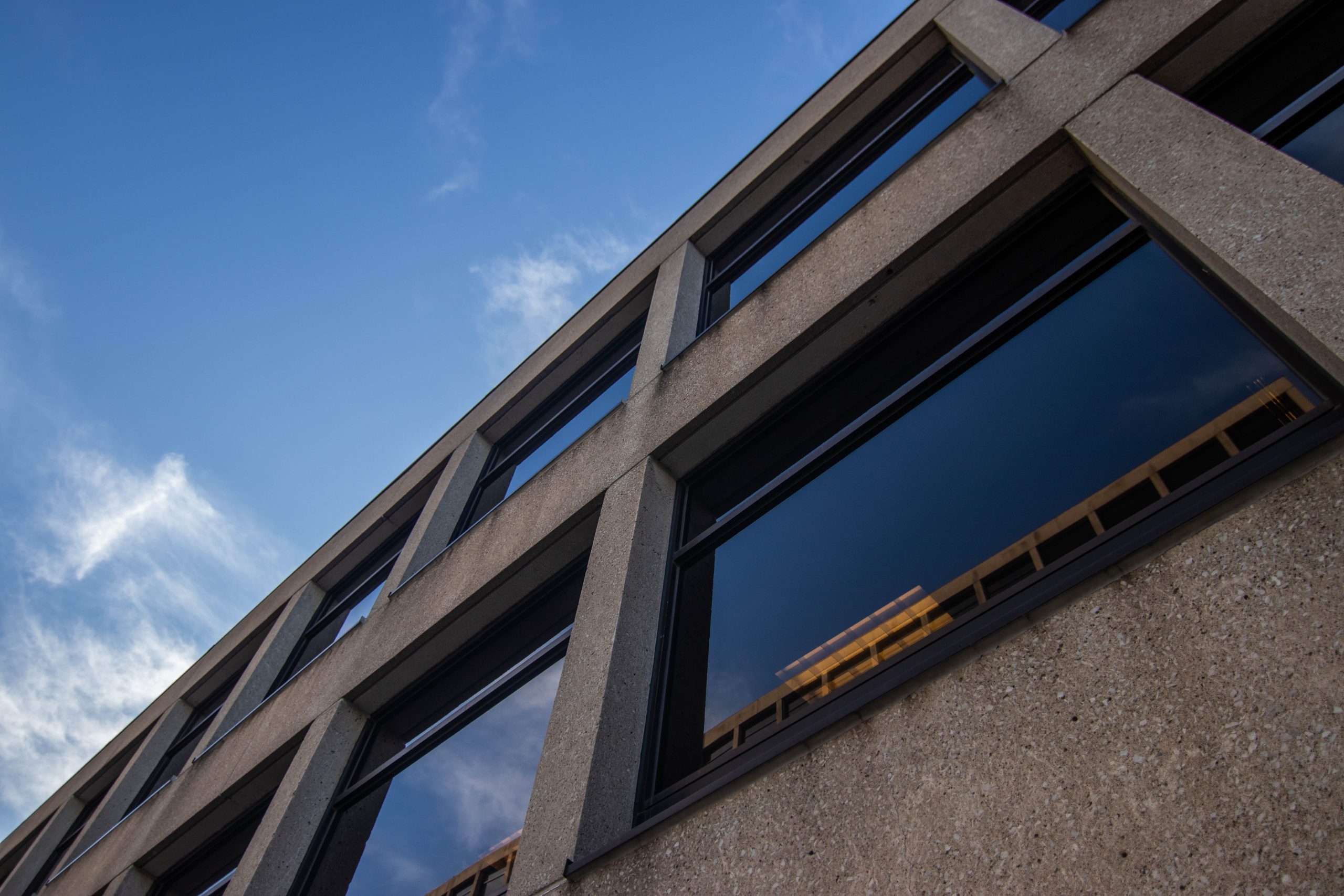 Your building’s existing glazing affects which film options are realistic. Older or single-pane glass often benefits most from the added performance layer film provides. At the same time, newer, already energy-efficient glazing may see a smaller relative improvement from the same product. Glass orientation matters too. South- and west-facing windows generally benefit more from solar control film than north-facing windows with less direct sun exposure.
Building height and accessibility also matter for larger commercial properties, since upper floors or hard-to-access glass can affect installation logistics and costs in ways that aren’t obvious from a simple square-footage estimate. Confirming your specific glass type with a potential installer before finalizing a film choice avoids compatibility surprises later in the process, particularly for buildings with existing tinted or coated glass, where not every film product is designed to layer over an existing treatment.
Step 3: Understand the Film Categories Available
Solar control film addresses heat, glare, and UV exposure, and it’s the most commonly specified option for general energy and comfort goals. Security or safety film prioritizes fragment retention, holding glass together after breakage to reduce injury risk, which differs from solar performance. Privacy and decorative film addresses visibility and aesthetics rather than heat or safety directly.
Specialty options, including bird-safe and anti-graffiti films, are available for more specific building or location needs. Most businesses end up combining categories across different areas of a property rather than choosing just one, since a single office building might need solar control film on guest-facing glass, privacy film in conference rooms, and security film on ground-floor entry points, all as part of the same overall project.
Step 4: Factor in Budget and Expected Return
Material cost is only part of the budget conversation. Installation labor, the complexity of the specific film category, and any long-term maintenance considerations all factor into a project’s real cost. Energy-related film can contribute to lower cooling costs over time. However, the actual return depends heavily on your building’s specific glazing and climate. How much of the property is being treated matters, so treat any vendor savings estimate with skepticism unless it’s tied to your property’s numbers.
A realistic budget conversation includes both the upfront project cost and a general sense of the timeline over which any energy-related savings might offset that cost, along with a clear understanding of what’s included in a quote, since installation prep, disposal of old film if applicable, and post-installation cleanup aren’t always itemized the same way across different vendors.
Step 5: Decide Between DIY and Professional Installation
Whether DIY makes sense depends heavily on which film category you’re installing. Still, the short version is that basic solar or privacy film carries relatively low risk for a DIY attempt. In contrast, security film and premium ceramic products carry higher stakes that generally favor professional installation, both for the result and for preserving manufacturer warranty coverage.
Step 6: Vet and Select a Qualified Installer
Once you know your goal, your building’s compatibility, and your film category, selecting the right installer is the final step that determines whether the project actually delivers on paper. Madico publishes documented performance specifications for its film products, and asking any potential installer for this kind of manufacturer documentation, rather than relying on general marketing claims, is a reasonable way to confirm you’re getting what you’re paying for.
Beyond documentation, ask about manufacturer certification, request references from similar commercial projects, and confirm warranty terms in writing before signing a contract. An installer’s willingness to answer these questions directly, rather than deflecting to general reassurances, is itself a reasonable signal of how the rest of the project is likely to go.
Comparison Table
| Primary Goal | Recommended Film Category |
| Energy costs and heat reduction | Solar control film |
| Glare on screens or presentation surfaces | Solar control film |
| UV protection for furnishings or merchandise | Solar control or UV-specific film |
| Privacy for offices or conference rooms | Privacy or decorative film |
| Glass safety and fragment retention | Security or safety film |
| Bird collision prevention | Bird-safe specialty film |
Conclusion
Picking the right commercial window film for your business comes down to working through a sequence, not comparing a few products side by side. Naming your actual goal first, understanding your building’s glazing, learning the real differences between film categories, budgeting realistically, choosing the right installation approach, and vetting your installer all matter, and each step narrows the decision in a way that makes the next one easier. Skipping any of these steps is a common reason projects don’t deliver the result a business expected. Working through the process in order leads to film that solves the problem you started with.
Frequently Asked Questions
What’s the biggest mistake businesses make when choosing window film?
The most common mistake is starting with a product comparison before identifying the goal, which leads to choosing based on price or marketing rather than what the film needs to accomplish.
Can one film product address multiple goals at once?
Some films address more than one priority, such as solar control film reducing both heat and glare, but a product engineered for one specific priority generally outperforms a general-purpose option for that need.
How do I know if my building’s glass is compatible with film?
An installer can assess your specific glazing during a site visit. However, older single-pane glass and glass with existing coatings are two common factors worth mentioning upfront when requesting quotes.
Is it worth getting multiple quotes before choosing an installer?
Yes, comparing quotes helps confirm you’re getting a reasonable price and lets you directly compare each installer’s experience, certifications, and proposed film products.
Should I prioritize the cheapest film option to control costs?
Cost matters, but choosing based on price alone, without confirming the product actually addresses your primary goal, is a common way businesses end up having to redo a project sooner than expected.
How long does a typical commercial window film project take?
Timelines vary significantly by project size and film category, so getting a specific estimate from your installer based on your property’s actual scope is more useful than a general industry average.
Does the film category affect how the installer prices the project?
Yes, more complex film categories, like security film with anchoring requirements, generally involve more labor and material costs than a straightforward solar control installation.
What warranty terms should I look for before signing a contract?
Confirm what’s covered, for how long, and whether professional installation is required to keep the warranty valid, as these vary significantly by manufacturer and product line.
Do I need a different approach if my building has multiple tenants?
Multi-tenant buildings often need to coordinate priorities among different businesses sharing the same glass or common areas, so it’s worth clarifying decision-making authority and cost-sharing arrangements before starting.
How often should commercial window film be inspected or replaced?
Periodic visual inspection as part of routine building maintenance is reasonable. However, the exact replacement timing depends on the specific product, sun exposure, and how well it was initially installed.
Ready to Start the Process for Your Business?
Working through your specific goals, build, and budget is easier with an experienced partner from the start.
Contact MGT to talk through your project and get a recommendation suited to your business.