
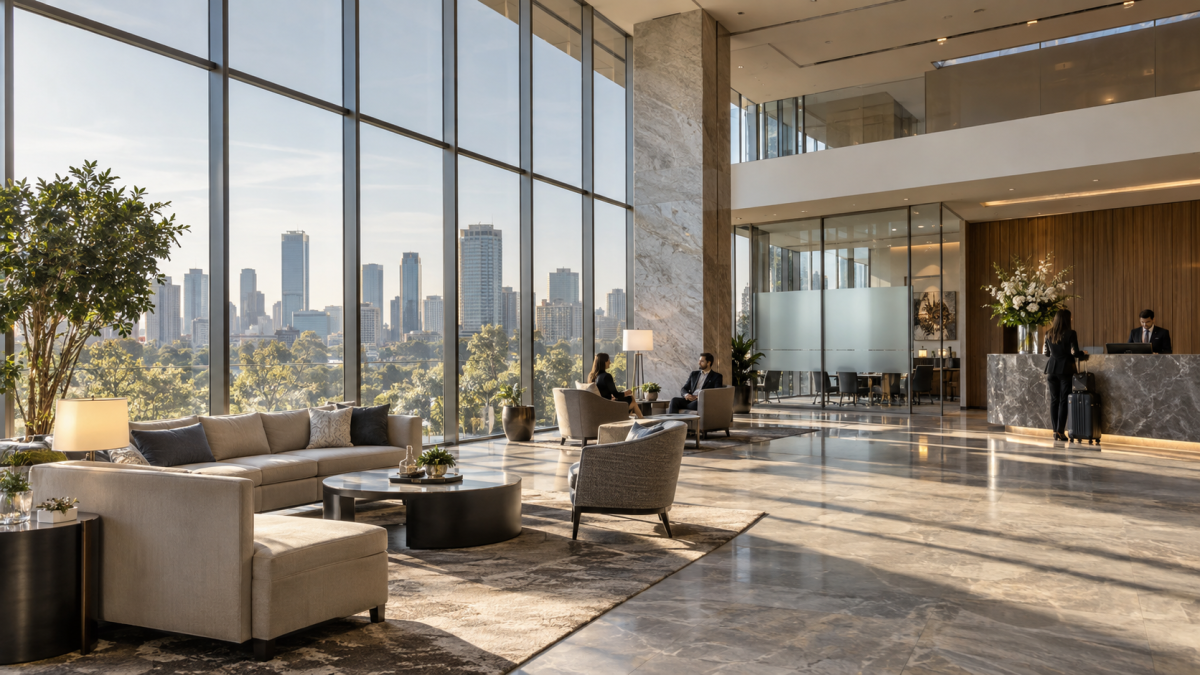
The best commercial window film for a hotel depends on which part of the property you’re treating, since guest rooms, lobbies, event spaces, and amenity areas all present different priorities. No single product serves every glass environment in a hotel equally well.
Hotels have a wider mix of glass conditions than most commercial properties. A guest room wing needs a balance of solar control and privacy across dozens or hundreds of individual windows. A lobby with floor-to-ceiling glass needs to protect furnishings from UV fading while maintaining an inviting, open feel.
A conference room needs glare control for presentations, and an amenity area like a pool or spa has its own moisture and privacy considerations. Here’s what hotels actually need from window film, which product fits which area, and why hotels tend to see outsized returns on energy-related film investments compared to smaller commercial properties.
Key Takeaways
- The best window film for a hotel depends on the specific area being treated; guest rooms, lobbies, event spaces, and amenity areas all have different priorities.
- Solar control film is the most common choice for guest rooms, balancing energy costs, glare, and guest comfort across many windows.
- UV protection film matters most in lobbies and common areas where furnishings, artwork, and flooring face consistent daytime sun.
- Hotels see outsized energy savings potential from window film simply due to scale, since even modest per-window savings compound significantly across dozens or hundreds of rooms.
- Multi-story and coastal or storm-exposed properties have additional safety considerations tied to fragment retention that smaller single-story commercial buildings don’t face to the same degree.
The Short Answer
The best window film for a hotel depends on the specific area: solar-control film generally fits guest rooms; UV-protection film fits lobbies and common areas with furnishings at risk of fading; and privacy- or glare-control film fits conference and event spaces. No single product serves an entire hotel equally well, since each area has different energy, comfort, and protection priorities.
What Hotels Actually Need From Window Film
Energy costs at scale are one of the biggest practical considerations for hotels specifically. A single home or small office might see a modest reduction in cooling costs from window film, but a hotel treating dozens or hundreds of guest room windows sees that same per-window benefit multiplied across the entire property, which changes the overall financial case significantly compared to a smaller commercial building with far fewer windows to treat.
Guest comfort ties directly to hotel reviews in a way that’s less true for other commercial properties. A guest dealing with an uncomfortably hot room or harsh afternoon glare is likely to mention it in a review, which makes window film’s comfort benefits a genuine reputational consideration, not just an operational one. This distinction is worth taking seriously, since a hotel’s online reputation directly affects future bookings in ways an office building’s internal comfort issues typically don’t.
UV protection matters differently across a hotel property depending on what’s exposed to the sun. Lobby furniture, artwork, and flooring often represent a meaningful design investment that fades visibly over a few years of consistent sun exposure if the glass isn’t treated. Guest room furnishings face the same risk, though typically at a smaller scale per room, and replacing faded furnishings across an entire guest room wing is substantially more expensive than replacing a single lobby piece.
Privacy needs vary by space. Guest rooms need standard privacy considerations balanced against natural light and view. Conference and event spaces sometimes need privacy for confidential meetings or private events, which differs from a guest room’s general privacy expectations, so it’s worth treating as a distinct specification rather than assuming a single privacy standard applies everywhere on the property.
Best Film by Hotel Area
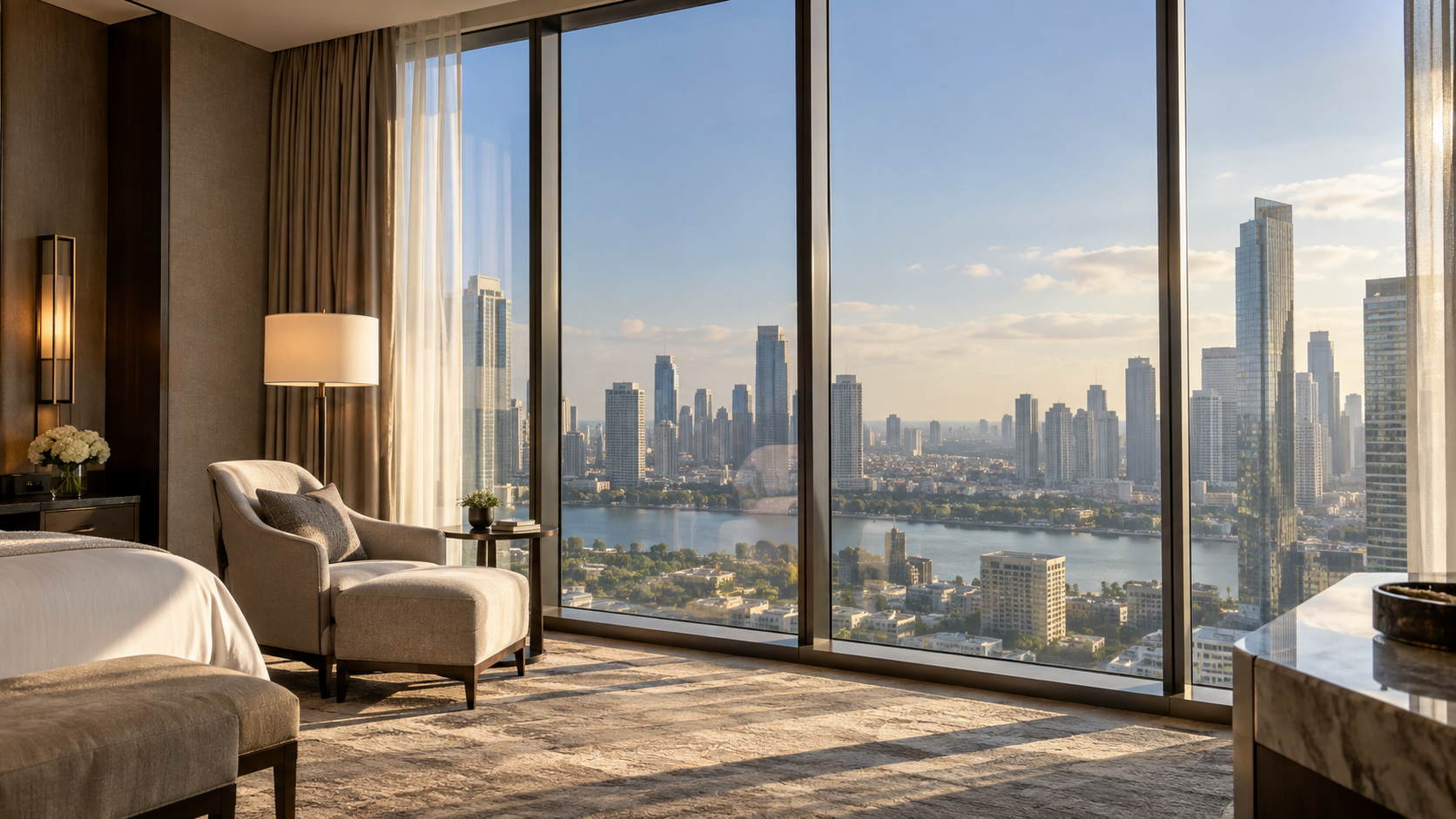 Guest Rooms
Solar control film is the most common choice for guest room windows, addressing heat, glare, and UV exposure while maintaining the view guests expect. Since guest rooms account for the largest total window area in most hotels, this is also where the cumulative energy-savings case is strongest.
Lobbies and Common Areas
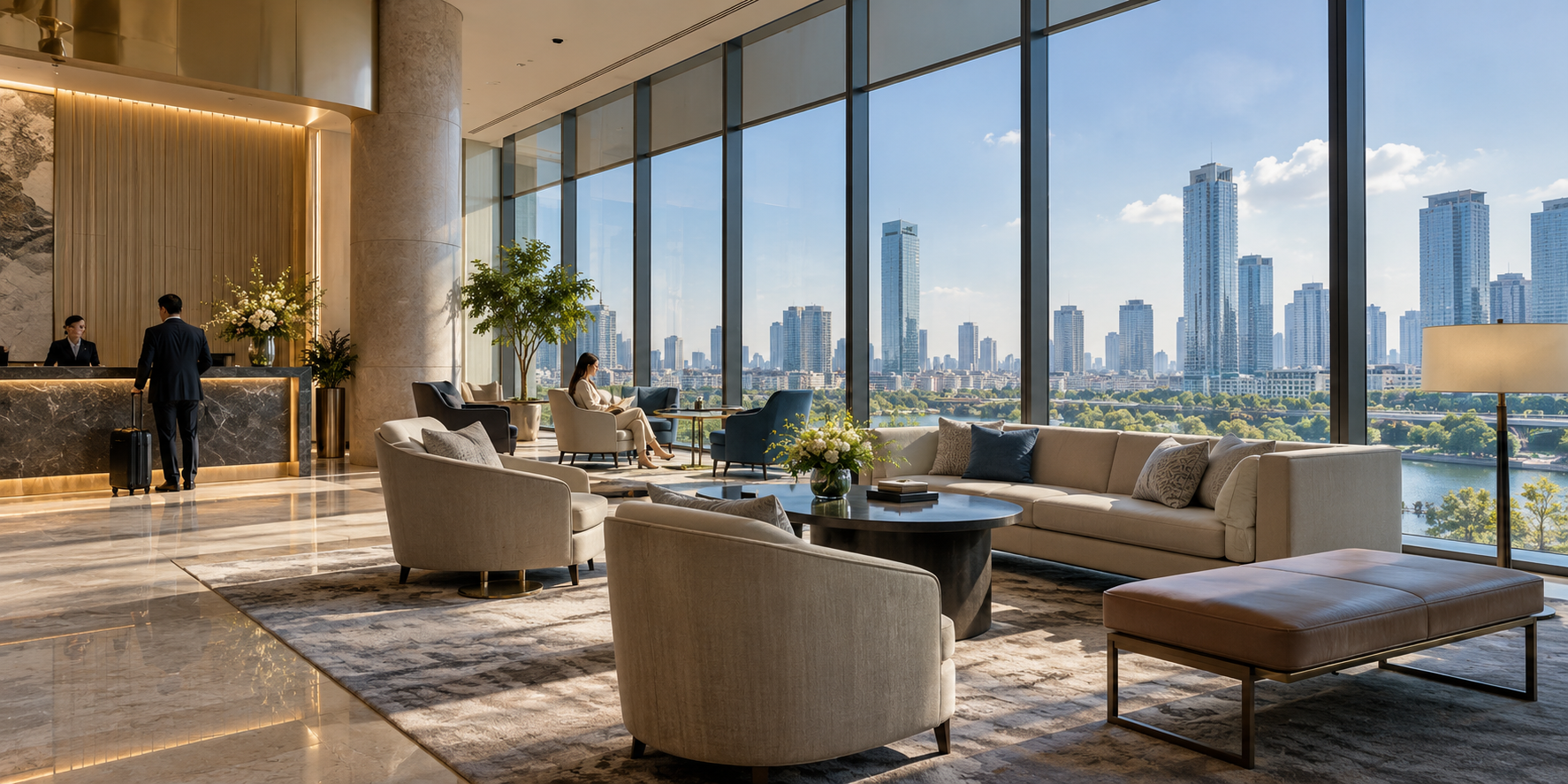
Lobbies often feature large, architecturally prominent glass that’s central to a hotel’s first impression, which makes UV protection film particularly relevant for protecting furniture, art, and flooring without requiring blinds or curtains that would compromise the space’s open feel.
Conference and Event Spaces
Conference rooms benefit from glare-control film to keep presentation screens visible throughout the day. In contrast, privacy film is often added to rooms used for confidential meetings or private events where visibility from adjacent hallways or outdoor spaces is a concern.
Pool, Spa, and Amenity Areas
Amenity areas often have large glass walls facing pool decks or outdoor spaces, where solar control film helps manage heat and glare for guests. At the same time, privacy needs depend on the layout and how visible the area is from public walkways or neighboring properties.
Energy Savings at Scale: Why Hotels See Outsized ROI
 The core reason hotels tend to see a stronger overall return on window film investment than smaller commercial properties is simple multiplication. A single window’s energy savings might be a minor line item on its own, but a hotel property with many similarly oriented guest-room windows sees that same benefit repeated across every treated room.
According to Window Film Magazine, the hospitality sector has increasingly adopted solar-control and UV-protective films as part of broader energy-efficiency and guest-comfort initiatives, reflecting this scale advantage across the industry. This doesn’t mean every hotel sees identical results, since actual savings depend on the property’s specific glazing, orientation, and climate, but the underlying scale effect is a genuine and consistent advantage for hotel properties specifically.
Safety and Security Considerations for Multi-Story Properties
Multi-story hotels, particularly those in coastal areas or regions with significant storm exposure, have safety considerations that smaller single-story commercial buildings often don’t face to the same degree. Fragment-retention film, the same general category used in security and safety film applications, can be a relevant consideration for properties concerned about wind-driven debris or general glass safety on upper floors. This is separate from the solar control and UV-protection film used elsewhere in the property, and it’s worth evaluating specifically for a property’s location and exposure rather than assuming it’s a universal need.
Comparison Table
| Hotel Area | Recommended Film Type | Primary Reason |
| Guest rooms | Solar control film | Balances energy costs, glare, and guest comfort at scale |
| Lobbies and common areas | UV protection film | Protects furnishings, art, and flooring from fading |
| Conference and event spaces | Glare control or privacy film | Presentation visibility and confidentiality needs |
| Pool, spa, and amenity areas | Solar control film | Manages heat and glare in high-glass outdoor-facing spaces |
| Multi-story or storm-exposed properties | Fragment-retention safety film | Addresses glass safety risk specific to height and exposure |
Conclusion
No single window film is best for a hotel, since guest rooms, lobbies, event spaces, and amenity areas each have different energy, comfort, and protection priorities. Solar control film supports guest comfort and energy savings at scale, UV protection film safeguards lobby furnishings, and glare or privacy film meets the specific needs of conference and event spaces. Matching the film type to each area, rather than applying one product across the entire property, yields better results for both the guest experience and the hotel’s underlying investment.
Frequently Asked Questions
Do all guest rooms need the same window film, or does it vary by orientation?
Rooms with more direct sun exposure, typically south- or west-facing, tend to see the most noticeable benefit from solar control film. However, many hotels choose to treat all guest-room windows consistently for a uniform guest experience.
How does window film affect hotel review scores?
While not directly measurable, guest comfort issues like heat and glare often drive negative reviews, so addressing them proactively is a reasonable part of a broader guest satisfaction strategy.
Is UV protection film necessary in every hotel lobby?
It’s most relevant where furniture, art, or flooring is directly exposed to consistent sunlight through large glass areas, which applies to many, though not all, hotel lobbies.
Can the same film be used for both glare control and privacy in a conference room?
Some films address both to a degree, though a specific privacy-focused product is generally more effective for rooms with a genuine confidentiality requirement.
Do coastal hotels need different film than inland properties?
Coastal and storm-exposed properties often have additional safety considerations around fragment retention that inland properties in milder climates may not need to prioritize as heavily.
How long does commercial window film typically last in a hotel environment?
Quality film is designed for long-term durability, though exact lifespan varies by specific product, sun exposure, and maintenance practices at each property.
Should a hotel treat its entire property at once, or phase the installation?
Phasing by area, starting with the highest-impact spaces like guest room wings with the most sun exposure, is a reasonable approach for larger properties or phased capital budgets.
Does window film interfere with a hotel’s architectural glass aesthetic?
Quality film, particularly solar-control and UV-protective options, is generally designed to stay clear and unobtrusive rather than visibly altering the glass.
Do hotel brands or franchise agreements ever have specific requirements around window film?
Some franchise or brand standards may address exterior appearance or specific product approvals, so it’s worth checking with your brand’s facilities standards before finalizing a product choice on a franchised property.
Is it worth treating windows in back-of-house or staff areas, or just guest-facing spaces?
Guest-facing areas typically see the clearest return on investment because they connect directly to comfort and reviews, though staff areas with significant sun exposure can still benefit from basic solar-control film for everyday comfort.
Considering Window Film for Your Property?
Every hotel has a different mix of priorities for guest rooms, the lobby, event spaces, and amenity areas.
Contact MGT to discuss a site assessment tailored to your property’s specific needs.