
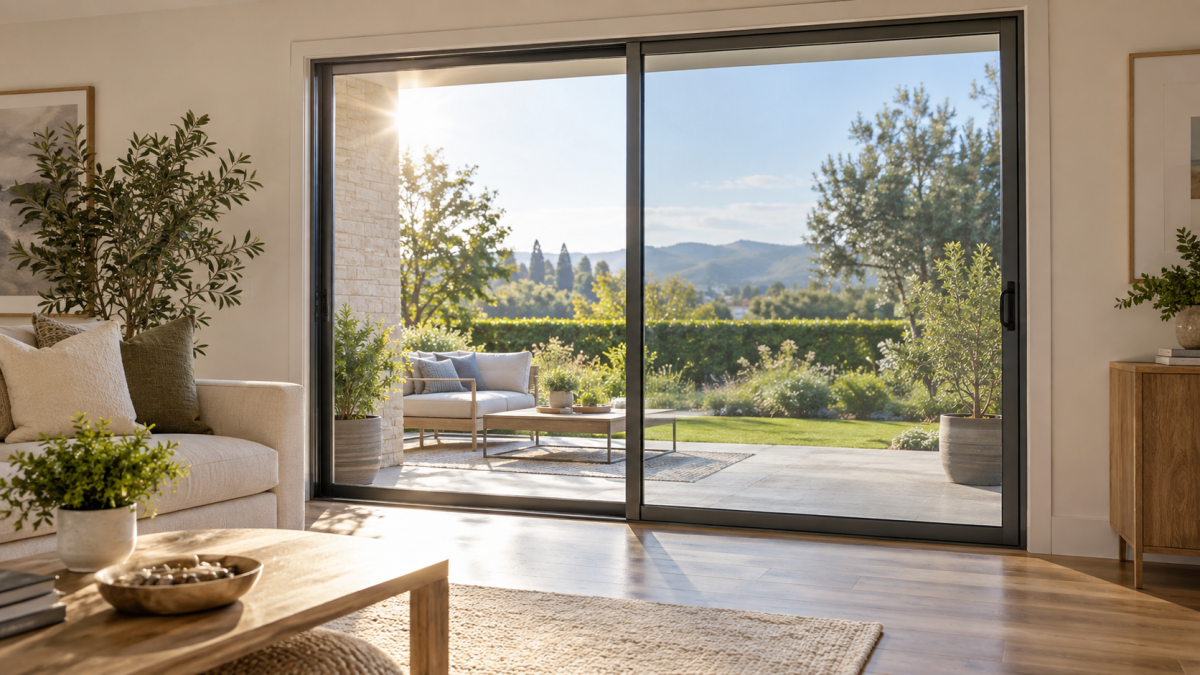
There’s no single best window film for every sliding glass door, because the right choice depends on what problem you’re actually trying to solve. Safety film, solar control film, privacy film, and UV film each address different priorities, and a sliding door often needs one more urgently than the others. The fastest way to find the right film is to start with your priority, not with a product name.
Sliding glass doors carry a different risk and use profile than a standard window. They’re usually the largest single piece of glass on a home, often sit at ground level facing a patio or pool, and see more foot traffic and impact risk than most other windows. That combination is exactly why the “best” film question doesn’t have one universal answer. This guide breaks it down by priority, compares DIY film kits to professional-grade film, and covers what to check before you buy.
Key Takeaways
- The best film for a sliding glass door depends on your priority: safety, heat and glare, privacy, or UV protection.
- Sliding doors pose a greater risk than standard windows because of their size, ground-level placement, and greater exposure to impact.
- Safety and security film is often the most overlooked priority, even though sliding doors are a common point of both accidental impact and forced entry.
- DIY static-cling film, the kind found on Amazon, can work for basic privacy or light heat reduction, but it doesn’t provide the shatter resistance that safety-focused film offers.
- Checking a film’s specific rating, whether that’s a UV rejection percentage or a safety glazing standard, matters more than assuming any tinted film solves your specific problem.
What Makes Sliding Glass Doors Different
Sliding glass doors typically have the largest, most exposed glass panels in a home, sitting at ground level and facing high-traffic outdoor areas like patios and pools. That combination of size, placement, and exposure means sliding doors face a wider range of real risks than a standard upper-floor window, from accidental impact and forced entry to intense afternoon heat and UV exposure. The best film depends on which of those risks matters most in your situation.
Best Film Types for Sliding Glass Doors, by Priority
 Best for Safety and Security
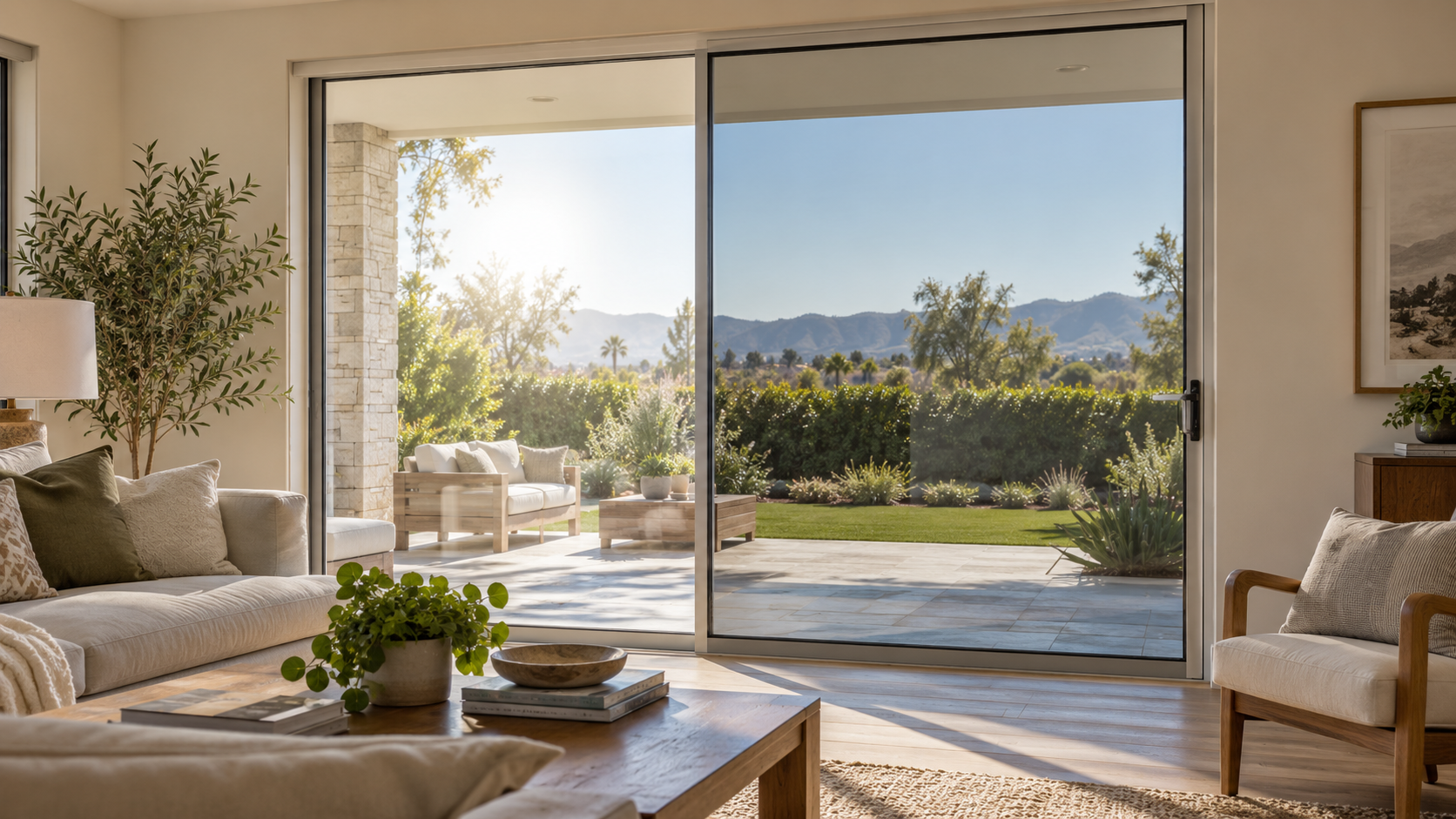
If safety is the priority, security film is the strongest option for a sliding door. Sliding glass doors are a common point of both accidental injury, especially with kids and pets around large glass panels, and forced entry, since they’re often easier to target than a locked door. Security film holds shattered glass together rather than letting it break into loose shards, addressing both risks at once.
Best for Heat and Glare Control
Sliding doors facing south or west often let in significant afternoon heat and glare, especially since any overhang usually leaves them exposed. Solar control film reduces heat gain and glare without requiring curtains or blinds to stay closed, which matters for a door meant to stay usable and open to the view.
Best for Privacy Without Blocking the View
Sliding doors facing a neighbor’s yard, a shared pool area, or a street often create a privacy tradeoff that curtains solve by blocking the view entirely. One-way window film addresses this differently, letting you see out clearly while limiting visibility from the outside, particularly effective during daylight hours.
Best for UV and Fade Protection
Flooring, furniture, and rugs near sliding doors take the brunt of UV exposure over time, since the glass area is large and usually unobstructed for most of the day. UV-protection window film reduces the risk of fading without changing how the door looks or how much natural light comes through.
Comparison Table: Matching Film to Your Priority
| Priority | Best Film Type | What It Solves | What It Doesn’t Address |
| Safety and security | Security film | Shatter resistance, forced entry resistance | Heat, glare, or UV exposure |
| Heat and glare | Solar control film | Reduced heat gain, reduced glare | Impact safety, full privacy |
| Privacy | One-way window film | Daytime privacy without blocking the view | UV protection, impact safety |
| UV and fading | UV protection film | Reduced fading of floors and furniture | Impact safety, full privacy |
DIY Film Kits vs. Professional-Grade Film
Static cling and adhesive film kits sold on marketplaces like Amazon can be a reasonable option for basic privacy or light heat reduction on a budget. They’re inexpensive, easy to apply without special tools, and fine for someone who just wants a temporary or low-stakes solution.
Where DIY kits fall short is safety and security. These products aren’t built to the shatter-resistance standard of dedicated security film, and a sliding door is exactly the application where that distinction matters most. If your priority is safety, professionally installed, professional-grade film is the only option that actually meets that specific need. Our post on whether you should install 3M window tint films yourself covers this DIY-versus-professional decision in more depth.
What to Look for When Choosing Film for a Sliding Door
 Match the film to your actual priority. Don’t default to whatever film is described as “best” in general; confirm it addresses your specific problem.
- Check the safety rating if security is a concern. 3M publishes safety film performance data referencing recognized safety glazing standards, which is worth reviewing if impact resistance matters for your door.
- Confirm the UV-rejection percentage if fading is a concern. A legitimate UV film will have a specific, documented rejection rate, not a vague claim.
- Verify compatibility with your glass type. Dual-pane sliding doors sometimes have specific film compatibility requirements that single-pane glass doesn’t.
- Ask about warranty coverage. Film warranties can vary significantly between DIY products and professionally installed film, and that difference matters more on a high-traffic door like a slider.
Conclusion
The best window film for a sliding glass door isn’t one specific product. It’s whichever category actually matches the problem you’re trying to solve, whether that’s safety, heat, privacy, or fading. Sliding doors carry more risk and more use than a typical window, which is exactly why matching the film to the priority matters more here than it might for a smaller, less exposed window elsewhere in the house.
Frequently Asked Questions
Can one film do all four things: safety, heat, privacy, and UV protection?
Some films offer overlapping benefits, such as solar-control film that also reduces some UV exposure, but no single film fully covers all four priorities at the same level as a dedicated product would. It’s worth deciding which priority matters most before making a choice.
Is DIY film safe to use on a sliding glass door?
DIY static cling film is fine for basic privacy or light heat reduction, but it doesn’t provide meaningful shatter resistance. If safety or security is a concern, professional-grade security film is the more appropriate choice.
Does window film work on dual-pane sliding doors?
Yes, in most cases, though it’s worth confirming compatibility with the specific film product, since some films have different application requirements for dual-pane glass.
How much does professional film installation cost compared to a DIY kit?
DIY kits are less expensive upfront, but professional-grade film, especially security film, costs more due to material quality and installation expertise. The cost difference generally reflects a real difference in performance, particularly for safety-focused applications.
Will privacy film on my sliding door make the room darker?
One-way privacy film is designed to maintain a clear view from the inside without significantly darkening the room, unlike blackout or heavily tinted film.
How long does film typically last on a sliding glass door?
Lifespan varies by film type and sun exposure, but quality film is designed for long-term performance. High-traffic doors may show slightly more wear at the edges over time than fixed windows.
Does security film actually stop a break-in? Security film makes forced entry significantly more difficult and time-consuming by holding the glass together instead of letting it shatter. However, it’s a deterrent and delay measure rather than an absolute guarantee.
Not Sure Which Film Fits Your Sliding Door?
If you’re weighing safety, heat control, privacy, or UV protection for your sliding glass door and want a recommendation based on your specific situation, contact MGT to talk through your priorities and get a film recommendation that actually matches what you’re trying to solve.