
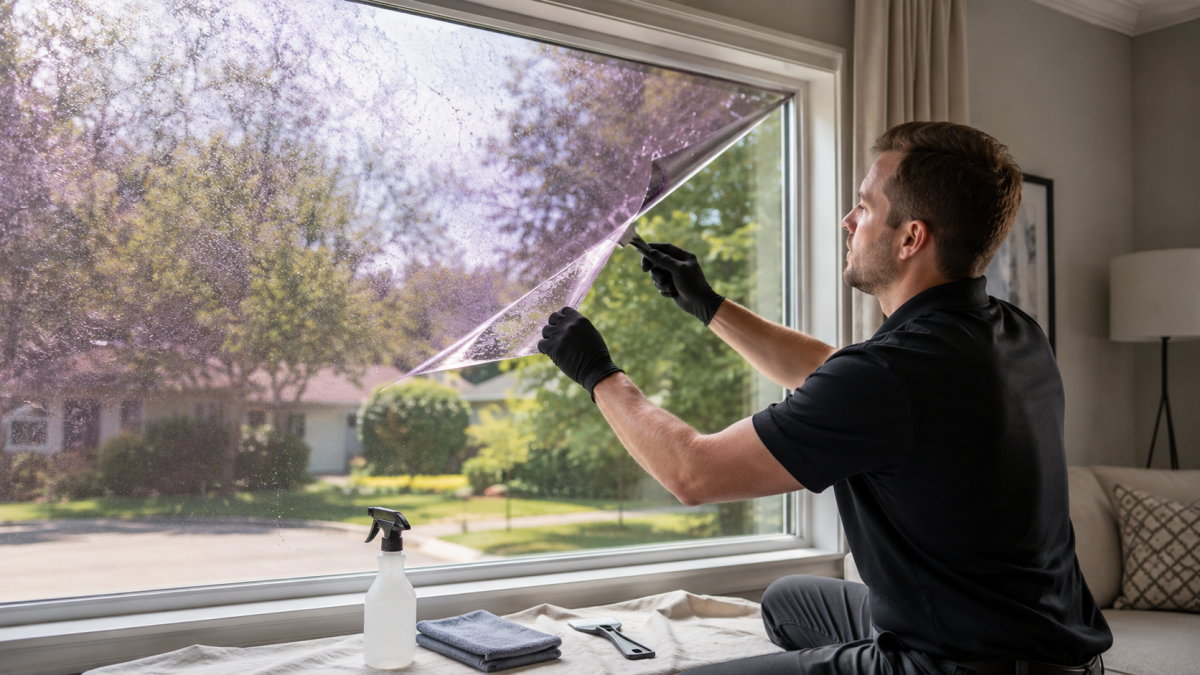
Removing old window film is possible in most cases, and the process comes down to heat, moisture, and patience. How straightforward it goes depends heavily on the film’s age, the type of glass beneath it, and what you plan to do with that glass next. For many homeowners and property managers, removal isn’t the end goal. It’s the first step before something new goes on.
That’s the real distinction here. Removing a few-year-old privacy film from a standard window rarely raises concerns, but prepping architectural or high-value glass for a premium film upgrade is a different level of risk entirely. This guide walks through what the removal process actually involves, why difficulty varies so much by film and glass type, and when it’s worth bringing in a professional instead of handling it yourself.
Key Takeaways
- Removing old window film relies on heat and moisture to loosen the adhesive, followed by careful peeling and scraping.
- Older, sun-exposed film tends to release more easily, while newer or higher-grade film can be more stubborn.
- Architectural and high-value glass carries more risk during removal, since scratches or coating damage are far more costly to fix.
- Leftover adhesive residue can interfere with how well new film adheres, which matters most when removal is prep work for an upgrade.
- If you’re planning to install smart, security, or decorative film right after removal, a combined removal-and-installation service often protects the glass better than doing the steps separately.
What’s Involved in Removing Old Window Film
Removing old window film involves heating the film to loosen the adhesive, then peeling it off and scraping it with soapy water or an ammonia-based solution. The core process is the same across most residential and commercial applications, but the difficulty shifts significantly based on how old the film is, how much sun exposure it’s had, and what type of glass it’s applied to.
The Removal Process
 Tools and Materials
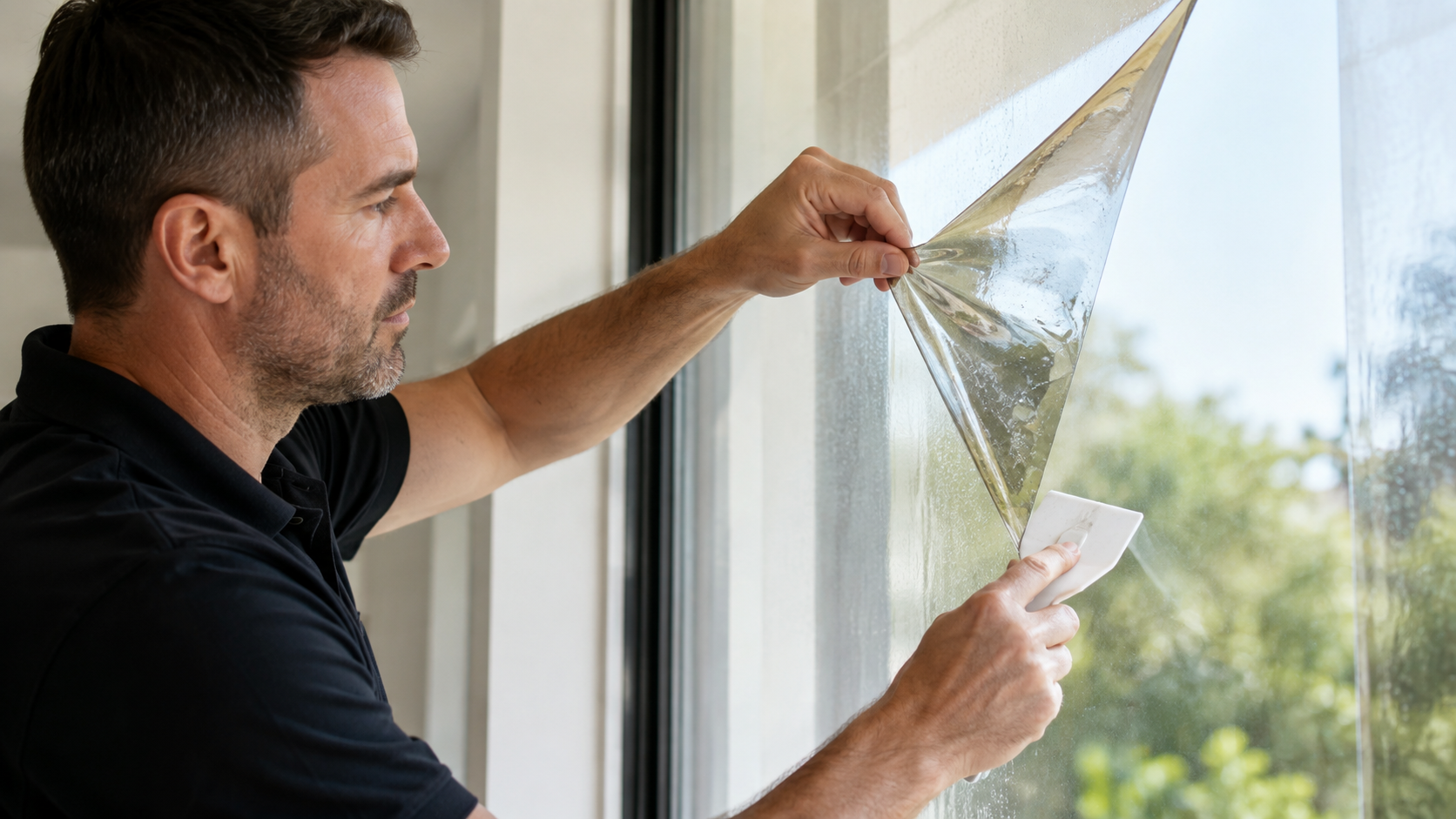
A standard removal kit includes a heat gun or hair dryer, a spray bottle with soapy water or a diluted ammonia solution, a plastic scraper, and a lint-free cloth for cleanup. These are widely available and inexpensive, which is part of why many people start this as a DIY project before deciding whether to continue on their own.
Step-by-Step Process
- Apply heat. Warm a section of the film with a heat gun or hair dryer to soften the adhesive underneath.
- Lift a corner. Use a plastic scraper to gently work up an edge once the film feels warm and pliable.
- Spray the solution. Apply the soapy or ammonia-based solution behind the film as you peel, letting it soak into the adhesive.
- Peel and scrape in sections. Work in strips rather than trying to remove the entire window at once, reapplying heat and solution as needed.
- Clean the glass. Once the film is off, scrape away remaining adhesive and wash the glass thoroughly.
Why Glass Type and Film Age Change the Difficulty
Older, Sun-Worn Film
Film that’s been exposed to years of direct sun tends to come off more easily, since UV exposure gradually breaks down the adhesive bond. This is one of the reasons why the length of time window film typically lasts matters here. Older installations nearing the end of their expected lifespan are often more cooperative during removal than newer films that are still fully bonded to the glass.
Architectural and High-Value Glass
Architectural glass, large commercial panels, and glass that’s about to receive a premium upgrade, such as switchable smart film, carry a meaningful risk during removal. A scratch or coating issue on standard residential glass is an inconvenience. The same mistake on architectural glass or a large commercial panel is far more expensive to fix, which is why this step deserves more care than a generic removal job.
Risks of Removing Old Film Yourself
- Scratching the glass with a metal blade used too aggressively
- Damaging Low-E or other specialty coatings during scraping
- Leaving adhesive residue behind that interferes with how well new film bonds to the glass
- Cracking near window edges or corners from excess pressure
Several of these issues are common causes behind the window film installation problems that actually trace back to removal, not the new installation itself.
When Removal Is Really the First Step of an Upgrade
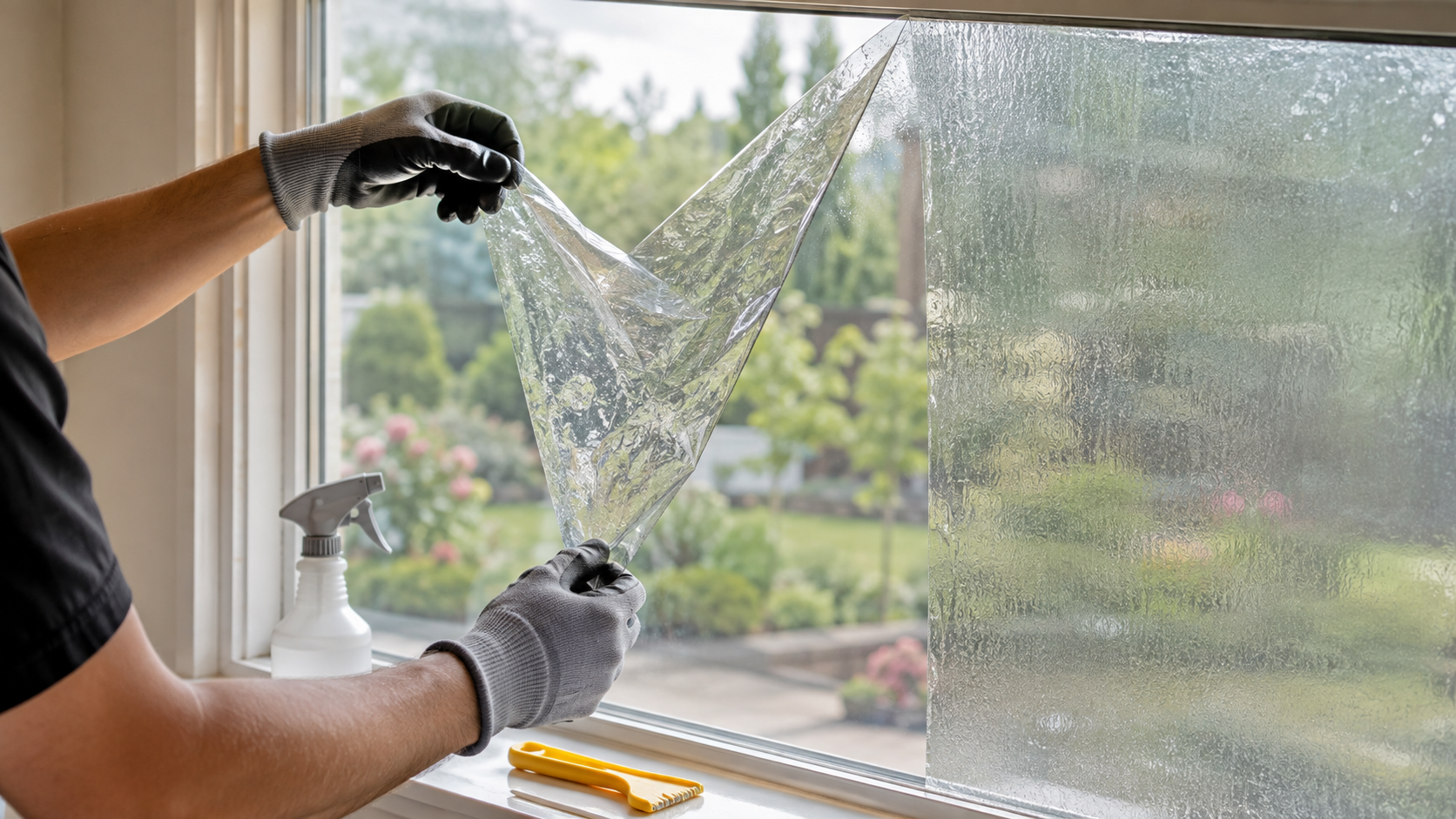 A large share of removal projects aren’t standalone jobs. They’re the first step before installing something new, whether that’s security film, decorative window film, or a smart film upgrade. In that context, how carefully the old film comes off matters just as much as how carefully it is removed in the first place.
Adhesive residue left by the old film can prevent the new film from bonding properly, leading to bubbling or peeling shortly after installation. Understanding how window film adheres to glass in the first place makes it clear why a clean, fully prepped surface matters so much before new film goes on. 3M specifically recommends thorough surface preparation, including full adhesive removal, before installing new film, since proper adhesion depends on starting with a clean surface. MGT installs 3M window film products as part of these upgrade projects, which is why surface prep gets treated as its own step, not an afterthought.
When to Bring in a Professional
- The glass is architectural, high-value, or part of a larger commercial installation
- You’re planning to install new premium film right after removal
- You’re unsure about the glass type or whether it has a coating that requires special care
- The film is a security or safety product with a stronger adhesive system
If you’re still weighing whether this is a reasonable project to take on yourself, MGT’s breakdown of DIY vs. professional window tinting covers the broader decision in more detail.
Conclusion
For many standard residential windows, removing old film yourself is a manageable project with the right tools and some patience. The calculation changes once architectural glass, commercial panels, or a planned upgrade is involved. In those situations, protecting the glass during removal matters just as much as removing the old film, since any damage or leftover residue becomes the new installation’s problem before it even starts.
Frequently Asked Questions
How long does it take to remove old window film?
A single average window typically takes 20 to 45 minutes, depending on the film’s age and adhesive strength. Older, more sun-worn film tends to come off faster.
Will removing old film damage my windows?
Not if it’s done carefully. Most damage comes from aggressive scraping with a metal blade or scraping directly on coated glass without care.
Do I need to remove all the adhesive before installing new film?
Yes. Leftover adhesive residue can prevent new film from bonding properly, which often leads to bubbling or peeling shortly after installation.
Is removing film from commercial or architectural glass different from residential glass?
The basic process is similar, but the risk of costly damage is much higher on architectural or large commercial panels, which is why more care and often professional handling is worth it in those cases.
Can I remove old film myself if I’m planning to install new film right after?
You can, but a combined removal-and-install service often protects the glass better and avoids doing the surface prep work twice.
What’s the best way to remove stubborn adhesive residue?
A plastic scraper, combined with more soapy or ammonia solution, is usually effective. Avoid dry scraping, which increases the risk of scratching the glass.
Is older window film always easier to remove than newer film?
Generally yes, since UV exposure over time breaks down the adhesive bond. Newer film that’s still fully bonded can be more stubborn to remove.
Planning a Film Upgrade? Start With the Removal Done Right
If old film needs to come off before your next window film project, whether that’s switchable smart film, security film, or a decorative upgrade, doing the removal correctly protects your investment in what comes next.
Contact MGT to talk through your glass, your upgrade plans, and whether a combined removal-and-install approach makes sense for your project.