
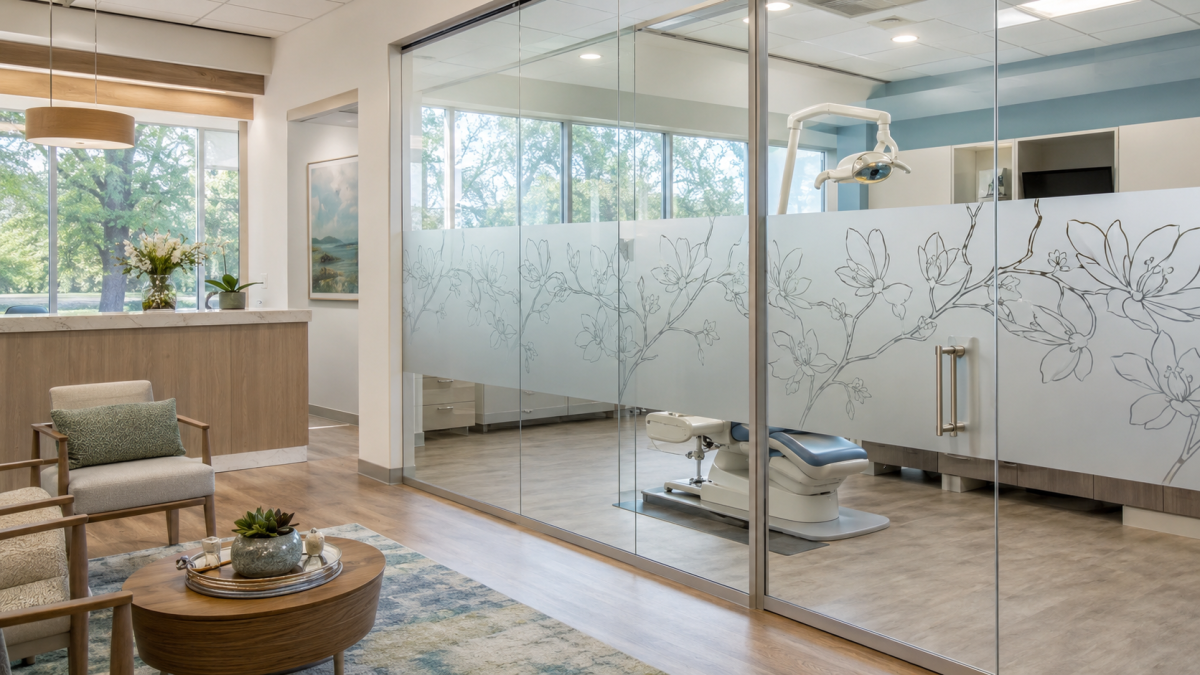
Decorative window film for Baton Rouge medical and dental practices is one of the fastest ways for practice owners to deliver patient privacy, polished branding, and a professional interior environment without replacing glass, pulling permits for structural work, or closing the practice during installation. As Baton Rouge’s healthcare corridor continues to expand along Bluebonnet Boulevard, Perkins Road, and the Essen Lane medical district, practice owners opening new locations and refreshing existing spaces are turning to decorative window film to meet their privacy, design, and speed-to-open goals in a single installation.
MGT Glass Solutions installs decorative film for medical offices, dental practices, physical therapy clinics, and specialty healthcare facilities throughout Baton Rouge and surrounding areas, including Zachary, Central, Denham Springs, Prairieville, and Gonzales. This guide covers where film delivers the most value in a healthcare practice environment, what design options are available, and how installation works around an active patient schedule.
Privacy Needs Across a Modern Practice
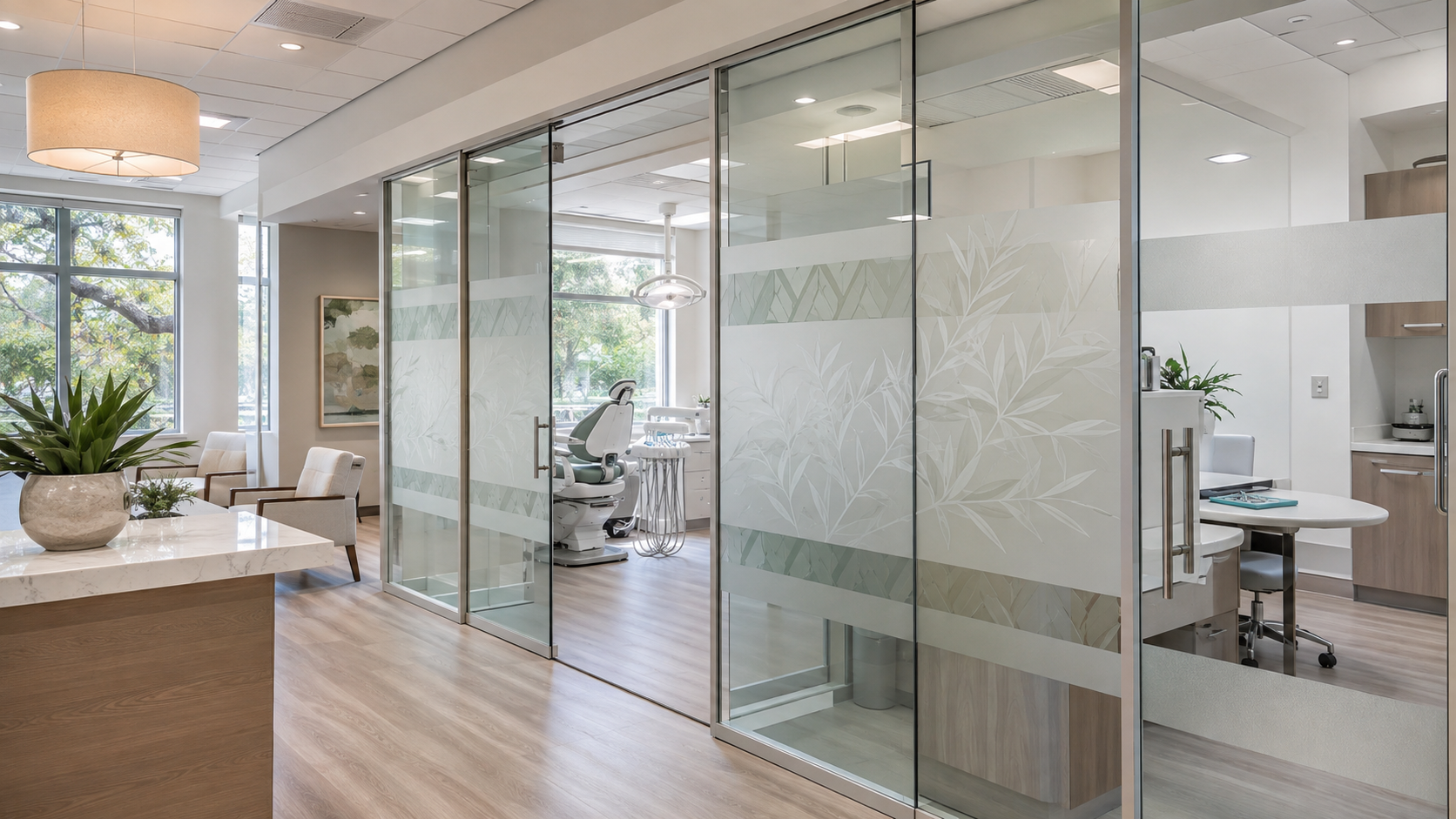 Healthcare practices carry privacy obligations that most commercial office environments do not. Patients expect that their presence in the building, their interactions with staff, and their treatment experience will not be visible to other patients, passersby, or anyone in an adjacent space. That expectation is reasonable, and in many configurations it is also a regulatory one.
Glass-fronted reception desks, waiting-area windows facing corridors or parking lots, consultation-room sidelights, and exam-room glass partitions are all surfaces where visual privacy directly affects the patient experience and the practice’s professional presentation.
Reception and Check-In Areas
The reception desk is the first point of patient contact and the area where insurance information, patient names, and appointment details are most visible to others in the waiting room or approaching from the corridor. Frosted film at the appropriate height and coverage level on reception glass screens prevents exchange from unintended observers without closing the space off entirely.
Waiting Areas
Waiting room windows facing a public corridor, a shared hallway, or a parking lot expose patients to observation from outside the practice. A frosted or patterned treatment on these windows creates a contained, private waiting environment that patients and families in sensitive medical situations appreciate.
Consultation and Exam Rooms
Glass-fronted consultation rooms and exam rooms with interior sidelights benefit from privacy film that prevents other patients and staff from observing conversations, examinations, or treatment in progress. A seated, eye-level band of frosted film, typically applied 36 to 66 inches above the floor, screens the interior of the room from corridor sightlines while maintaining the natural light and open feel of a glass-fronted space.
For a comprehensive look at how decorative film addresses privacy across different room types and configurations, our post on decorative glass film for privacy covers the full range of applications in healthcare and professional offices.
Design Options: Frost, Pattern, Gradient, Logo
The design flexibility of decorative window film makes it well-suited to the range of healthcare practice aesthetics in the Baton Rouge market, from the clean minimalism of a contemporary dental office to the warm, approachable design of a pediatric or family practice.
Standard Frosted Film
Standard frosted film replicates the appearance of acid-etched or sandblasted glass at a fraction of the cost. It is available in opacity levels from light diffusion to fully opaque, allowing precise calibration of privacy versus light transmission for each specific application. For practice owners who want a simple, clean, professional appearance on reception glass and consultation room partitions, standard frosted film is the most straightforward and cost-effective specification.
Patterned and Textured Film
Geometric patterns, organic textures, and repeating motifs add visual interest to frosted glass treatments without significantly changing the privacy performance. For practices with a design-forward interior identity, patterned film on waiting room glass or corridor partitions reinforces the practice’s aesthetic investment. It reads as an intentional design choice rather than a functional afterthought.
Gradient Film
Gradient film transitions from fully frosted at the base to clear at the top, or from a dense pattern to light diffusion, within a single panel. This treatment is popular for waiting room windows, where the goal is eye-level privacy without entirely blocking the upper glass. It also works well on large glass panels in consultation rooms where maintaining a sense of openness while providing seated privacy is the priority.
Logo and Branded Treatments
Practice logos, monograms, and brand marks can be incorporated into any frosted or patterned film treatment. A logo cutout in a frosted reception window, a branded pattern across a waiting room glass wall, or a practice name treatment on an entrance door glass are all applications that reinforce brand identity at every patient touchpoint. For a detailed comparison of how film compares to permanently etched glass for these applications, our post on frosted glass vs frosted window film clearly covers the cost and performance differences.
HIPAA and Visual Screening Considerations
HIPAA’s physical safeguard requirements for healthcare practices address the protection of patient health information in the physical environment. While HIPAA does not mandate a specific product or material for visual screening, the requirement that practices implement reasonable safeguards to limit incidental disclosures of protected health information extends to the visual accessibility of reception areas, consultation rooms, and any space where patient information is discussed or displayed.
Decorative window film on reception glass and consultation room partitions is a documented, photographable physical safeguard that practice owners can reference in their HIPAA compliance documentation. It demonstrates that a reasonable measure was taken to limit visual access to patient interactions and information, which is the standard that the regulation applies. MGT Glass Solutions provides installation documentation for every project that can be included in a practice’s physical safeguard records.
Commercial window tinting can be incorporated alongside decorative film for exterior-facing windows where solar control is also a priority, particularly in Baton Rouge practices with south or west exposure that create glare and heat gain in waiting areas and consultation rooms during afternoon patient hours.
Install Timing for Operating Practices
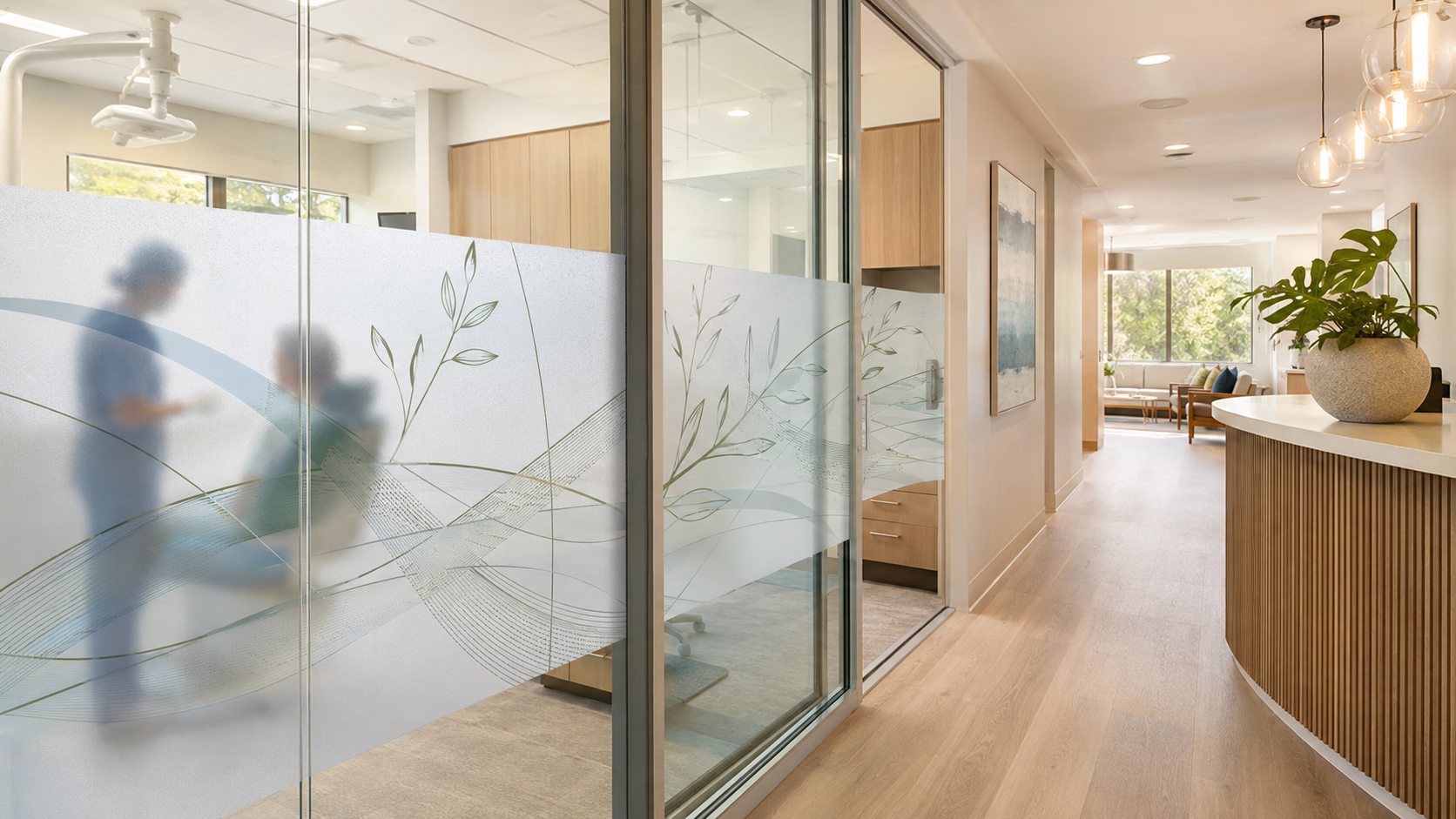 Medical and dental practices run tight daily schedules with patient appointments that cannot be moved for a film installation. MGT Glass Solutions structures every healthcare installation around your patient schedule, not ours.
Most individual room or reception glass installations are completed in two to four hours. A full practice covering reception, waiting area, and multiple consultation room glass surfaces is typically completed in one full day. For practices that cannot accommodate installation activity during patient hours, we schedule early-morning starts before the first appointment or evening installations after the last patient has left.
We coordinate directly with your practice manager or office administrator during the planning phase to confirm which rooms are in use on which days, identify any rooms that can be accessed during patient hours without disruption, and sequence the installation to keep the practice fully operational throughout the project.
Lead time from design approval to scheduled installation is typically five to seven business days for standard film specifications. Logo and custom-patterned treatments may require additional production time depending on artwork complexity.
MGT Glass Solutions serves medical offices, dental practices, and healthcare facilities throughout Baton Rouge and surrounding areas, including Zachary, Central, Denham Springs, Prairieville, and Gonzales.
Contact MGT Glass Solutions to schedule a practice consultation and have a film specification tailored to your privacy requirements, design standards, and patient schedule.
Frequently Asked Questions
Is decorative film HIPAA compliant?
Decorative window film is not a HIPAA-certified product because HIPAA does not certify specific materials. It functions as a documented physical safeguard that supports a practice’s compliance with HIPAA’s requirement to implement reasonable measures to limit incidental disclosure of protected health information. Film on reception glass and consultation room partitions limits visual access to patient interactions and information in the practice environment. MGT Glass Solutions provides written installation documentation for every project that practice owners can include in their physical safeguard records as evidence of a reasonable, documented privacy measure.
Can it include our practice logo?
Yes. Practice logos, monograms, and brand marks can be incorporated into any decorative film specification at any scale. Logo treatments are produced from your existing artwork files and rendered in frosted, etched-look, or pattern-integrated finishes. Common applications include logo cutouts in frosted reception windows, practice name treatments on entrance-door glass, and branded pattern elements across waiting-room glass panels. From the patient’s perspective, the finished result reads as permanently etched glass and can be removed cleanly if the practice rebrands or relocates.
Does it reduce natural light in exam rooms?
It depends on the opacity level selected. Light-diffusion frosted film maintains most of the glass’s natural light transmission while providing visual privacy, which is the standard recommendation for exam rooms and consultation spaces where natural light contributes to the patient environment. The film scatters rather than blocks light, so the room remains bright even with full-coverage frosted film. For applications where maximum light transmission is critical, lower-opacity specifications or banded treatments that leave portions of the glass clear can achieve the privacy goal without a meaningful reduction in light transmission.
Is it easy to remove if we rebrand?
Yes. Decorative window film is fully removable and leaves no adhesive residue on the glass when removed correctly. When a practice rebrands, relocates, or updates its interior design, the existing film is removed cleanly, leaving the glass surface ready for a new installation with no prep work beyond standard cleaning. This is one of the primary advantages of film over permanently etched or sandblasted glass for healthcare practices that may change ownership, merge with another practice, or update their brand identity over the lifespan of their lease.