
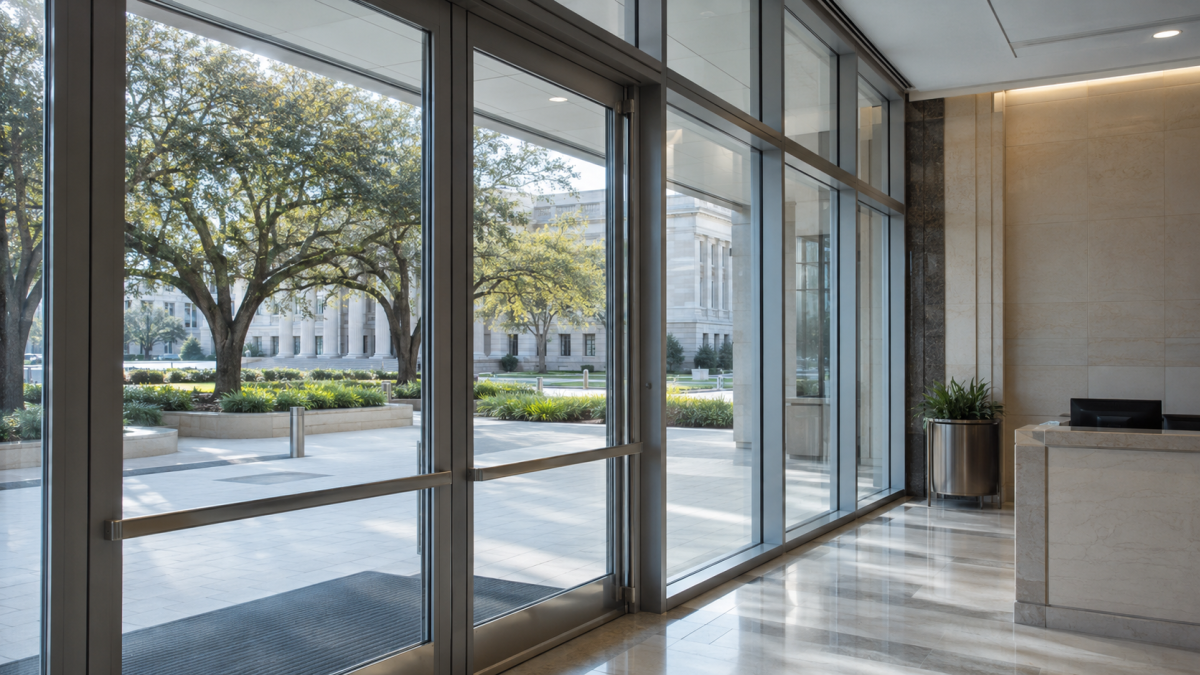
Security window film for Baton Rouge commercial and government properties delivers forced-entry delay and blast mitigation on existing glass without replacing a frame, altering a building’s appearance, or disrupting occupants. Baton Rouge carries a concentration of institutional buildings, state government facilities, and corporate headquarters in oil and gas, professional services, and financial sectors that few other Louisiana cities match. That concentration of high-value and high-profile occupants creates a security environment where glazing vulnerability is a genuine facility management concern, not a theoretical one.
MGT Glass Solutions installs security film for corporate offices, government buildings, and institutional facilities throughout Baton Rouge and surrounding areas, including Zachary, Central, Denham Springs, Prairieville, and Gonzales. This guide covers how security film performs, why attachment systems determine real-world outcomes, and how the product applies across the range of building types in the Baton Rouge market.
The Threat Environment in Baton Rouge
Understanding the Baton Rouge market’s specific threat profile shapes every glazing security recommendation. The city’s combination of state government facilities, petrochemical corporate headquarters, financial institutions, and densely occupied mid-rise office product creates a layered threat environment that differs meaningfully from general commercial retail.
State Capitol and Government Corridor
The area surrounding the Louisiana State Capitol and the network of state agency buildings along North Boulevard and Third Street represent one of the most high-profile concentrations of government facilities in the Deep South. State buildings face a threat profile that includes both opportunistic forced entry and elevated blast- and protest-related security considerations inherent to government facilities by virtue of their function and public visibility.
Corporate Headquarters and Professional Services
Baton Rouge’s oil and gas sector, anchored by major operators and service companies concentrated in the Perkins Road and Bluebonnet Boulevard corridors, generates a significant population of corporate headquarters and regional office facilities. These buildings house sensitive commercial information, executive personnel, and, in some cases, critical infrastructure control systems, elevating their security priority above that of standard commercial office products.
Institutional and Financial
Banks, credit unions, law firms, and healthcare administrative facilities throughout Baton Rouge face the same combination of cash-handling exposure, sensitive information vulnerability, and after-hours forced-entry risk that characterizes high-value commercial operations in any major Louisiana city.
How Security Film Changes Break-In and Blast Response
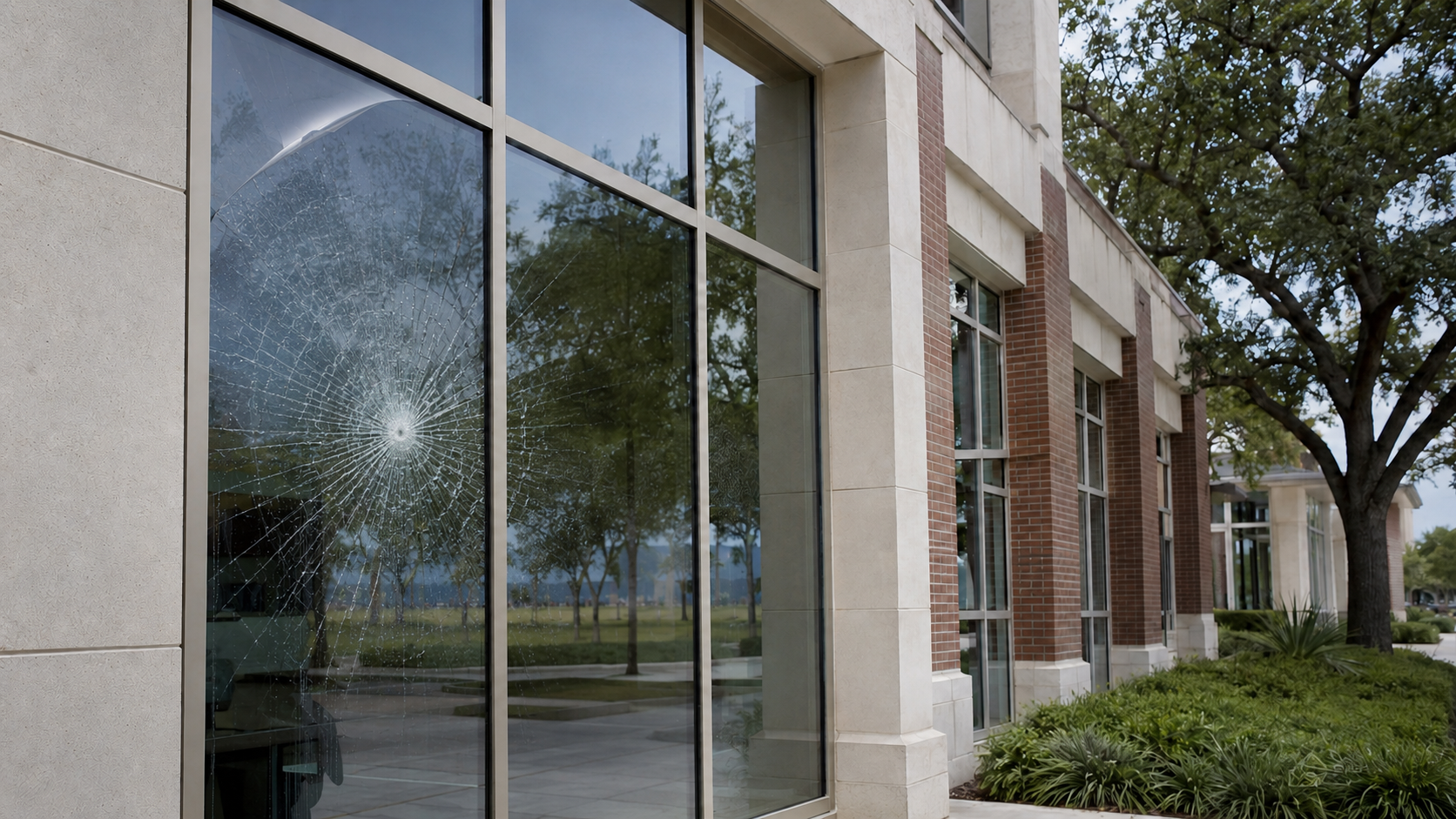 Security film is a thick polyester or multi-layer composite material applied directly to the interior surface of existing glass. When glass is struck, the film holds shattered fragments in place rather than allowing the pane to clear. An attacker who expects glass to break and open in one or two strikes instead faces a surface that continues to resist through repeated impact, consuming time and increasing exposure risk until the attempt is abandoned.
For a detailed explanation of the mechanism and performance range of this product category, our post on how security film protects offices from break-ins covers the practical performance picture for commercial building applications.
In a blast event, the hazard from glass is not the structural failure of the window but the high-velocity fragmentation caused by the cleared glass inside the occupied space. Security film that holds shattered glass fragments together dramatically reduces the fragmentation hazard for building occupants, even when the glass itself does not survive the blast pressure wave. For Baton Rouge government facilities and corporate headquarters where blast mitigation is a documented security consideration, this is a meaningful and cost-effective risk reduction measure that does not require replacing the existing glazing system.
Understanding what makes security film different from regular tint is important context for facility managers evaluating security film for the first time and seeking to understand why product specification and installation quality matter as much as the product category itself.
Commercial window tinting can be incorporated alongside security film in a single installation for buildings where solar control, glare reduction, or privacy are also part of the facility improvement objectives. MGT Glass Solutions designs combined specifications that address security and comfort performance in a single coordinated project.
Attachment Systems and Why They Matter
The attachment system is the element of a security film installation that most facility managers do not know to ask about, and most non-specialist contractors do not include by default. It is also the element that determines whether an installation performs under real attack conditions or fails at the moment it is needed most.
Security film applied to glass with standard adhesive holds shattered fragments together after impact. That is a genuine and meaningful improvement over bare glass. However, the glass assembly can still be pushed out of the frame intact if the frame connection is not addressed. An attacker who cannot break through the glass can push the entire panel inward, out of the frame, if it is not mechanically anchored, thereby negating the film’s delay performance.
An attachment system addresses this by mechanically bonding the film-and-glass assembly to the window frame with structural adhesive, mechanical fasteners, or both, depending on the frame construction and threat level. When an impact occurs, the full unit resists as one. The glass cannot be pushed through the frame, and the forced-entry delay time increases substantially compared to film-only installations.
For Baton Rouge government facilities and corporate security teams documenting physical security measures for compliance, insurance, or internal security program purposes, the attachment system specification is the detail that separates a documented security installation from a decorative one. MGT Glass Solutions provides written installation documentation for every project, specifying film type, mil thickness, coverage area, and attachment method, structured for submission to security program reviewers, insurers, or government procurement offices.
Applications by Building Type
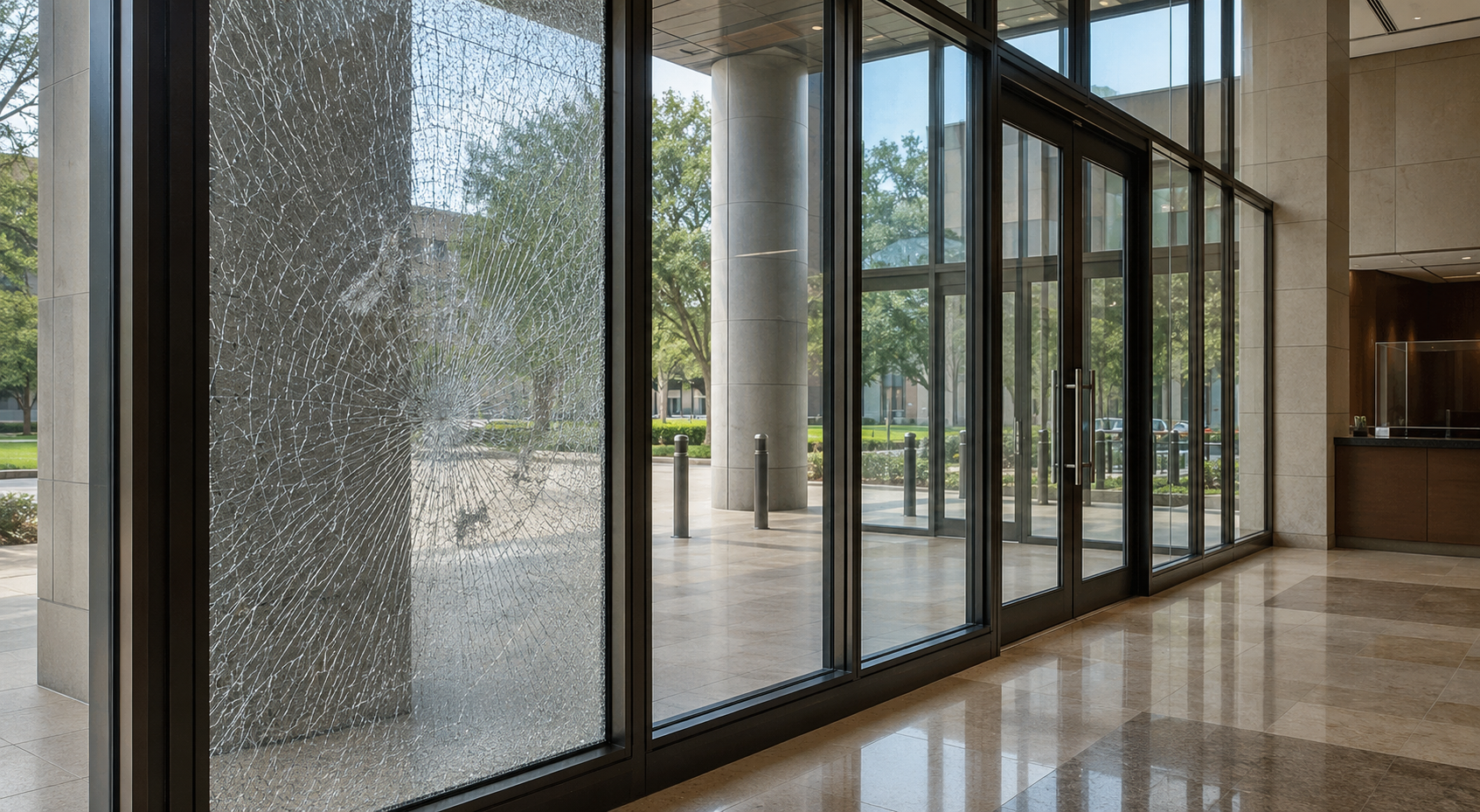 Security film application strategy in Baton Rouge varies based on building type, occupant profile, and the primary threat the installation is designed to address.
State and Government Facilities
State agency buildings, court facilities, and administrative offices in the Capitol corridor benefit from security film on perimeter glazing, lobby glass, and other public-accessible fenestration. For these facilities, blast mitigation performance is as relevant as forced-entry delay, and film specifications should be selected with both threat types in mind. GSA-referenced blast mitigation film standards provide the documentation baseline that government facility security officers typically require when specifying glazing security products.
Corporate Headquarters and Oil and Gas
Corporate headquarters in the Perkins Road, Bluebonnet, and Interstate 10 corridors benefit from security film on ground-floor perimeter glazing, executive floor windows, and any glass adjacent to public lobbies or reception areas. For oil and gas operators with control room or data center adjacencies, glazing security on those specific areas may warrant a higher specification than standard perimeter glazing.
Financial Institutions
Banks and credit unions throughout Baton Rouge, including those in Zachary, Central, and Denham Springs, face the same smash-and-grab and after-hours forced-entry profile as financial institutions in any Louisiana market. Security film with attachment systems on storefront glazing, drive-through enclosures, and teller-line glass addresses the primary forced-entry threat at a cost that most branch security budgets can accommodate without a full glazing replacement project.
Medical and Healthcare Administrative
Healthcare administrative buildings and medical office facilities in the Baton Rouge medical corridor face a combination of after-hours security exposure and the regulatory documentation requirements that HIPAA-compliant facilities carry for their physical security program. Security film installation records support the physical security documentation that healthcare facility administrators maintain for regulatory compliance purposes.
Multi-Tenant Office
Mid-rise and low-rise multi-tenant office product throughout Baton Rouge benefits from security film as a building-level improvement that enhances the security profile of the entire asset rather than a single tenant’s suite. For building owners competing for tenants in a market where security and facility quality are evaluation criteria, documented security glazing is a leasing amenity that costs significantly less than other building upgrades that deliver comparable tenant-perceived value.
Request a Baton Rouge Security Assessment
Security film performance depends on the correct product specification, installation, and attachment system for each opening. None of those variables can be determined without an on-site assessment by a qualified security glazing specialist.
MGT Glass Solutions conducts security glazing assessments for corporate offices, government facilities, financial institutions, and multi-tenant office properties throughout Baton Rouge and surrounding areas, including Zachary, Central, Denham Springs, Prairieville, and Gonzales. The assessment covers your full glazing inventory by surface and threat priority, product specification recommendations with attachment system requirements, and a written project scope with installation timeline options.
For government and institutional clients, assessment documentation is structured to support the procurement and security program review processes required by public-sector projects.
Contact MGT Glass Solutions today to schedule your Baton Rouge security assessment and get a written scope that your facility team, security officer, and insurer can all work from.
Frequently Asked Questions
Does security film affect the appearance or the view through glass?
Standard optically clear security film is visually indistinguishable from unfilmed glass at normal viewing distances. There is no tint, haze, or visible surface texture with clear security film. Occupants experience no change in outward views, natural light levels, or the building’s exterior appearance. For buildings where solar control or privacy tinting is also desired, lightly tinted security film options are available that combine both performance characteristics. Still, clear security film on its own produces no visible change to the glass.
How does it hold up against forced-entry tools?
Security film is rated for forced-entry delay under standardized attack protocols using hand tools, including sledgehammers, crowbars, and glass-breaking instruments. Film-only installations using standard adhesive typically experience a two- to four-minute delay under sustained attack. Films installed with a mechanical attachment system extend that delay significantly, with some configurations rated for five minutes or more under standardized testing. In practical terms, most forced-entry attempts are abandoned within two to three minutes when the glass does not clear, which means a properly specified and installed security film system stops the majority of real-world attacks before they succeed.
Can security film be combined with solar control?
Yes. Security film and solar control film can be specified as a combined product or installed as separate layers on the same glass surface. Combined security and solar control film products address both forced-entry delay and heat rejection in a single installation, which is a practical specification for Baton Rouge commercial buildings where afternoon sun exposure on west- and south-facing glass creates both comfort and security priorities. MGT Glass Solutions evaluates each building’s glazing orientation and performance requirements during the site assessment and recommends combined or separate specifications based on the specific conditions of each opening.
Is it appropriate for state-owned buildings?
Yes. Security film is used in state and federal government facilities across the United States and is referenced in GSA physical security design guidelines for blast mitigation and forced-entry protection. For Louisiana state-owned buildings in Baton Rouge, security film specifications should reference applicable GSA or government security standards and include documented installation records that meet the evidence requirements of the building’s physical security program. MGT Glass Solutions has experience working within government procurement frameworks and can structure project documentation to meet the requirements of state facility management and security program review processes.