
Banks, credit unions, and financial branches in Jackson, MS operate under a unique combination of physical security obligations. Federal regulatory frameworks, insurance underwriting requirements, and the realities of operating a cash-handling facility in an active-threat environment all point to the same conclusion: glazing is a vulnerability that cannot be ignored, and hardening it does not require a full branch renovation.
Security window film delivers forced-entry delay, blast mitigation, and shatter containment on existing glass without replacing a single pane. For Jackson-area financial institutions that need to demonstrate meaningful physical security improvements to regulators, insurers, or corporate security teams, it is one of the most cost-effective and least disruptive upgrades available.
MGT Glass Solutions serves banks, credit unions, and financial institutions across Jackson and the surrounding area, including Ridgeland, Madison, Brandon, Flowood, Pearl, and Byram. This guide covers how security film performs, why attachment systems determine the outcome of an attack, and how film fits into the broader physical security framework that regulated financial environments require.
The Threat Profile for Jackson, MS Financial Branches
 Financial institutions face a threat profile that differs from general commercial retail in both the nature of attacks and the regulatory consequences of inadequate preparation.
Smash-and-Grab and Forced Entry
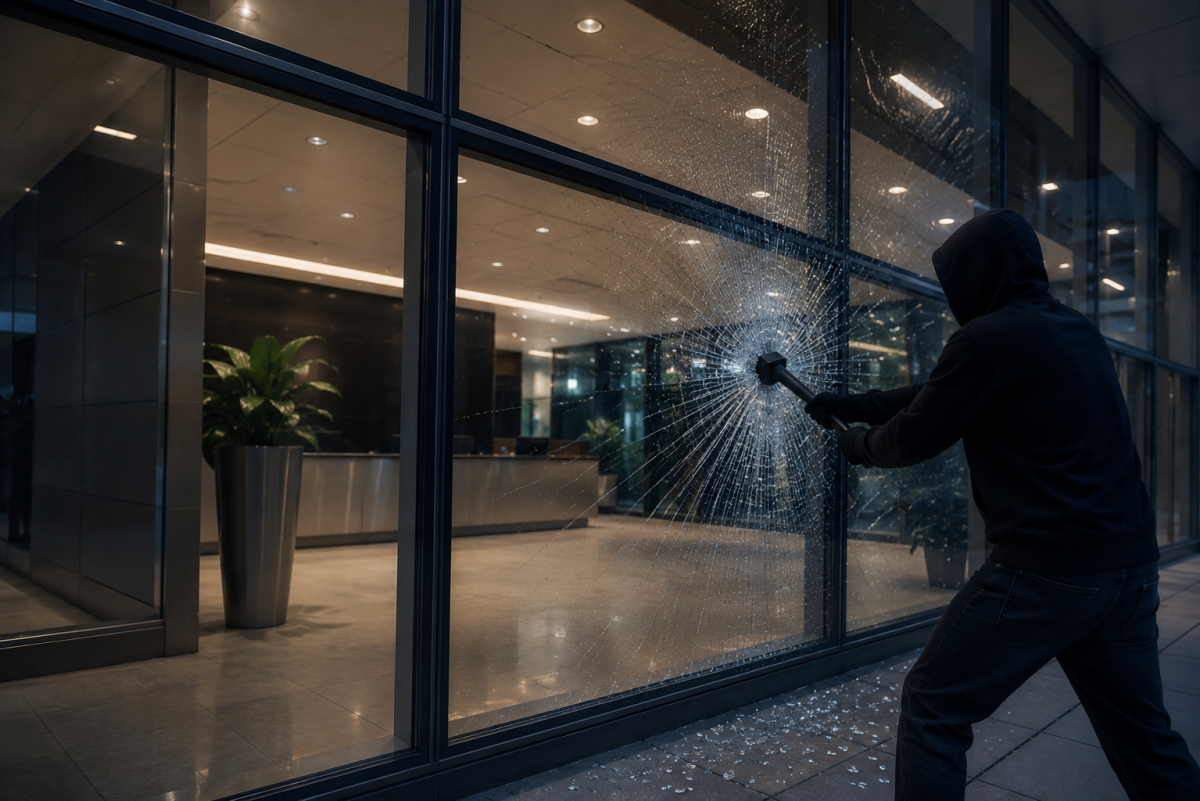
Branch storefronts, lobby glass, and drive-through enclosures are targets for rapid forced-entry attempts. Attackers use blunt instruments to breach glass quickly, with the goal of reaching cash drawers, ATM internals, or teller areas before a law enforcement response arrives. Standard tempered glass, which shatters into small pieces on impact, provides almost no meaningful delay. Security film changes that dynamic by holding the glass assembly together under repeated strikes.
Blast and Explosive Events
Financial institutions are also considered higher-priority targets for blast events than most commercial properties. FDIC and NCUA physical security guidance acknowledge the blast threat category, and security film that meets GSA or Department of Defense blast mitigation standards provides measurable protection for branch staff and customers in the event of an explosive incident near perimeter glazing.
Opportunistic After-Hours Attacks
Branches in Jackson and surrounding suburbs, including Brandon and Flowood, have experienced after-hours ATM attacks and storefront breaches targeting cash or negotiable instruments left overnight. After-hours forced entry attempts tend to be more sustained than retail smash-and-grabs because the attacker has more time. Security film with a proper attachment system is specifically designed to perform under sustained attack conditions.
How Security Film Performs Under Attack
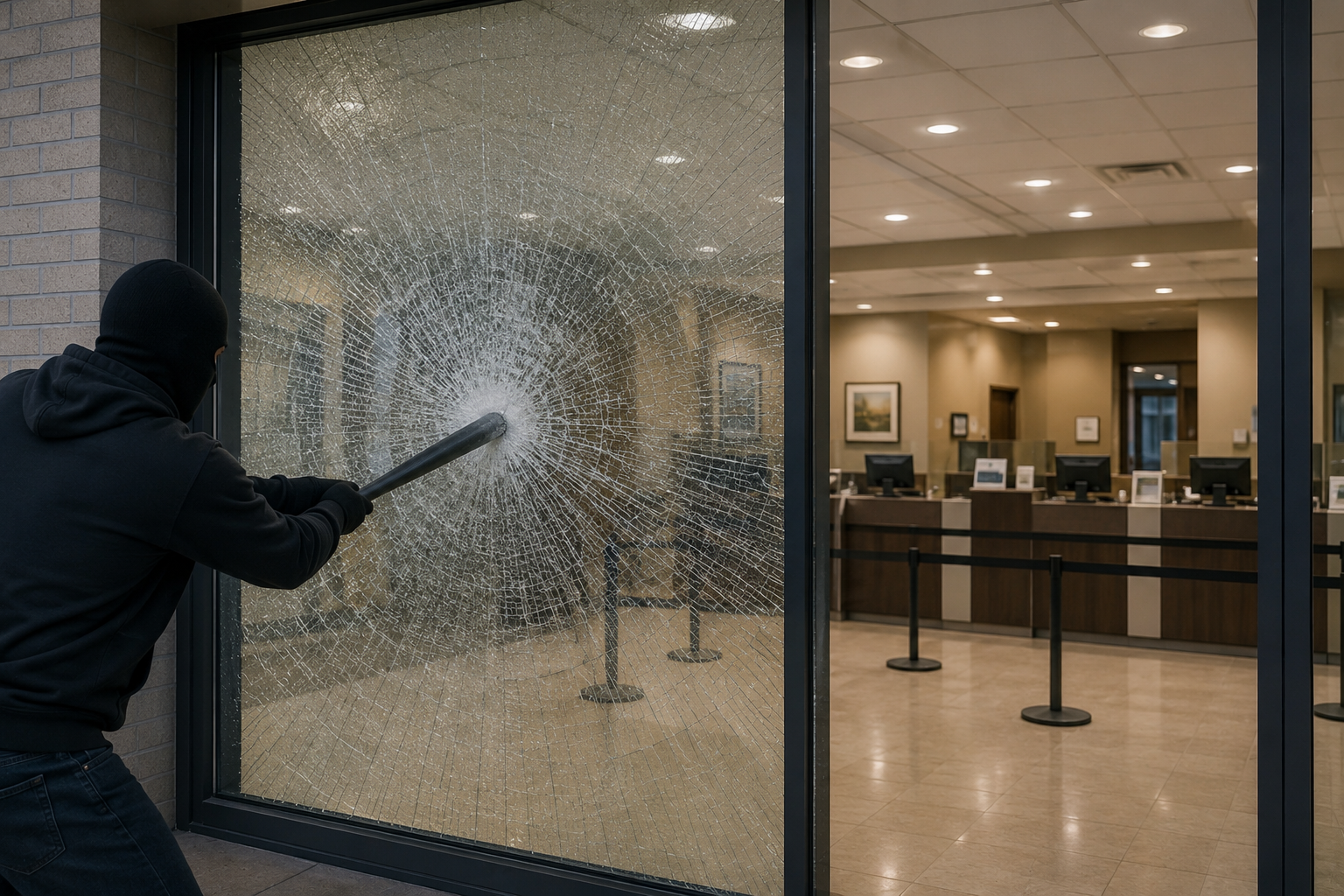 Security film is a thick polyester or multi-layer composite material applied directly to existing glass. When glass is struck, the film holds shattered fragments in place rather than allowing the pane to clear. The attacker faces a surface that continues to resist through repeated strikes rather than opening after one or two blows.
Understanding how security film protects against break-ins is important for branch managers and security officers evaluating product specifications. The key performance metric is forced-entry delay, measured in minutes under standardized attack protocols. Higher-mil film, when applied with an attachment system, produces longer delay times than thinner film applied with adhesive alone.
For financial institutions, the practical goal is to extend the attack duration until it exceeds the attacker’s risk tolerance or allows law enforcement to respond. Most smash-and-grab attempts against hardened glass are abandoned within two to three minutes when the glass does not clear. Security film with attachment systems rated for sustained attack is designed to hold well beyond that threshold.
It is also worth addressing a common question directly. Security film does not make glass bulletproof, and understanding the distinction matters when specifying products for a financial institution environment. Our post on do security films make windows bulletproof covers what film does and does not protect against, which is essential context for any security officer writing physical security plan documentation.
For branches that also need solar control or glare management in teller and lobby areas, commercial window tinting can be incorporated into the same installation, addressing both the security specification and the operational comfort of staff and customers in a single project.
Attachment Systems: Why They Matter
The single most important variable in a security film installation for a financial institution is the attachment system. This is where most general contractors and non-specialist installers cut corners, and where the difference between a film installation that performs and one that fails under attack is determined.
Security film applied to glass with standard pressure-sensitive adhesive holds shattered fragments together after impact. That is a meaningful improvement over bare glass. However, the glass assembly can still be pushed out of the frame intact if the frame connection is not addressed. An attacker who cannot break through the glass can simply push the entire panel inward if it is not mechanically anchored.
An attachment system mechanically bonds the film-and-glass assembly to the window frame using structural adhesive, mechanical fasteners, or both, depending on the frame construction. When impact occurs, the full unit resists as one. The glass cannot be pushed through the frame, and the delay time increases substantially compared to film-only installations.
For FDIC and NCUA-regulated environments, attachment systems also matter for documentation purposes. A physical security plan that references security film installations should specify whether an attachment system was used, as the installation’s forced-entry delay rating depends on it. MGT Glass Solutions provides written installation documentation that specifies film type, mil thickness, coverage area, and attachment method for each opening, structured for direct submission to regulators, insurers, or corporate security teams.
Regulatory, Insurance, and Vendor Considerations
Financial institutions in Jackson, MS, operate under physical security requirements that vary by institution type and charter. FDIC-regulated banks are subject to the Bank Protection Act, which requires each institution to maintain a written security program with specific physical security measures. NCUA-regulated credit unions operate under similar requirements outlined in Part 748 of the NCUA regulations.
Neither framework mandates a specific glazing product by name. Both frameworks require that physical security measures be proportionate to the institution’s identified threat profile. A documented security glazing installation, with product specifications and installation records from a qualified contractor, supports the written security program that examiners review.
On the insurance side, some financial institution property and liability underwriters consider documented physical security improvements when evaluating coverage terms or premium calculations. An installation record from MGT Glass Solutions specifying the film type, attachment method, and coverage area directly supports that conversation. Institutions should consult with their broker or carrier to understand how security glazing documentation is treated under their specific policy structure, as outcomes vary by carrier and coverage line.
Branch security officers preparing for regulatory examinations or insurance renewals should collect installation documentation before those reviews, not after. MGT Glass Solutions structures project records for this purpose from the start of each engagement.
Layering: Film, Riot Glass, and Access Control
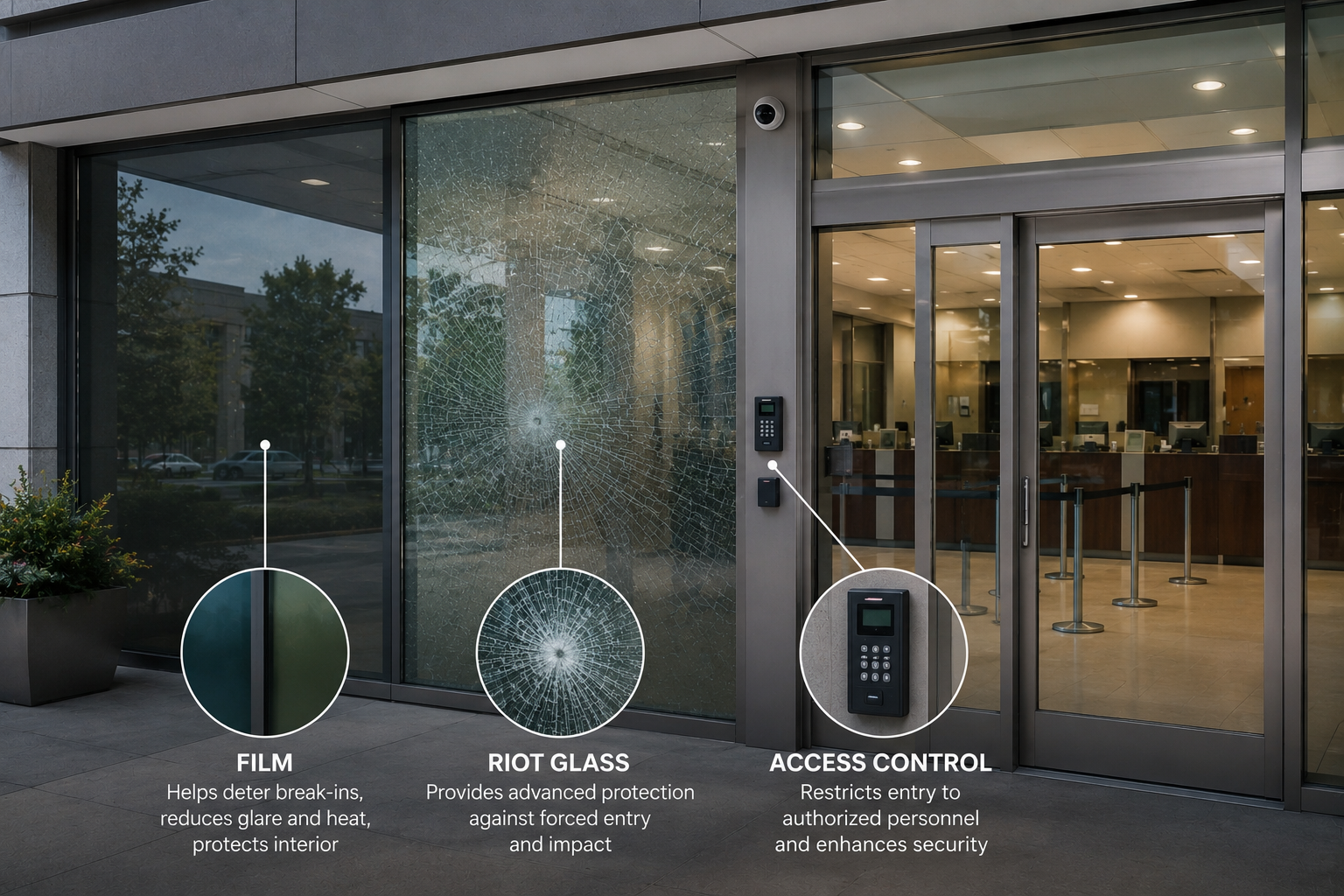 Security film is a component of a physical security system, not a standalone solution. For Jackson-area financial institutions, the most effective glazing strategy tiers protection based on the risk level and function of each glass surface.
Perimeter Glazing and Lobby Glass
Security film with attachment systems is the appropriate specification for perimeter storefront glazing, lobby windows, and glass adjacent to public entry points. These surfaces face the highest exposure to opportunistic forced entry and after-hours attacks.
Teller Lines and Interior Barriers
Teller transaction windows and interior glass barriers that separate staff from the public floor are a secondary attack surface. For these openings, a Riot Glass retrofit provides a higher level of forced-entry resistance than film alone. Riot Glass is a polycarbonate or laminated composite panel installed over existing glazing, engineered to withstand sustained attack with tools that would defeat film-only installations.
Drive-Through Enclosures
Drive-through teller enclosures and ATM surrounds are a specific category of vulnerability. These surfaces are exposed to vehicle approach, sustained tool attack during after-hours incidents, and in some configurations, weather and UV degradation that affects film performance over time. Security film specified for exterior or high-exposure applications addresses these conditions. Riot Glass is also appropriate for drive-through transaction windows where the threat profile justifies the investment.
Access Control Integration
Security glazing works most effectively when it is coordinated with access control at entry points. A perimeter that delays forced entry through glass for three to five minutes provides meaningful protection only if that delay window triggers a monitored alarm response. MGT Glass Solutions works with branch security teams to ensure glazing specifications align with the existing alarm and access control systems.
Request a Jackson Security Assessment
The right starting point for any financial institution glazing project is a site assessment conducted by a qualified security glazing specialist. MGT Glass Solutions conducts security assessments for banks, credit unions, and financial branches throughout Jackson and the surrounding area, including Ridgeland, Madison, Brandon, Flowood, Pearl, and Byram.
The assessment covers your full glazing inventory by surface and function; threat profile analysis by opening type; tiered product recommendations with specifications suitable for regulatory documentation; attachment system requirements; and a written project scope with installation timeline options aligned with branch operating hours.
Financial institution assessments are conducted with an understanding of the documentation requirements imposed by FDIC- and NCUA-regulated environments. Every recommendation is written to support your physical security program, not just to describe a product.
Contact MGT Glass Solutions today to schedule your Jackson branch security assessment and get a written scope that your security team, insurer, and examiner can all work from.
Frequently Asked Questions
How long does security film hold up during a forced-entry attack?
Security film delay time depends on film thickness, installation method, and whether an attachment system is used. Film-only installations using standard adhesive typically experience a two- to four-minute delay under sustained attack with hand tools. Film installed with a mechanical attachment system significantly extends that delay, with some configurations rated for five minutes or more under standardized forced-entry test protocols. For financial institution applications, MGT Glass Solutions recommends installing attachment systems on all primary perimeter and teller glazing to achieve delay ratings appropriate for a regulated security environment.
Is security film appropriate for drive-through tellers and ATMs?
Yes, with the right product specification. Drive-through enclosures and ATM surrounds require film rated for exterior exposure, UV resistance, and temperature cycling. Standard interior security film is not appropriate for these applications. MGT Glass Solutions specifies exterior-grade security film for drive-through and ATM installations and can recommend Riot Glass for transaction windows that require a higher forced-entry resistance rating. The assessment process identifies each surface type and matches the product specification to the exposure conditions and threat level.
Does it affect our branch’s exterior appearance?
Optically clear security film is visually indistinguishable from unfilmed glass at normal viewing distances. There is no tint, haze, or visible surface texture with standard clear security film. For branches that also want solar control or privacy in specific areas, lightly tinted or frosted security film options are available, but these are elective upgrades rather than a requirement of the security specification. The standard installation for a financial institution perimeter does not alter the branch’s exterior appearance in any way that would affect signage visibility, brand standards, or customer recognition.
Can it reduce our insurance premiums?
Security glazing installations have resulted in premium adjustments for some financial institution policyholders, particularly when the installation is documented with product specifications and attachment system details. The outcome depends on your carrier, your current policy terms, and the specific coverage lines involved. MGT Glass Solutions provides written installation documentation structured for insurance submission, and some clients have used that documentation as part of a premium review conversation with their underwriter. It is recommended that you contact your insurance broker before and after installation to understand how your carrier treats documented security glazing improvements under your specific policy.