
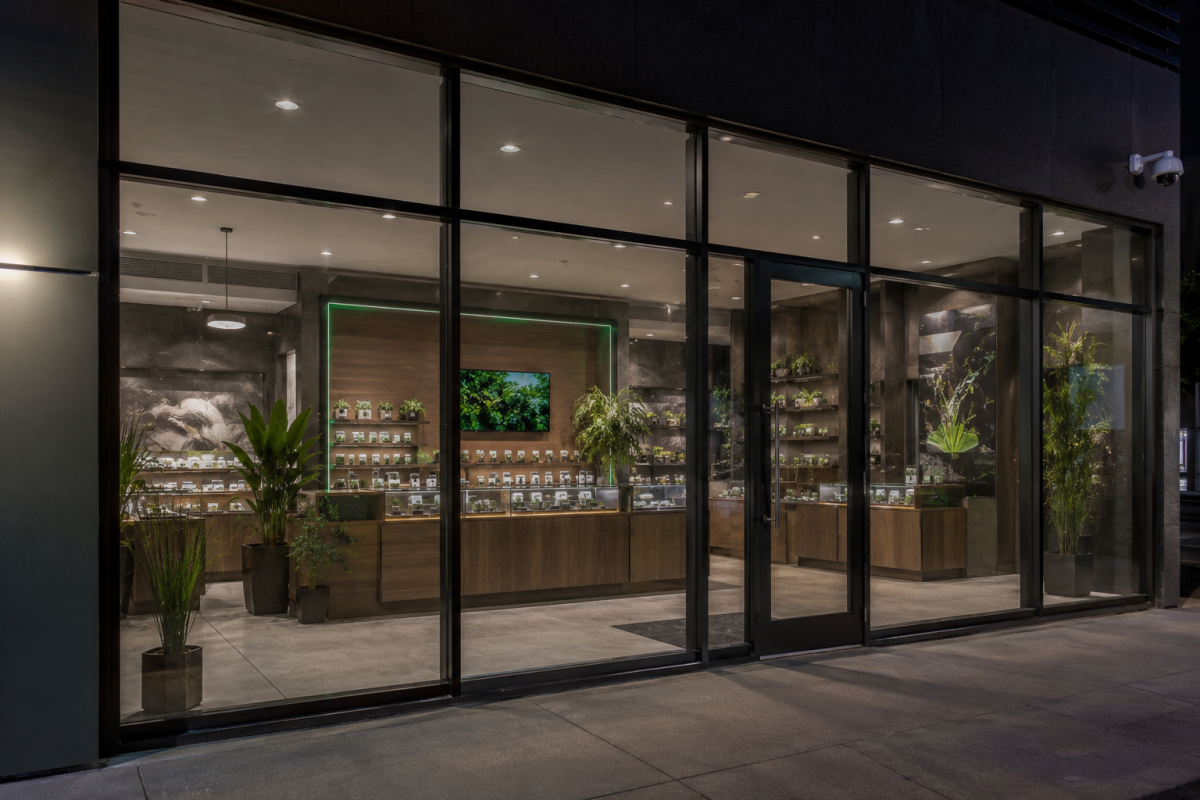
Milwaukee dispensaries are operating in a high-risk retail environment. Cash on hand, high-value product behind glass, and the perception of limited security make cannabis retail a consistent target for smash-and-grabs and forced-entry attacks. In 2023 and 2024, dispensary break-ins across Wisconsin and the broader Midwest accelerated, with attackers using coordinated vehicle rams, sledgehammers, and crowbars to breach storefronts in under two minutes.
The answer is not a single product. It is a tiered glazing strategy that matches the right level of protection to each part of your building, balances upfront cost against long-term risk, and satisfies the documentation requirements your insurer and licensing authority are increasingly asking for.
MGT Glass Solutions provides security glazing assessments and installations for Milwaukee dispensaries and high-risk retailers throughout the area, including Wauwatosa, West Allis, Brookfield, Glendale, and Shorewood. This guide breaks down how a tiered approach works, what each layer protects against, and what operators need to know before their next lease renewal or insurance review.
The Threat Profile for Milwaukee Dispensaries
Understanding what you are protecting against shapes every product and placement decision.
Smash-and-Grab Attacks
The most common threat to Milwaukee dispensary storefronts is the rapid smash-and-grab. Attackers use blunt instruments to break storefront glass, reach through, and remove product or cash in under 90 seconds. Standard float glass, even tempered glass, offers minimal resistance. The goal of security glazing in this scenario is not to make entry impossible, but to slow it down enough that the attack is abandoned or law enforcement arrives in time.
Vehicle Ram Attacks
A growing category of retail attack involves using a stolen vehicle to drive through the storefront. These attacks target the full perimeter glazing and entry doors. Product quantity and cash-handling policies make dispensaries a specific target for this method in the urban and suburban Milwaukee markets.
Display Case and Vault Breaches
Inside the dispensary, display cases and vault rooms represent a secondary target layer. Even if perimeter glazing slows entry, an attacker who breaches the front may have additional time at display cases if those surfaces are also standard glass.
Each of these threat types requires a different product response, which is why a tiered strategy outperforms a single-product approach.
A Tiered Security Glazing Approach
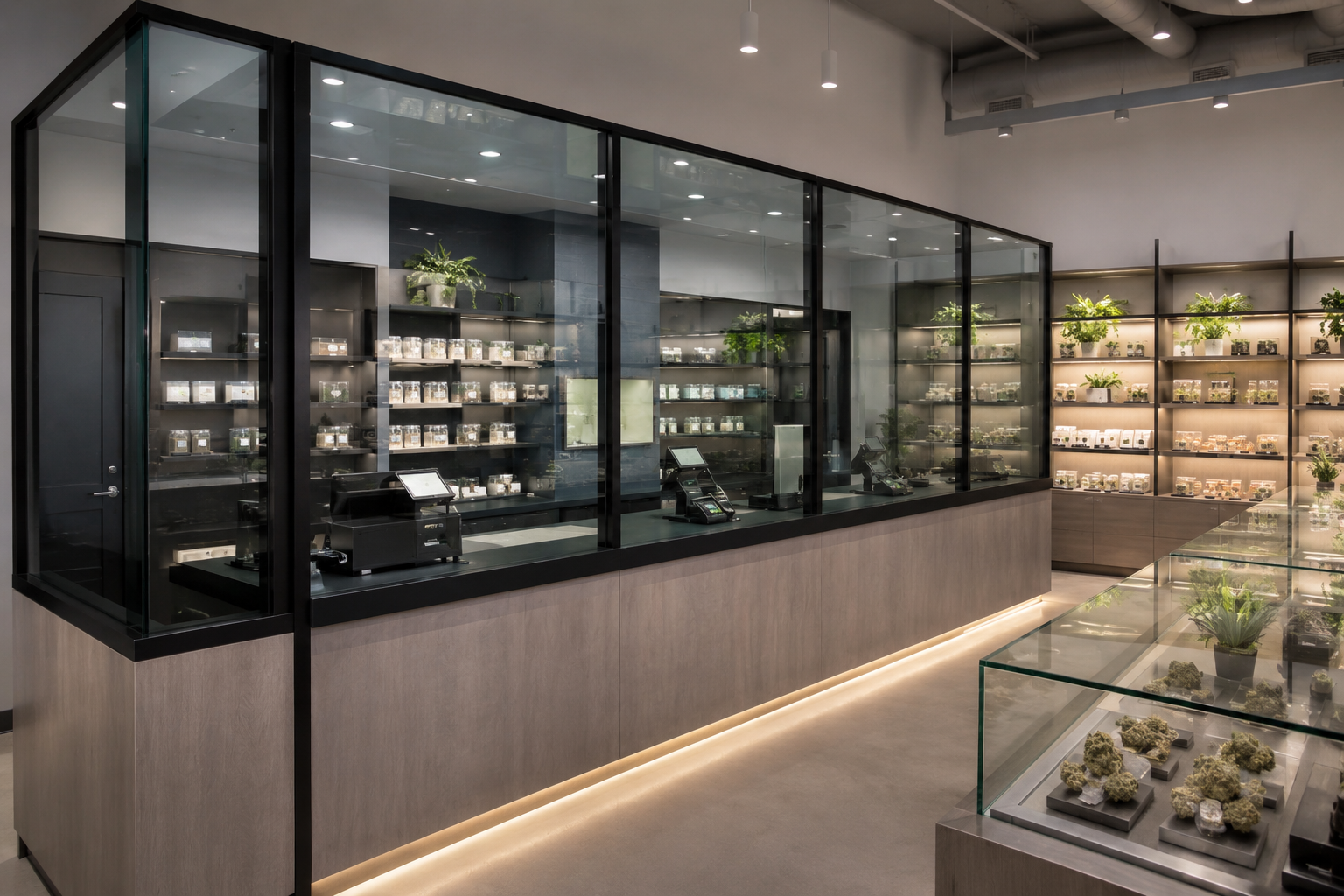 The most cost-effective and protection-effective strategy for Milwaukee dispensaries is to tier your glazing investment based on the risk level of each surface. Perimeter glazing and entry points receive a baseline security film treatment. High-value display floors, vault doors, and interior barriers receive Riot Glass, a retrofit glazing system designed for serious forced-entry resistance.
This approach means you are not paying for maximum protection on every square foot of glass in the building. You are concentrating your investment where the threat is highest and providing a meaningful layer of delay everywhere else.
Security Window Film: Your Baseline
Security window film is the first line of defense on perimeter glazing, transom windows, sidelights, and any glass surface that is not a primary attack target. When applied correctly with an anchoring attachment system, security film holds shattered glass in place after impact, turning a standard break into a barrier. An attacker who expects glass to clear in one or two strikes instead faces a surface that continues to resist, loses time, and often abandons the attempt.
Security film is significantly more affordable than laminated glass replacement, can be applied to existing glazing without a full frame retrofit, and is available in optically clear formats that do not change the appearance of your storefront. For dispensaries operating in leased retail spaces, this is often the most practical path to meaningful perimeter protection without triggering landlord approval requirements for structural changes.
To understand the full capabilities and limitations of this product category, our post on how security film differs from regular tint is worth reviewing before making a product decision.
For operators weighing cost against protection level, security film as an alternative to security glass covers the comparison in detail.
Riot Glass: For Display Floors and Vaults
Riot Glass is a retrofit glazing system, not a film. It is a polycarbonate or laminated composite panel installed in front of or replacing existing glass, engineered to withstand repeated blunt impacts, crowbar prying, and, in some configurations, ballistic threats. Where security film slows an attack, Riot Glass is designed to stop it entirely or extend the delay far beyond what any film product can achieve.
For Milwaukee dispensaries, Riot Glass is the recommended solution for display case glazing, interior vault doors, and any glass partition separating the retail floor from back-of-house product storage. These are the surfaces an attacker reaches after breaching the perimeter, and they represent the last barrier between an intruder and your highest-value inventory.
Riot Glass panels are installed as a retrofit over existing frames in most applications, which means the project does not require a full storefront rebuild. Installation is completed by trained glazing crews and, in most cases, can be phased around your operating hours.
Attachment Systems That Actually Matter
One of the most consistently overlooked elements of security film installation is the attachment system. Security film applied directly to glass with standard adhesive provides meaningful impact resistance but has a structural vulnerability: the film holds glass together, but the glass assembly can still be pushed out of the frame intact.
An anchoring attachment system addresses this by mechanically bonding the film-and-glass assembly to the window frame. When an impact occurs, the entire unit resists as one, rather than the film holding glass shards while the frame gives way. For Milwaukee dispensary storefronts, an anchored installation is the difference between a film product that delays entry and one that genuinely stops it.
MGT Glass Solutions installs attachment systems for every security film project when the threat profile warrants it. During the site assessment, we evaluate your existing frame construction, glazing pocket depth, and perimeter conditions to determine the appropriate attachment method for each opening.
Commercial window tinting can also be incorporated into the same installation, allowing dispensaries to manage interior visibility and reduce the visual merchandising cues that make a location appear to be a high-value target from the street.
Insurance, Licensing, and Compliance Considerations
Milwaukee dispensaries operate under Wisconsin DATCP licensing requirements and are subject to the security plan documentation that those requirements include. While the state does not mandate a specific glazing product by name, security plan reviewers are increasingly asking operators to demonstrate that their physical security measures are proportionate to the risk profile of cannabis retail.
Documented security glazing installations, with product specifications and installation records, support the security plan submissions that licensing renewals require. Some operators have used glazing upgrade documentation as part of a broader physical security narrative during initial licensing or variance requests.
On the insurance side, the picture is more direct. Dispensary property insurers have tightened underwriting for smash-and-grab exposure, and a growing number of carriers are requiring documented forced-entry protection measures as a condition of coverage or as a factor in premium calculation. An installation record from a qualified glazing contractor, specifying the product type, coverage area, and attachment method, is exactly the kind of documentation underwriters request.
MGT Glass Solutions provides written installation documentation for every project that can be submitted directly to your insurance carrier or included in a licensing file. We are familiar with the documentation format that Wisconsin dispensary operators typically need and can structure project records accordingly.
Request a Milwaukee Security Assessment
The right starting point for any Milwaukee dispensary glazing project is a site assessment, not a product quote. Until someone walks your perimeter, identifies your highest-risk glass surfaces, and understands your current frame construction and lease constraints, any product recommendation is a guess.
MGT Glass Solutions conducts security glazing assessments for Milwaukee dispensaries and high-risk retailers throughout the area. The assessment covers your full glazing inventory, threat profile by surface type, product recommendations with tiered options at different investment levels, and attachment system requirements. You leave with a written scope that you can use to make a decision, apply for insurance credits, or share with a landlord as part of a security upgrade conversation.
We serve dispensaries and cannabis retailers across Milwaukee and nearby suburbs, including Wauwatosa, West Allis, Brookfield, Glendale, Brown Deer, and Shorewood. Contact MGT Glass Solutions to schedule your assessment and get a scope that matches your building, your budget, and your risk exposure.
Frequently Asked Questions
Does Milwaukee dispensary licensing require any specific glass protection?
Wisconsin DATCP dispensary licensing does not mandate a specific glazing product by name. However, the security plan that operators submit as part of the licensing process is reviewed for adequacy relative to the risk profile of cannabis retail operations. Documented forced-entry protection measures, including security film and Riot Glass installations with written specifications, support a stronger security plan submission. Some operators have used glazing upgrade documentation during renewals or variance reviews. It is recommended to consult with your licensing attorney when making any physical security investment to ensure your documentation is structured to meet the specific requirements of your license type.
How fast can Riot Glass be installed on existing storefronts?
In most retrofit applications, Riot Glass installation on an existing storefront can be completed in 1 to 3 days, depending on the number of openings and the condition of the existing frames. Because the system is designed as a retrofit over existing glazing in many configurations, a full frame replacement is often not required. For dispensaries that cannot afford extended downtime, installations can be phased by zone or scheduled for overnight and early-morning windows. MGT Glass Solutions coordinates directly with your operations team to build a timeline that does not interrupt your licensed hours.
What is the forced-entry delay time typical of Riot Glass?
Riot Glass systems are tested and rated for forced-entry delay rather than absolute prevention, which is the correct way to evaluate any glazing security product. Depending on the specific panel thickness and configuration, Riot Glass installations are rated to resist forced entry for several minutes under sustained attack with blunt instruments. Some configurations exceed a five-minute delay under standardized testing protocols. In practical terms, the goal is to extend the attack long enough to exceed the attacker’s risk tolerance or to allow a law enforcement response. The specific delay rating for your application will depend on the product configuration recommended during your site assessment.
Can this protect against drive-through vehicle attacks?
Security film and standard Riot Glass configurations are not rated for vehicle impact. A vehicle ram attack involves energy levels that exceed what glazing products alone can stop. For dispensaries with identified vehicle-attack exposure, the recommended approach combines glazing protection with physical perimeter barriers, such as bollards, raised curbing, or landscaping features, that prevent a vehicle from reaching the storefront at attack speed. MGT Glass Solutions can advise on glazing selection as part of a broader perimeter security plan and refer operators to physical barrier specialists when the threat profile warrants it. Glazing protection remains important in these scenarios because it addresses the secondary attack that often follows a vehicle breach.